


L'équipe Texto SMS Gratuit
11 October 2026 · 12 min read
Introduction: the day the battery stops being the problem
We always picture the same scene: the power goes out, and everyone scrambles for a charger. We think about phone battery life, remaining percentage, low-power mode.
That's the wrong way to look at it. In a prolonged power outage, your smartphone is almost never the weak link. A recent device charged to 100%, used sparingly, will last 24 to 48 hours. What dies long before that is the cell tower at the end of the street.
Recent episodes have shown this in France as elsewhere in Europe: winter storms that leave hundreds of thousands of households without electricity for two to five days, incidents at a substation that cut power to an entire urban area for several hours, and more recently the massive Iberian blackout of April 2025, which brought down a large share of Spanish and Portuguese mobile networks within a matter of tens of minutes. The phone itself still showed 90%. But it also showed "No Service".
This guide isn't about survivalism. It explains in concrete terms, for France in 2026: how long a mobile site lasts without power, why SMS often outlives voice calls, what the government and the operators are actually required to maintain, and which simple steps — taken beforehand — decide whether you're still reachable at hour 30.
What goes dark, and in what order
A long outage doesn't break the network all at once. It eats away at it layer by layer, in a fairly predictable order.
1. Your internet router: immediately. This is the point most often overlooked. A fibre or ADSL router has no battery at all. It shuts down within a second, and with it: Wi-Fi, IP-based landline telephony (so the landline no longer works, unlike the old wired phone powered by the copper network), Wi-Fi calling, home automation, cameras, connected intercoms. Since the gradual shutdown of the copper network, the old reflex of "I'll use the landline, it always works" no longer has any technical basis.
2. The cell towers: from 30 minutes to a few hours. Most French mobile sites have a backup battery sized to absorb micro-outages, not to last a full day. In practice:
| Type of site | Typical backup | What it covers |
|---|---|---|
| Standard dense urban site | 30 min to 2 h | Micro-outages, network failover |
| Reinforced / strategic site | 4 to 8 h (upsized batteries) | Conventional local outage |
| Core network site, major exchanges | Generator + fuel oil | Several days if resupplied |
3. The core network: it holds. The operators' technical centres and critical nodes are redundant and equipped with generators. So the problem is almost never "the national network is down", but "there's no longer a powered antenna anywhere near me".
4. Then congestion. A counter-intuitive but massive phenomenon: when one antenna in three goes dark, those left standing take on all the traffic in the area — and everyone is calling at the same time. You have signal, and yet nothing gets through. That's saturation, not an outage.
Remember the order: router → nearby antennas → saturation of the surviving antennas. By hour three, the problem is no longer electrical, it's about capacity.
Why a text gets through when a call fails
This is one of the rare cases where legacy technology saves the day, and it's worth understanding.
A voice call requires a continuous channel for the whole conversation: if the radio resource isn't available, the call is rejected. An SMS, on the other hand, is a 140-byte message sent "poste restante" style. It slips into very frugal signalling channels, it is stored by the operator's messaging centre if the recipient is unreachable, and it is retried automatically for hours, sometimes up to 48 or 72 hours depending on the operator's settings.
Practical consequences in a crisis:
- A text sent in a saturated area will often get through in the end, even ten minutes late.
- A text sent to someone whose phone is switched off will be delivered as soon as they power it back on.
- A text uses a fraction of the energy of a call, both on the phone side and the antenna side.
That's why civil protection guidance, in France as abroad, has been repeating the same line for years: in a major event, use SMS to reassure your loved ones and leave the calls to the emergency services. Every call you don't make frees up radio resource for someone who needs it.
One important point about emergencies: 112 remains reachable even without a valid SIM card or outside your own operator's coverage, as your phone will then switch to any available network. And for deaf or hard-of-hearing people, 114 accepts SMS and chat — it is also, in practice, France's official written emergency channel.
The real inventory: what matters before the outage
Forget thirty-item lists. In a typical French power outage — a few hours to three days, warm or cold, but with passable roads — what determines whether you stay reachable comes down to five decisions.
1. Stored energy, not generated energy
A modern smartphone uses 10 to 20 Wh per full cycle. In other words, a good-quality 20000 mAh power bank (≈ 74 Wh) will recharge a phone four to five times. For a household of four over 48 hours, that's enough — provided it was charged beforehand, which is precisely what nobody does.
Simple rule: a power bank sitting at 40% in a drawer is useless. Charge it the day you bring in the firewood or close the shutters, not during the outage.
For a household that also wants to power a router once service returns, a lamp or a light medical device, the next step up is a 300 to 500 Wh portable power station. That's a purchase running into several hundred euros, worthwhile mainly in regularly affected areas (Atlantic coast, mountains, rural areas with overhead lines).
2. A charger that doesn't depend on a wall socket
In many outages, the car remains the most readily available generator in the household. A good-quality USB-C car charger, left permanently in the glovebox, solves the problem for three euros and ten minutes of engine running time. A word of caution: never run an engine in a closed garage, and charging while driving is preferable.
Foldable solar has its place, but let's be realistic: in December, under a Breton sky, a 20 W panel produces crumbs. It's useful in summer, when camping — not during a winter storm.
3. Two networks instead of one
This is the most underrated lever. In a localised outage, it's common for one operator's sites to go down while another's stay up — mast locations, backup power levels and electrical connections differ from one network to the next.
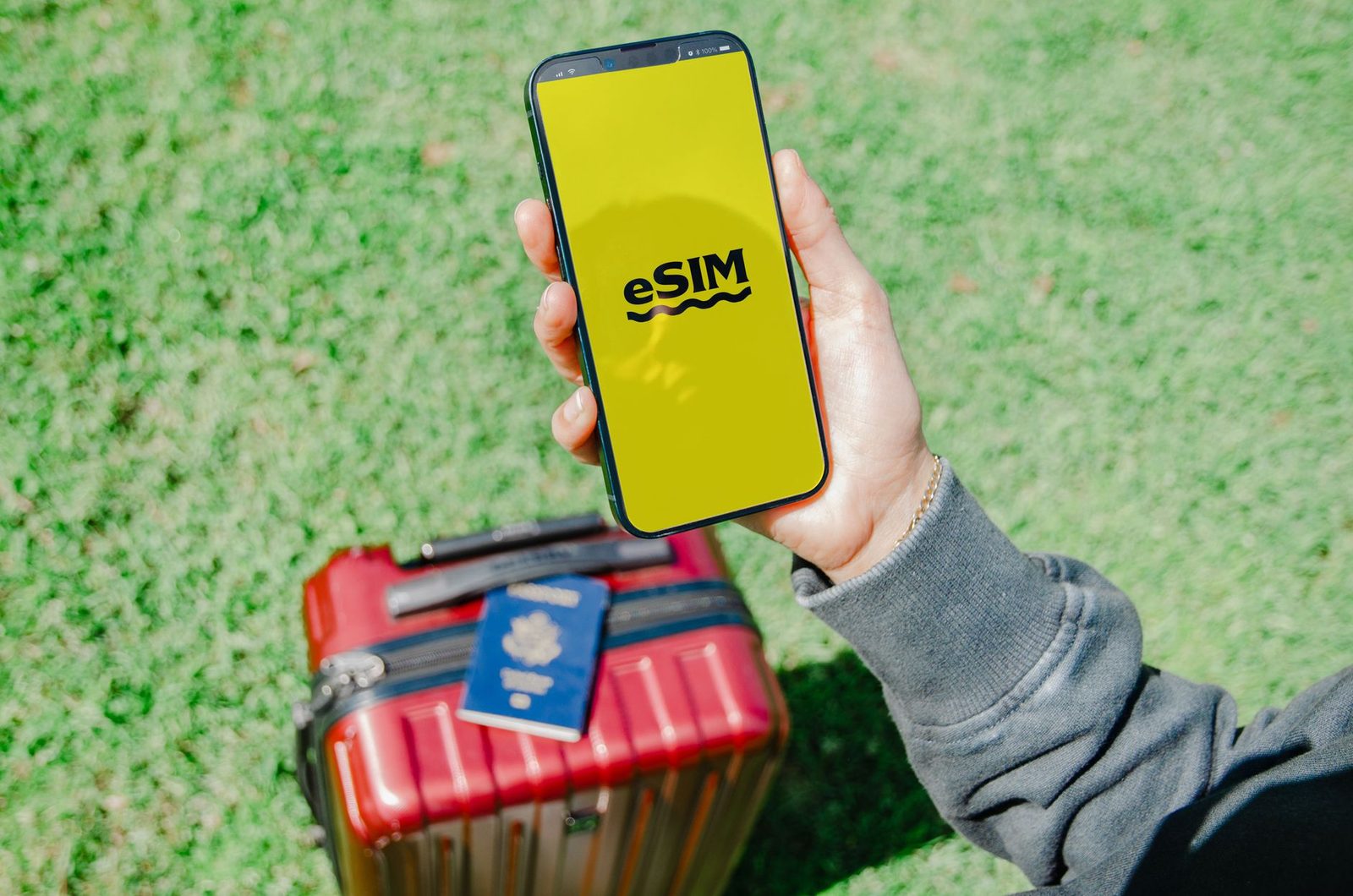
A dual-SIM phone with a prepaid eSIM from a second operator sitting dormant at €2 a month provides genuine redundancy. And because an eSIM is loaded remotely, it can even be activated after the episode has begun — provided you still have some connectivity left, which is not guaranteed: better to set it up ahead of time.
4. A radio that depends on nothing
When mobile networks saturate, incoming information still travels over the FM band. Public service radio stations have an obligation to broadcast safety information, and the main transmitters have backup power. A wind-up FM radio or a battery-powered one, stored alongside a head torch, remains the most reliable tool of the lot: it needs no network, no subscription, no updates.
5. Offline information
Your contact list is in your phone. So are your home insurance number, electricity breakdown line, town hall and GP. If the device dies, all of it vanishes at once.
The countermeasure is utterly mundane and works every single time: five numbers written on paper, in your wallet. Including the "rallying point" relative who lives elsewhere and will act as the information relay for the whole family.
The habits that double your battery life once the outage has started
Once the power is gone, the goal changes: it's no longer about using your phone, but about keeping it alive and reachable.
- Stop it searching for a network in vain. A phone that can't find any signal transmits at full power looking for an antenna: that's the worst-case scenario for the battery. If it shows "No Service", switch to airplane mode and come out of it every 30 to 60 minutes to test. This single habit often saves 30 to 40% of your battery.
- Turn off 5G and force 4G. In a degraded area, constant switching between technologies is energy-expensive for zero benefit.
- Brightness at minimum, dark background, notifications off. The screen remains the biggest consumer.
- One phone switched on per household. Leave the others off: they're a walking energy reserve, and you'll power up the second one when the first hits 10%.
- Texts rather than calls, text rather than photos. A single photo sent by MMS or instant messaging uses more radio than a hundred text messages.
- Don't start any update, backup or sync. When the network comes back, your phone will try to catch up on everything it missed: temporarily turn off automatic backups.
One surprising detail: in cold weather, a lithium battery loses a significant share of its apparent capacity. If you're riding out the outage in an unheated home, keep your phone close to your body, not on a table by the window.
What the government and operators must do — and what they don't have to
There is a framework, and it's useful to know where it stops.
Mobile operators are subject to continuity and resilience obligations set out in the French Post and Electronic Communications Code, under the supervision of Arcep. After several weather events, resilience plans have been strengthened: identification of priority sites, longer-duration batteries on part of the estate, pre-positioned mobile generators, local roaming that can be activated in a crisis so that subscribers of a downed operator can use another's network. In practice, it's this last mechanism that saves entire areas — but it is neither automatic nor instantaneous.
On the alerting side, France has FR-Alert, the national mobile alert system run by the Directorate-General for Civil Protection and Crisis Management. It relies on cell broadcast: the message is sent by the antennas to every phone present in a given area, with no sign-up and no phone number. Two limitations to be aware of:
- FR-Alert needs at least one powered antenna to reach you. In an area with no network at all, it won't get through.
- It doesn't replace local channels: prefecture, town hall, radio.
To follow the progress of the outage itself, the distribution network operator (Enedis across the vast majority of the country) publishes restoration information by municipality and provides a breakdown number available 24/7. But consulting an online map requires… a network. Hence the value of radio and of a family relay living outside the affected area.
The three scenarios, and what to do in each
An outage of 2 to 6 hours (the most common case)
The mobile network generally holds, sometimes degraded. Nothing special to do: lower the brightness, avoid long calls, send a text if you have an appointment. Don't drain your power bank: you won't need it.
An outage of 12 to 48 hours (storm, substation incident)
This is the scenario where preparation pays off. Nearby antennas start going down after a few hours; coverage shrinks to a few high points. Move 200 metres, go up a floor, step outside the building: the difference is often spectacular. Ration yourself: checking messages every two hours is plenty. Designate one household phone.
An outage of more than 48 hours (exceptional event)
Beyond that, the logic shifts: the energy is somewhere other than your home. Town hall, community hall, shopping centre running on a generator, your car. Collective charging points opened by local councils are becoming the norm in regularly affected départements. This is also the moment when paper, cash and out-of-area contacts prove their worth — card payments go down with the network.
The checklist, in ten lines
| To do now | Why |
|---|---|
| Charge the power bank and note the date | A reserve at 40% isn't a reserve |
| A USB-C charger in the car | The household's most available generator |
| 5 useful numbers on paper | Survives your phone shutting down |
| Test which operator has the best signal at home | Determines the choice of your 2nd line |
| Install a prepaid eSIM from another network | Genuine redundancy in a localised outage |
| Check that FR-Alert isn't switched off | Official geolocated alerts |
| Battery or wind-up FM radio | Information when mobile networks saturate |
| Head torch + batteries | Having your hands free changes everything |
| Know where the Enedis breakdown number is | Report and track restoration |
| Agree on a relay contact outside the area | Centralises family information |
Conclusion: being reachable is prepared in advance
The lesson of recent years is simple: in France, a long power outage is no longer an exotic hypothesis. It's seasonal, local, and perfectly manageable — provided you've understood where the real bottleneck lies.
It isn't your battery. It's the antenna that goes dark after two hours, and the saturation of those that remain. Against that, three things really work: text rather than voice, two networks rather than one, and energy stored before the event.
The rest — the torch, the paper, the radio — fits in a drawer and costs the price of a meal. It's probably the best return on investment in your annual telecoms budget.