


L'équipe Texto SMS Gratuit
14 September 2026 · 11 min read
Introduction: two bars, and still nothing goes through
It's 7 p.m., you're sitting outside the tent, your phone shows two bars of 4G and the carrier logo is right there. You type a message to your mother to say you've arrived. The spinner turns. And turns. Forty seconds later, a red exclamation mark: "Not delivered".
You climb up the bank, you raise your arm, you restart the phone. Nothing. Meanwhile, three metres away, a neighbour is quietly watching a video. He isn't with the same carrier.
That scene sums up everything coverage maps don't tell you. In France, mobile coverage is officially excellent: the Arcep reports more than 99% of the population covered by 4G across all four carriers. But coverage is measured by population, not by surface area, and even less by capacity — that is, the number of people who can use the same cell site at the same time. And holiday destinations suffer from both handicaps at once: few masts, and far too many people all at once.
This guide explains the real mechanics behind these dropouts, then sets out a method: check before you leave, react on site, and know what still works when there's almost nothing left.
Why the signal dies exactly where you're going
Coverage is measured in inhabitants, not square kilometres
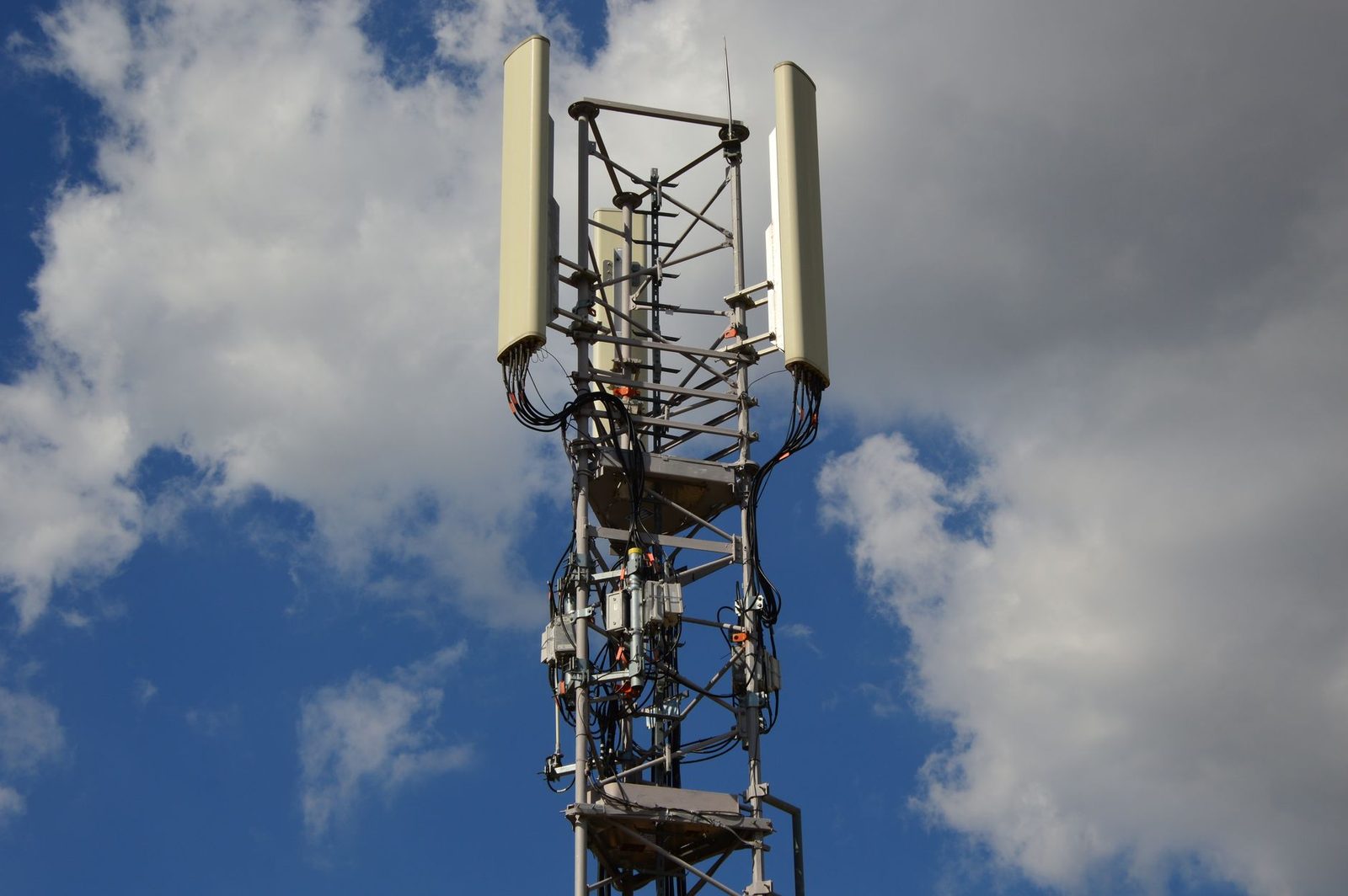
A carrier installs its masts where people live year-round. A village of 400 inhabitants deep in an Alpine valley gets a mast sized for 400 inhabitants. On 3 August, that village hosts 4,000.
The mast doesn't "go down": it saturates. Every cell site has a finite capacity, shared between all connected handsets. When the number of active users exceeds that capacity, the network applies priorities: voice comes before data, and data is handed out in dribs and drabs. That's exactly what you experience when the 4G icon is showing but nothing loads.
The signal bar indicates the strength of the received signal, not the availability of the service. A strong signal on a saturated mast gives you five bars and zero throughput.
Topography: mountains block, the sea reflects
In the mountains, the problem is geometric. The waves used by mobile networks travel in a near-straight line and are stopped by rock. A steep-sided valley creates a perfectly clear-cut radio shadow: you get signal on the ridge, nothing at all 200 metres below. Carriers fill the gaps with directional cell sites, but these cover the main roads and the resorts, not the valley floors or the high pastures.
By the sea, it's the opposite: nothing stops the waves. They carry a long way over water, and your phone may latch onto a mast 20 or 30 km away, sometimes even a foreign one if you're near a maritime border. The signal looks fine, but the link is unstable, latency goes through the roof and texts arrive five minutes late.
Not all frequencies are equal
The bands used in France don't all share the same properties:
| Band | Range | Penetration (walls, vegetation) | Throughput |
|---|---|---|---|
| 700 / 800 MHz | Very good (several km) | Good | Modest |
| 1800 / 2100 MHz | Medium | Medium | Good |
| 2600 MHz | Poor | Poor | Very good |
| 3.5 GHz (5G) | Poor | Bad | Excellent |
In rural areas, what saves you are the low bands (700 and 800 MHz). They carry far and pass through forest. But carriers don't all hold the same amount of low-band spectrum, nor deploy it identically from one department to the next. That's the real reason your campsite neighbour has signal and you don't: he isn't on the same carrier, so he isn't on the same frequencies.
Before you leave: the fifteen minutes that change everything
1. Check coverage at the exact address
The instinct is to look at your own carrier's map. That isn't enough: those maps are optimistic commercial simulations. Use instead:
- "Mon réseau mobile", the official Arcep service (monreseaumobile.arcep.fr), which shows all four carriers side by side, with four coverage levels (very good, good, limited, no coverage);
- the ANFR maps (Agence nationale des fréquences) via the Cartoradio tool, which shows the masts actually installed and their frequency bands — an excellent complement, because it reveals the physical distance to the nearest cell site.
Zoom in on the precise address of the campsite, holiday cottage or mountain hut, not on the main town. Between the village centre and the site down below, there can be two levels of difference.
2. Ask your host — the right question
Don't ask "is there any signal?" (the answer is always: "oh yes, yes"). Ask:
"Which carrier do your guests get the best signal with, and does it hold up in August?"
Campsite managers and cottage owners know the answer by heart, because they're asked it every single day.
3. Plan a fallback if the stay is a long one
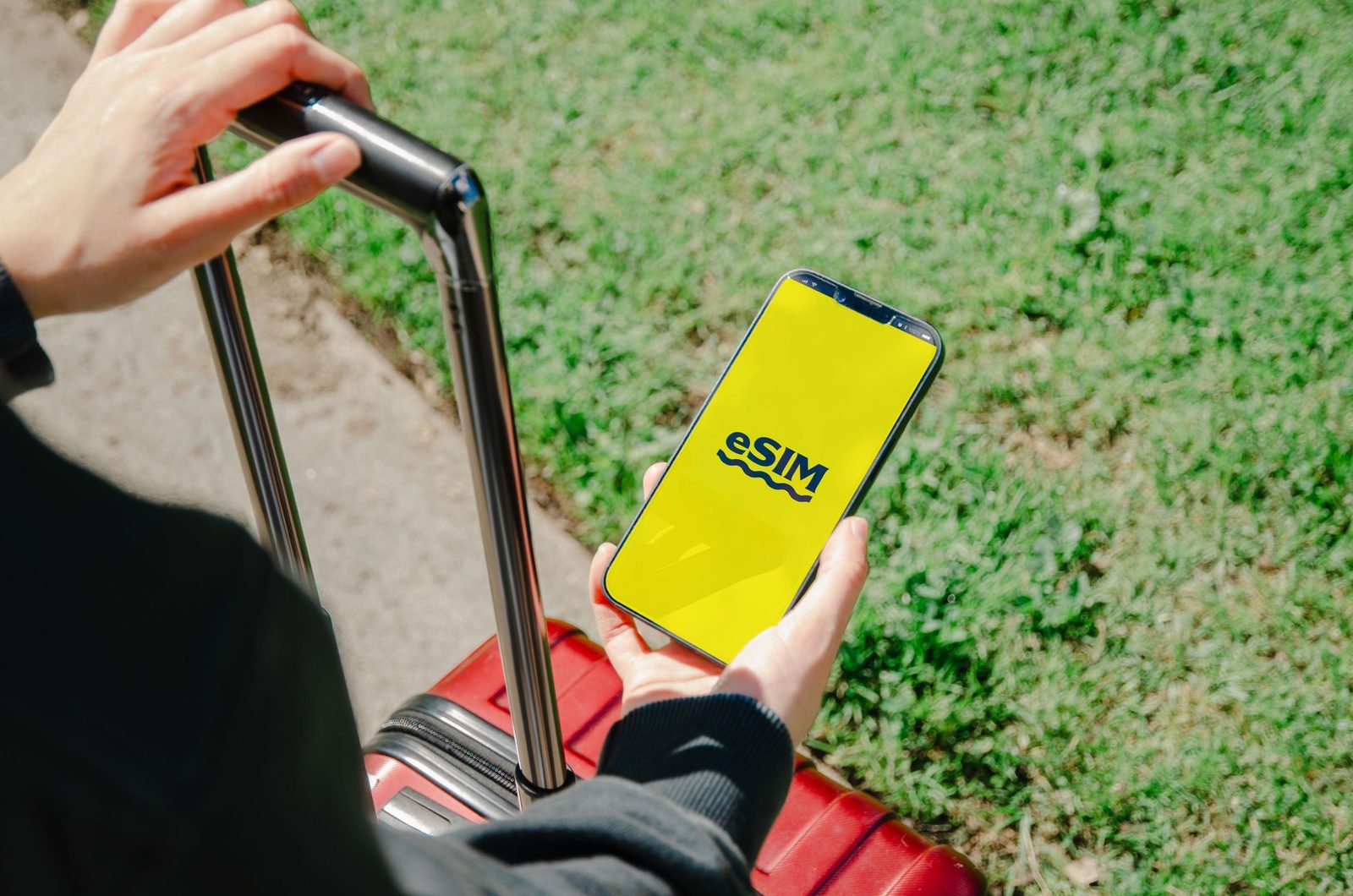
If you're heading off for three weeks to an area you know is difficult, a prepaid eSIM from another carrier, activated for a few euros, turns your phone into a dual-network device. Most smartphones sold since 2021 handle a physical SIM and an eSIM simultaneously on standby: you switch to whichever has signal. It's often more effective than any accessory.
On site: the settings that really work
Force the low band by turning off 5G
This is the most rewarding and least known adjustment. In difficult areas, your phone sometimes clings to a weak, unstable 5G signal rather than a stable, available low-band 4G one. The result: constant dropouts.
- Android: Settings → Mobile network → Preferred network type → 4G/LTE
- iPhone: Settings → Cellular → Cellular Data Options → Voice & Data → LTE
You lose theoretical throughput, you gain a connection that holds. Switch back to automatic once you're home.
Select the carrier manually
Another underrated setting. By default, the phone picks the network automatically. At the edge of a coverage zone, it can oscillate between two cell sites and spend its time re-attaching.
In Settings → Mobile network → Network operators, turn off automatic selection, let the phone scan, then manually choose your carrier. The connection often stabilises immediately. Careful: don't forget to switch back to automatic before moving to another region.
Wi-Fi calling: the ultimate weapon at campsites and cottages
All four French carriers offer Wi-Fi calling (VoWiFi). The principle: your calls and texts travel over a Wi-Fi connection, not the mobile network. You keep your number, billing is identical to a normal call, and it works even with zero bars of signal.
At a campsite with Wi-Fi, in a cottage with a router, in an equipped mountain hut, this is solution number one. Enable it before you leave (it sometimes needs an initial activation in a covered area):
- iPhone: Settings → Phone → Wi-Fi Calling
- Android: Settings → Network & Internet → Wi-Fi Calling
A small compact Wi-Fi repeater plugged in inside the mobile home lets you pick up the signal from the campsite's central access point — usually located at reception — and makes Wi-Fi calling usable from your bed.
Texts get through when calls don't
Physically, a text message is tiny and travels on the signalling channel — the one the phone uses to talk to the mast even before a connection is established. The practical consequence: a text can get out where a call fails.
If you need to reach someone from a marginal area:
- Write a short text, with no photo or attachment.
- Leave the phone still, as high up as possible, screen on.
- Don't put it in aeroplane mode "to force it" — you lose your attachment to the network.
- Wait. The message sometimes goes out after several minutes.
That's also why a service for sending texts from a browser remains useful: if you have Wi-Fi but your mobile line is silent, you can let a loved one in France know without going through your carrier.
Emergency calls: what you probably don't know
In France, 112 can be dialled even without your own carrier's network: the phone automatically switches to any available network, including a competitor's. So you can reach the emergency services with "No service" showing on screen, as long as at least one carrier covers the spot.
Since 2022, Advanced Mobile Location (AML) has been rolled out in France: when you call 112, the phone automatically sends its GPS position to the emergency services, with far greater accuracy than mast triangulation.
An essential complement in the mountains: 114, the emergency number by text, designed for deaf and hard-of-hearing people but usable by everyone — and which, like any text message, sometimes gets through where voice fails.
What works, and what costs a fortune for nothing
Useful accessories
- A high-capacity power bank: hunting for signal drains a battery at a spectacular rate, because the phone transmits at full power continuously. In a marginal area, battery life can be cut to a third.
- A portable solar charger for multi-day hikes or wild camping, where there's no socket available.
- A paper IGN map: it never breaks down, and it remains the reference for areas where the digital base map no longer loads.
The false good ideas
"Network boosters" bought online. In France, installing a mobile repeater as a private individual is illegal without authorisation: only carriers may deploy them, and the ANFR regularly carries out seizures. A badly tuned repeater pollutes the mast for the whole neighbourhood. As for the "antenna booster" stickers you stick on the back of your phone, they are pure superstition.
Counting on satellite. Satellite messaging features exist on some recent smartphones, but their availability in France remains partial, limited to emergency situations and dependent on a clear view of the sky. For a stay in a genuinely isolated area, a PLB-type distress beacon remains the reference equipment for mountain rescue services.
Preparing your phone for a no-signal area
The best setup is the one that makes the network unnecessary:
- Download offline maps of the area (Google Maps, Organic Maps, IGN Rando) before you go. GPS works without a network: it's the base map that's missing.
- Download music, podcasts and series before leaving, so the children don't eat up what little bandwidth there is.
- Turn off automatic photo backups: on a saturated network they monopolise everything and delay your messages.
- Write down on paper two or three essential numbers — the cottage, a family member, your insurer. A dead phone means an unreachable contact list.
What if the holiday is ruined by the lack of signal?
Accommodation advertised with "free Wi-Fi" or "good mobile coverage" is a commitment on the professional's part. If the service is plainly missing, report it in writing to the manager during your stay (a time-stamped text counts as proof), then ask for a gesture of goodwill. If they refuse, the dispute falls under the general rules on the sale of services and can be brought before the médiateur du tourisme et du voyage.
As for your carrier, however, don't kid yourself: mobile contracts are obligations of means, not of results. No carrier guarantees coverage at a given point. That said, if your main residence is poorly covered while the carrier's map claims otherwise, that's a serious argument for obtaining a free contract termination — a separate matter, to be dealt with when you sign up.
The takeaway checklist
- Check the exact address on monreseaumobile.arcep.fr, for all four carriers, before you book.
- Enable Wi-Fi calling before you leave, while still in a covered area.
- On site, force 4G and select the carrier manually if it keeps flip-flopping.
- Favour a short text over a call when the signal is marginal.
- Remember that 112 works on every network, and that 114 works by text.
- Download maps and content before you go, and take something to recharge with.
A lack of signal isn't inevitable — it's a physical constraint you can work around with two or three settings and a bit of forward planning. The rest of the time, the absence of signal at the bottom of a valley remains, let's be honest, one of the last luxuries still available in 2026.