

L'équipe Texto SMS Gratuit
4 September 2026 · 11 min read
Introduction: the rushed caregiver's bad reflex
Sooner or later, the question comes up: "we really should get Mum a phone." The most common reflex is to grab the cheapest plan found online, order a big-button handset, and consider the matter settled. Six months later, you discover a bill inflated by premium-rate services, a device that no longer connects since a network was switched off, and a cold caller who has sold three subscriptions over the phone to someone who never asked for anything.
Setting up an elderly relative isn't about buying a plan: it's about designing a reliable, secure communication set-up that can be monitored remotely. The criteria are different from those of a 35-year-old professional. Data usage barely matters. What becomes decisive instead is real coverage inside the home, the device's technical compatibility, spending controls, and protection against cold calling.

In 2026, two technical developments make this subject urgent: the gradual shutdown of 2G and 3G networks in France, and the widespread adoption of voice over 4G (VoLTE). Many devices sold as "senior phones" in recent years are now living on borrowed time. This guide covers the whole question, in the order in which you should be asking it.
Step 1: check real coverage, not the marketing map
This is the point most often overlooked, and yet the most decisive. A €5 plan on a network that doesn't reach the living room is a useless €5 plan.
Don't trust the operators' maps
The coverage maps published by operators are outdoor propagation simulations, not measurements taken inside homes. Yet an elderly person spends most of their time at home, often in an older building with thick walls, sometimes with metal shutters or high-performance double glazing — both of which strongly attenuate the signal.
The right source is the Arcep, which publishes on monreseaumobile.arcep.fr coverage and quality data measured operator by operator, distinguishing between outdoor coverage and in-building coverage. Each year the Authority also publishes its annual survey on mobile service quality, whose results vary markedly between rural and densely populated areas.
The 20-minute field test
Nothing beats an on-site trial. The method:
- Bring along two or three prepaid SIM cards from different operators (they cost a few euros).
- Test in the rooms actually used: bedroom, living room, kitchen, bathroom (a frequent site of falls).
- Note the signal level in dBm, not in bars. On Android: Settings → About phone → Status. On iPhone the information is harder to reach, but field test mode is still accessible depending on the version.
- Make a real two-minute call in each room.
Simple benchmarks: above −85 dBm, everything is fine; between −95 and −105 dBm, calls go through but degrade; below −110 dBm, forget it.
Key takeaway: the best operator for your parent is the one that works in THEIR bedroom, not the one that tops the national rankings.
When nothing works: voice over Wi-Fi
If the home has an internet router, enable VoWiFi (Wi-Fi calling). All four French operators offer it, free of charge, on most plans. Calls then travel via the router rather than the mast. It is often the most effective solution for a poorly covered flat, and it costs nothing. Just check that the option is switched on in the phone's settings — it isn't always enabled by default.
As a complement, a mesh Wi-Fi repeater placed in the hallway fixes dead zones in the home and makes these Wi-Fi calls more reliable — provided the router is correctly positioned (never inside a closed cabinet or behind a television).
Step 2: the 2026 technical trap, the end of 2G and 3G
This is THE subject most caregivers discover too late.
What is actually happening
French operators have begun shutting down their legacy networks, under Arcep supervision. 2G and 3G free up valuable frequencies that are reassigned to 4G and 5G. Orange and SFR have announced staggered timetables over the 2025-2030 period, with 3G switched off before 2G at some operators and the reverse at others.
The direct consequence: a phone that cannot handle calls over 4G will eventually become a paperweight. And 4G was not designed for voice: it carries data. To make calls over 4G, the device must support VoLTE (Voice over LTE).

The check to run before any purchase
Many simplified big-button handsets sold between 2018 and 2023 are 4G for data but without VoLTE, or their VoLTE is not certified with the French operator concerned. The test:
- In the phone's settings, look for an entry called "VoLTE calls", "4G calls" or "HD Voice". If it doesn't exist, be wary.
- Make a call, then look at the network icon: if it switches to 3G or G/E during the conversation, the device isn't using VoLTE.
- Ask the operator to confirm: VoLTE works from a whitelist of approved models. An imported device may be technically compatible yet unrecognised by the French network.
If you're going for a new device, a VoLTE-compatible big-button mobile phone remains the most reassuring format: widely spaced physical keys, a high-contrast screen, and a charging cradle that avoids fiddling with a connector. Just check for an explicit mention of "VoLTE" or "4G calling" on the product sheet, not merely "4G".
What about connected assistance devices?
Be careful: personal alarms, GPS watches and telecare wristbands often contain 2G-only modules, for cost and battery-life reasons. This equipment is directly threatened by the shutdown. If a parent uses an assistance device, contact the provider to find out their migration roadmap. Don't assume "it'll always work".
Step 3: choosing the right type of plan
Once the network and the device have been validated, the plan itself becomes almost a detail. Almost.
The three families of offers
| Type of offer | Indicative price | Advantage | Limitation |
|---|---|---|---|
| Capped plan (2 hrs + SMS, little data) | €3 to €8/month | No overspending possible | Not enough data for internet use |
| Standard no-commitment plan | €8 to €12/month | Flexibility, comfortable data allowance | Out-of-bundle charges billable |
| Prepaid / top-up card | ~€5 to €10 topped up | Absolute spending control | Risk of running out of credit at the worst moment |
For strictly voice use, a capped plan is often the best choice: out-of-bundle usage is impossible, which neutralises the risk of premium-rate charges. Beware of one subtlety, however: some so-called "capped" plans only block data and still let premium-rate numbers through. Insist on an explicit mention that special-rate services are blocked.
Prepaid, for its part, has one crippling flaw in a caregiving context: the credit can run out at the precise moment the call matters. Avoid it as the only backup line.
What's pointless
- 200 GB: an elderly person who doesn't stream on mobile rarely uses more than 2 GB a month.
- 5G: of no interest for voice use, and sometimes a battery drain.
- "International" add-ons where there is no real need (family abroad, trips).
- Handset insurance billed at €8/month on a device worth €60.
What really counts
- A customer service line you can reach by phone, with a human being. Ultra-cheap, 100% online MVNOs become a nightmare when you have to solve a problem for someone who doesn't manage their own online account.
- The ability to be authorised on the account: most operators will register a trusted third party allowed to act on the line, on presentation of a written authorisation. Do this when you sign up, not on the day things break down.
- Direct debit from an account you can keep an eye on.
Step 4: protecting against cold calling and scams
This is the most important part, and the most underestimated. Isolated elderly people are the prime target of abusive telemarketing and fraud.
The legal framework in 2026
French legislation has substantially tightened the rules on telemarketing. The law of 13 June 2025 on combating fraud and abuse in the energy renovation sector introduced a shift to prior consent: unless the consumer has expressly agreed, cold calling is prohibited. The Bloctel scheme, run on behalf of the State, remains the free registration point to know about (bloctel.gouv.fr). Registration is valid for three years and renewable.
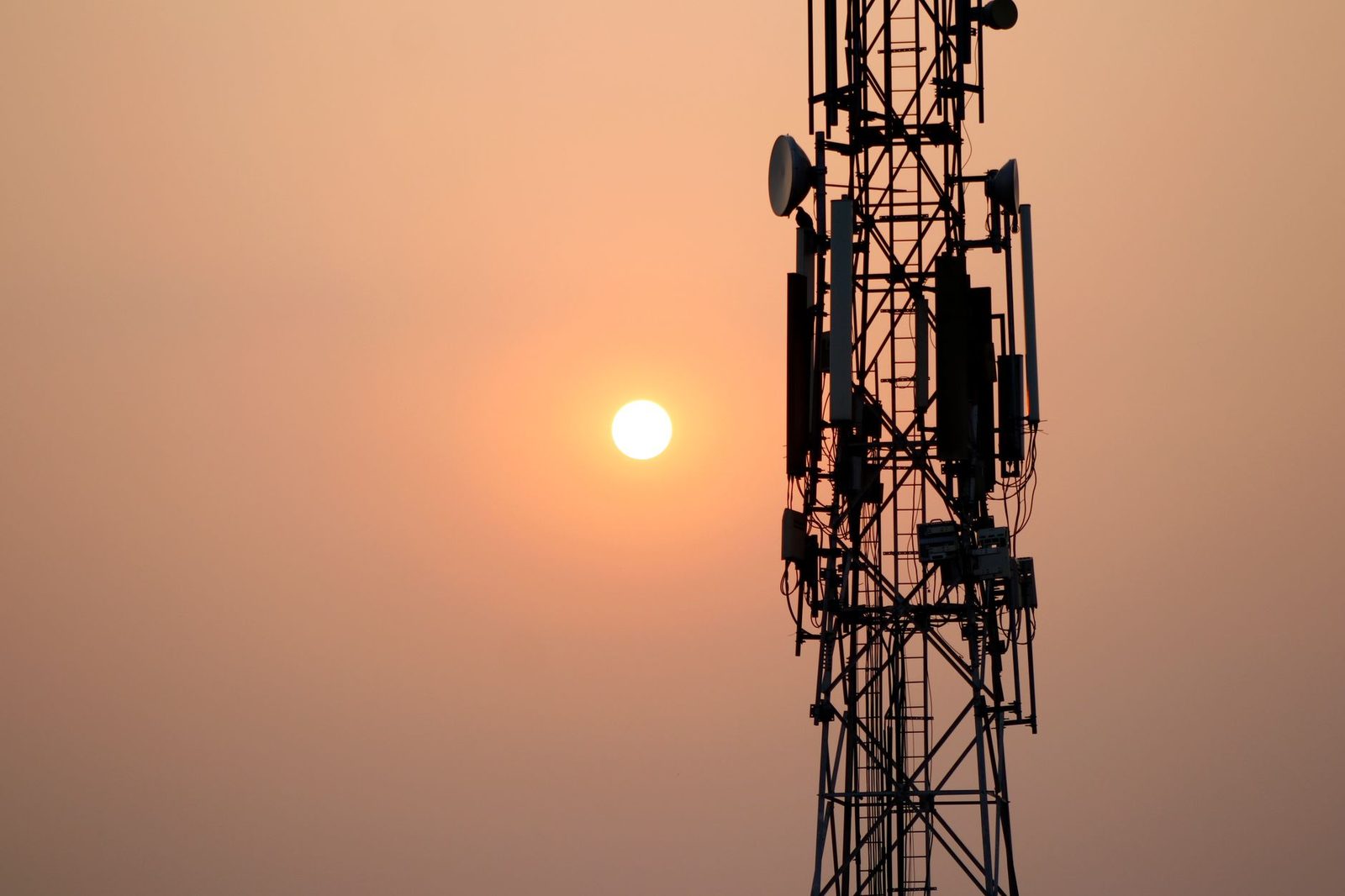
In parallel, Arcep has required operators to implement a calling number authentication mechanism (the "MAN"), designed to cut off calls whose displayed number has been spoofed. As a result, fraudulent calls showing a fake 01 or fake 06 number are being filtered out on a massive scale. But cold callers have adapted, notably by switching to genuinely allocated mobile numbers.
The practical steps to put in place
- Register the number with Bloctel as soon as the line is activated.
- Turn on the operator's call filtering: all four operators now offer an anti-spam voice service, often free, which flags or blocks calls reported as unwanted.
- Turn on the phone's built-in filtering: on both Android and iOS, an option lets you silence unknown callers. Use it with judgement (doctors, pharmacies and labs often call from unsaved numbers).
- Fill out the contacts list: the more legitimate contacts are saved, the more effective and readable the filtering becomes.
- Report fraudulent texts to 33700, the official reporting service for voice and SMS spam.
- Set one simple rule: "you never give out a code received by text over the phone, never, not even to someone who says they're the bank." This is the number one vector of banking fraud today.
A paper phone address book kept beside the landline remains, against all expectations, an excellent tool: it makes it possible to check at a glance whether an incoming number is legitimate, without handling the screen.
Useful reminder: no operator, no bank and no public service ever asks for a confirmation code over the phone. Cybermalveillance.gouv.fr and the Signal Conso platform (DGCCRF) allow abuses to be reported.
Step 5: keeping watch without watching over
The final layer of the set-up consists of keeping an eye on the line without turning the relationship into constant surveillance.
The bill as a warning signal
A bill that suddenly rises always tells you something: calls to premium-rate numbers, a subscription taken out via SMS+ (billed through the operator), an add-on slipped in by a cold caller. Get into the habit of reviewing the monthly itemisation. In the case of an unwanted SMS+ service, the site infoconso-multimedia.fr lets you identify the publisher behind a short code and request cancellation.
Everyday comfort, often the deciding factor
Many elderly people give up on mobile phones not because they reject technology, but because of physical discomfort:
- Hearing: check compatibility with hearing aids (the M/T rating on the spec sheet). Noise-cancelling headphones or, better still, a telephone sound amplifier can transform the calling experience.
- Battery: a flat device is a useless device. A cradle charging dock avoids handling a cable, a difficult gesture with arthritis. A spare power bank in the bag remains useful for long outings.
- Readability: increase the font size in the accessibility settings and turn on high contrast. It's free and it changes everything.
- Loss: a Bluetooth tracker attached to the keyring or slipped into the case cuts down on everyday panics — provided a relative has the app on their own phone.
The right level of autonomy
The aim is never to take control away from the person. The CNIL's recommendations on geolocation devices for vulnerable people insist on one point: the consent of the person concerned remains the principle, including when the intention is benevolent. A device that is imposed is a device quietly switched off, then abandoned.
In summary: the caregiver's checklist
- Coverage tested inside the home, room by room, not on a map
- VoWiFi enabled if there is a router
- Device explicitly VoLTE-compatible and approved by the operator
- Personal alarm or GPS watch: migration away from 2G confirmed by the provider
- Capped plan including blocking of premium-rate numbers
- Customer service reachable by phone, trusted third-party authorisation registered
- Bloctel registration + operator anti-spam filtering enabled
- Emergency contacts saved at the top of the contacts list
- Bill reviewed once a month
- Accessibility settings (font, contrast, volume) adjusted
The right set-up isn't the most sophisticated one: it's the one that works on the day a call has to be made. Spending two hours testing the network, checking VoLTE and blocking premium-rate charges is worth more than ten years on a badly chosen plan. And once everything is installed, the best test is still the simplest one: call, and see if they pick up.