


L'équipe Texto SMS Gratuit
13 August 2026 · 5 min read
Introduction: The 2030 Horizon and the Obsession with Speed
In the world of telecommunications, the renewal cycle is relentless. Barely has 5G stabilized its coverage across French territory before engineers and regulators turn their gaze toward the 2030 horizon. 6G is no longer mere laboratory speculation, but a strategic project for the digital sovereignty of France and Europe.
While for the average user, 4G+ or current 5G is more than enough to browse social networks or stream high-definition videos, tomorrow's industrial, medical, and technological needs require a quantum leap. We are no longer talking just about "downloading a movie faster," but about creating a near-total fusion between the physical and digital worlds.
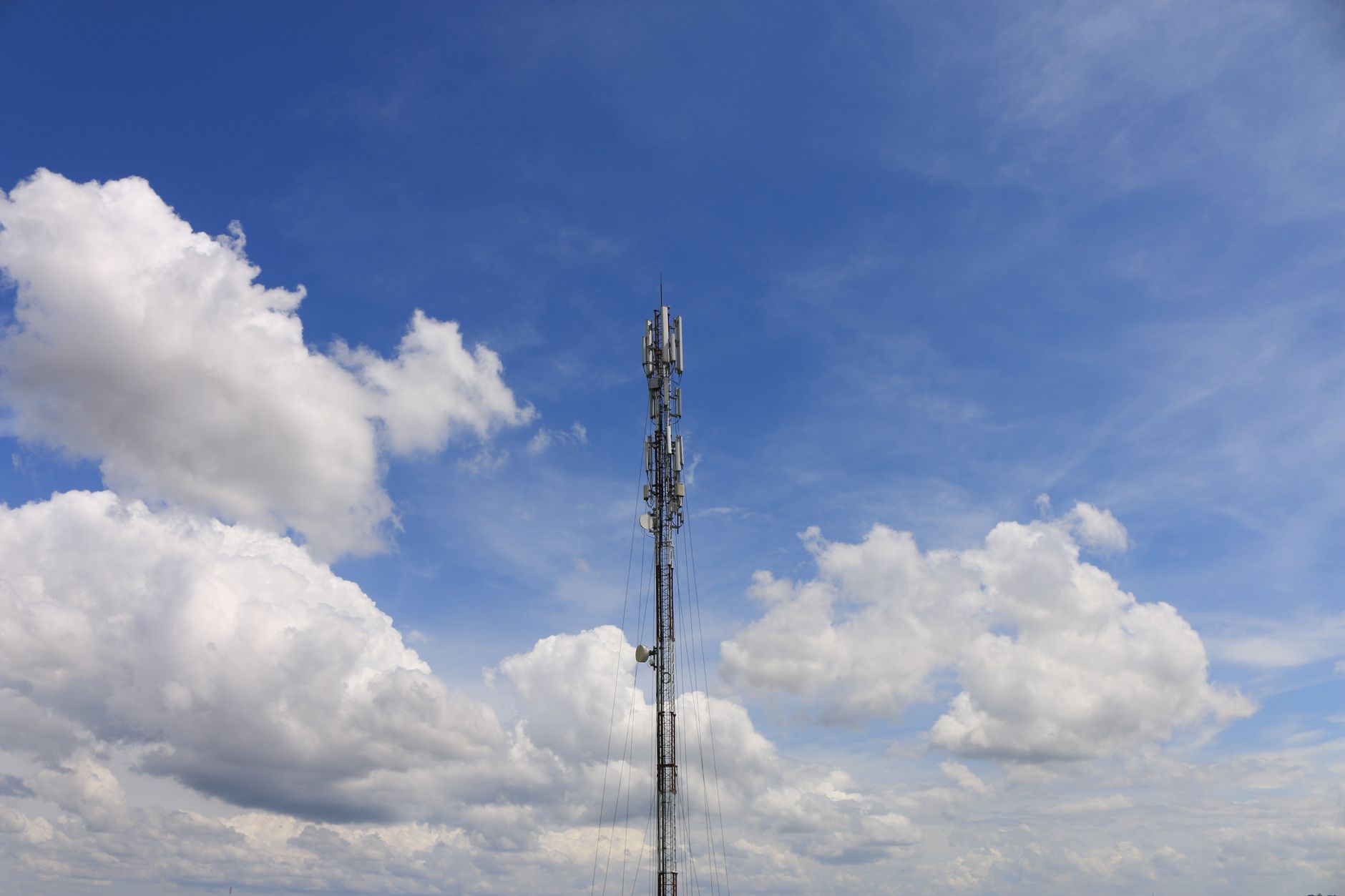
As French operators are already "on high alert," as highlighted by recent sector analyses, what will 6G actually change for us? Is it a simple marketing gadget or a major technological breakthrough?
What is 6G? Beyond Throughput
To understand 6G, one must first understand the limits of 5G. Although powerful, 5G has sometimes struggled to keep its initial promises in terms of mass deployment and real-world speed for the general public. 6G aims to correct these shortcomings while exploring frequencies that have never been used before.
Dazzling Speeds
Where 5G theoretically promised peaks of 20 Gbit/s, 6G targets speeds exceeding 1 Tbit/s (terabit per second). To put this into perspective, this would allow the download of massive volumes of data in a fraction of a second, making the very concept of "loading time" obsolete.
Near-Zero Latency
Latency is the delay between sending a command and the network's response. 6G aims for latency of less than a millisecond. This gain is crucial for critical applications:
- Remote Surgery: A surgeon can operate on a patient thousands of miles away without any perceptible lag.
- Autonomous Vehicles: Instantaneous communication between cars and urban infrastructure to avoid accidents in real-time.
- Industry 4.0: Controlling factory robots with millimeter precision.
AI Integration at the Core of the Network
Unlike previous generations, 6G will not just be a pipe for transporting data. It will be "AI-native." Artificial intelligence will dynamically manage network resource allocation, optimizing the signal based on user position and traffic load, thereby reducing the energy consumption of antennas.
Technical Challenges: The Terahertz Frequency Hurdle
To achieve such speeds, 6G must explore much higher frequencies than 5G, particularly in the Terahertz (THz) band. However, moving up in frequency brings major physical constraints.
The Range Problem
The higher the frequency, the shorter the signal range. Terahertz waves are extremely fragile: they can be blocked by a simple wall, a window, or even rain. This means that 6G cannot rely on a few large relay antennas spaced several kilometers apart.
Extreme Densification
The deployment of 6G will require an exponential multiplication of "micro-cells." We imagine access points integrated into street furniture, lampposts, and even building walls. To manage all this hardware, operators will need to invest heavily in even denser fiber optic infrastructure to connect these access points to the network core.

For professionals who already manage device fleets, the adoption of such technologies will require a complete hardware refresh. Using a high-performance 5G router can serve as a transition today, but 6G will mandate a new generation of chips and antennas.
The Role of Arcep and French Regulation
In France, Arcep (the Regulatory Authority for Electronic Communications, Posts and Press Distribution) plays a pivotal role. Its objective is twofold: to encourage innovation while preventing the cost of deployment from being abruptly passed on to consumers' bills.
Spectrum Management
One of the major challenges will be frequency allocation. Arcep will have to organize auctions to assign 6G frequency bands to operators (Orange, SFR, Bouygues, Free). The goal is to avoid monopolies while ensuring that operators have the financial means to invest in infrastructure.
The Challenge of Territorial Coverage
As seen with 4G and 5G, the risk is an widening of the digital divide. If 6G requires extreme densification, how can we guarantee that rural areas are not totally excluded? Arcep could impose minimum coverage obligations or favor hybrid solutions combining terrestrial 6G and satellite connectivity for the most isolated areas.
6G and Privacy: A New Battlefield
With 6G, the network becomes capable of "perceiving" its environment. Thanks to millimeter and Terahertz waves, the network could potentially be used for Sensing (detection). The network signal could serve as a radar to detect the presence, position, and even the movements of a person in a room, without a camera.
This is a formidable advancement for elderly care or security, but it is a potential nightmare for confidentiality. The issue of personal data protection will be at the center of legislative debates by 2030. Using a computer webcam cover is a simple solution today, but faced with a network capable of "seeing" via waves, protection solutions will need to become software-based and regulatory.
Conclusion: Should We Worry or Be Excited?
6G probably won't change how you send a text or browse the web tomorrow morning. However, it will lay the foundations of a society where connectivity is invisible, omnipresent, and instantaneous. It will transform medicine, industry, and perhaps even the way we interact with reality via ultra-light augmented reality glasses.
For operators, the challenge is colossal: investing billions of euros in a network whose general public utility remains to be proven, while managing the phase-out of old technologies like 2G. For us users, caution is advised: let's wait and see if the technical promise translates into a service that is accessible and respectful of our privacy.
In the meantime, to optimize your current devices and extend battery life against power-hungry networks, purchasing a high-capacity external battery remains the most pragmatic investment for any active mobile user.