
Sophie
9 November 2026 · 12 min read
You jot down the number of someone you met while travelling, and it starts with +1. You assume "United States", and your plan says texts to North America are included. Three weeks later, the bill shows an "international SMS, out of plan" line at a rate that bears no resemblance to that. Around twenty countries and territories share the +1 dialling code without sharing the same pricing, and the same phenomenon exists with +7, +44, +212 and +590. Your phone, for its part, displays no country name: it dials the digits it is given, and it is the network that decides where the message lands — and how much it costs.
Updated 9 November 2026.
Can several countries really have the same dialling code?
Yes. An international dialling code is not a country code in the geographical sense: it is a numbering zone code assigned by the International Telecommunication Union (ITU), and a single zone can bring together several sovereign states.
The global numbering plan is defined by Recommendation E.164 of the ITU, which publishes and updates the official list of dialling codes. Three mechanisms explain shared codes:
- Integrated numbering plans. Several countries pool a single dialling code and divide up the prefixes that follow. That is the case with +1, which covers the North American Numbering Plan: the United States, Canada, but also some twenty Caribbean territories.
- Political legacies. +7 was assigned to the USSR. It is today shared by Russia and Kazakhstan, two separate countries with two separate telecoms markets.
- Dependent territories. A département or overseas collectivity may use the dialling code of the country it belongs to, or conversely a code of its own that mainlanders know nothing about. The French West Indies use +590, +596 and +594; Réunion and Mayotte use +262.
The practical consequence is unpleasant: the prefix you see does not tell you which network the SMS will travel to, and therefore not how much it will cost.
Why +1 is the most expensive trap
Because the United States and Canada appear in almost every French plan that includes international texts, whereas the Caribbean is nearly always excluded — and the two are written exactly the same way.
Within the North American plan, the actual country is determined by the three digits that follow +1: the area code. Here are examples of area codes that correspond to neither the United States nor Canada:
| Number starting with | Actual destination | Usual status in French plans |
|---|---|---|
| +1 809 / +1 829 / +1 849 | Dominican Republic | Outside the North America zone |
| +1 876 | Jamaica | Outside the North America zone |
| +1 868 | Trinidad and Tobago | Outside the North America zone |
| +1 721 | Sint Maarten (Dutch side) | Outside the North America zone |
| +1 242 | Bahamas | Outside the North America zone |
| +1 340 | US Virgin Islands | Varies by operator |
| +1 787 / +1 939 | Puerto Rico | Varies by operator |
The entries in the right-hand column are indicative only: your operator's price list is the sole authority, and it changes. Orange, SFR, Bouygues Telecom and Free Mobile all publish a list of destinations by zone, available from your online account; it is the only document that binds the seller. Before sending a message you have doubts about, the useful habit is to look up the full number, area code included, in that list — not "United States".
The case of Puerto Rico and the US Virgin Islands deserves particular attention: they are American territories, but several French operators place them in a pricing zone separate from the continental United States. That is precisely the kind of discrepancy you only discover on the bill.
If you don't recognise the area code of a +1 number, assume by default that it is not included in your plan, and check before sending.
How do I know which country my SMS is actually going to?
You need to identify not the country code, but the full prefix, and then check it against your operator's price list. No phone does this work for you.
The method, in four steps:
- Get the number in full international format, with the
+and without any national leading 0. We covered the most common entry mistakes in our guide to the international format of a foreign number. - Isolate the country code, bearing in mind that it is 1, 2 or 3 digits long (+1, +33, +212, +590).
- For shared zones, note the digits that follow: the three digits of the area code for +1, the first digit after +7 (6 and 7 point to Kazakhstan; 3, 4, 8 and 9 to Russia).
- Look up that prefix in your operator's price list, under "calls and texts abroad". Compare it with the zone advertised by your plan.
For numbers written down by hand while travelling, a small pocket notebook avoids ambiguity when copying digits from a poorly lit screen: mistake a 1 for a 7 in an area code and the SMS heads off to a different jurisdiction.
What about shared dialling codes other than +1?
There are fewer of them, but they are just as treacherous — especially when they involve nearby destinations where you think you're on familiar ground.
- +7 — Russia and Kazakhstan. Two countries, two networks, two pricing schemes. A text to Almaty is not a text to Moscow as far as your operator is concerned.
- +44 — the United Kingdom, but not only. The Isle of Man (+44 1624, mobiles on 7624), Jersey (+44 1534, mobiles on 7797 among others) and Guernsey (+44 1481) use +44 while being Crown dependencies outside the European Union and outside the United Kingdom in pricing terms. Since Brexit, the United Kingdom has itself left the scope of the European roaming regulation, something we addressed in our article on roaming rules in Europe.
- +212 — Morocco and Western Sahara. Same dialling code, same operators, but sometimes specific billing practices on the French side depending on "Maghreb" offers.
- +599 — Caribbean Netherlands and Curaçao. The code was split after the dissolution of the Netherlands Antilles; Curaçao uses +5999, while Bonaire and the other islands use +599 7 or 9.
- +61 — Australia, Cocos Islands and Christmas Island. Australian territories, but classified separately by some operators.
- +39 — Italy and San Marino. San Marino also has +378; both are in circulation.
- +33 — mainland France only. The overseas collectivities have their own dialling codes (+590 Guadeloupe and French Saint Martin, +596 Martinique, +594 French Guiana, +262 Réunion and Mayotte, +687 New Caledonia, +689 French Polynesia). A text to Papeete is not a domestic text, even if the recipient is French.
This last point is the most widespread source of confusion. "Unlimited texts in France" means, in almost every plan, "mainland France". Texts to the French overseas départements and regions are included in a growing number of offers, but never by default: the inclusion must be stated explicitly in the offer's standardised information sheet, a document whose content is governed by Arcep (the French electronic communications regulator) — see Arcep — and by the code de la consommation (French Consumer Code).
Why doesn't my operator warn me?
Because a text message is handed over to the network without any prior negotiation: there is no stage at which the network asks you to confirm the price before sending, contrary to what certain calling habits might suggest.
Technically, the SMS is passed to your operator's message centre (SMSC), which routes it to the destination network and records a billing ticket. The price is applied afterwards, at billing time, based on the prefix dialled. No alert message is provided for in the protocol: there is neither confirmation nor any automatic cap specific to international texts.
The spending caps that do exist for roaming — the €50 excluding VAT data roaming alert set out in the European regulation — do not cover texts sent from France to a foreign number. For your line, this is a domestic operation: you are on the French network, you are simply contacting a distant destination. The mechanism is explained in detail in our feature on texts and data outside the European Union.
The only genuinely effective protection remains usage tracking in your online account, which reports out-of-plan charges with a delay ranging from a few hours to a few days depending on the operator.
What are the options for texting without pricing risk?
Three approaches, in increasing order of reliability.
1. Check, then send anyway. SMS remains the only method that reaches a phone without any app or data connection on the recipient's side. If the destination is outside your plan, the unit cost stays in the region of a few tens of cents with French operators — bearable for one message, heavy for a conversation.
2. Use a web-based SMS sending service. Sending from a browser lets you choose the destination explicitly, with a price shown before you confirm rather than discovered on the bill. That is the principle behind our online SMS sending service and its pricing list, which removes precisely this prefix ambiguity: the destination is named, not inferred.
3. Switch to a data messaging app. WhatsApp, Signal, Telegram and RCS ignore the question of pricing codes entirely, since the message travels over data. But they assume the recipient uses the same app — which is never guaranteed, as we showed regarding contacts who only have WhatsApp.
For travellers who want a local line rather than an international bill, a prepaid data eSIM remains the simplest solution in 2026, provided the phone is compatible and unlocked. A universal power adapter with USB-C ports belongs to the same basic kit, since checking a number in your online account takes both battery and signal.
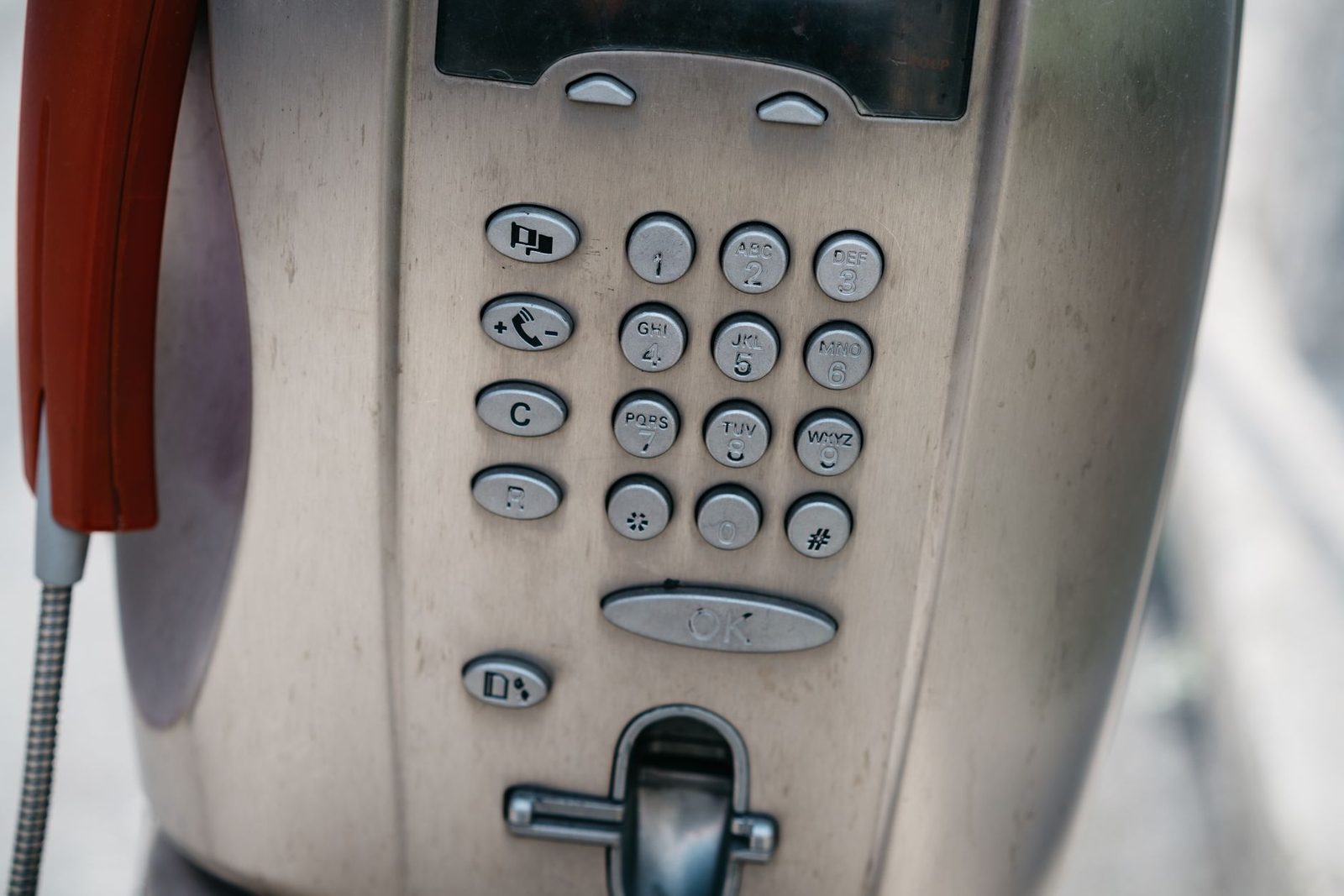
How to identify an unknown number before replying
The problem also arises in the other direction: a text arrives from a +1 868 or a +44 7797, and you don't know whether replying will cost you anything.
The rule is simple: replying to a text received from abroad is billed as a text sent abroad, at that destination's rate. The sender does not pay for your reply. We go into this point, and the case of premium-rate numbers, in our article on who pays when you reply to a text from abroad.
A few useful pointers:
- A +1 number followed by a Caribbean area code, in a message you weren't expecting, very often means cold calling or fraud. Reporting goes through 33700, the French number dedicated to unwanted texts.
- A country code you don't recognise can be checked in seconds on the ITU's official list or on an operator's page — never on a reverse directory site that monetises curiosity.
- A message asking you to call back an international number should be treated as suspicious by default, however plausible the pretext.
For business lines that receive a lot of foreign numbers, a card binder or a simple desk organiser for filing printed price lists saves looking the information up every time: zones rarely change from one year to the next, and a printed page is quicker to consult than an online account.
Key takeaways
| Situation | What to do |
|---|---|
| Unfamiliar +1 number | Read the area code, not just the +1 |
| +7 number | Check Russia or Kazakhstan based on the next digit |
| +44 number starting 1624, 1534, 1481 | Crown dependency, outside UK pricing |
| Text to French overseas territories | Check for the explicit mention in the offer sheet |
| Unsure about the zone | Look up the full prefix in your operator's price list |
A dialling code is a routing address, not a flag. As long as shared numbering plans exist — and the North American plan has no reason to split — the only reliable way to know where a text is going will be to read the digits all the way through, then check them against your own operator's price list. Our answers to the most common questions about texting abroad are gathered in the service FAQ.
Frequently asked questions
Does +1 mean the United States? Not necessarily. +1 covers the North American Numbering Plan, which includes the United States, Canada and around twenty Caribbean territories. Only the three-digit area code that follows the +1 identifies the actual country.
Is a text to Martinique or Réunion included in my plan? Not automatically. The overseas collectivities have their own dialling codes (+596, +262 and so on) and constitute a destination separate from mainland France. Inclusion must be set out in black and white in the offer's standardised information sheet.
How do I check the exact destination of a foreign number? By looking up the full prefix — country code plus the digits that follow — in the official list of dialling codes published by the ITU, and then in your operator's "texts abroad" price list.
Can my operator warn me before an out-of-plan text? No. No alert is provided before an international text is sent from France: billing happens afterwards. Usage tracking in your online account is the only visibility available.
Does replying to a text from a foreign number cost anything? Yes, at the rate of a text sent to that destination. Receiving is free in France, sending is not — and the rate that applies is that of the actual country, deduced from the full prefix.