

L'équipe Texto SMS Gratuit
21 August 2026 · 11 min read
Introduction: the invisible border that sends bills soaring
Since Roam like at Home came into force, an entire generation of travellers has settled into a comfortable habit: leave home with your phone, change nothing, and come back to find your plan untouched. It works perfectly from Lisbon to Helsinki. But there is an invisible border, rarely marked by anything more than a welcome text skimmed in passing: the one separating the "Europe and French overseas départements" zone from the rest of the world.
Beyond that line, the rules change radically. There is no European price cap any more, no wholesale rate framed by Brussels, no fair-use policy. There is a commercial contract between your French operator and a foreign one, and a pricing table that almost nobody consults before leaving. That is where three-figure bills are born — and sometimes worse.
In 2026, the DGCCRF and consumer associations still receive complaints every summer about non-EU roaming bills deemed incomprehensible. The problem is rarely a lack of information: it exists, and it is even sent by text on arrival. The problem is that it arrives too late, in a format that is far too dense, at a moment when the traveller is thinking about anything but a pricing table.
Where does your plan's "Europe" actually end?
First source of confusion: your operator's pricing zone matches neither the geography nor the political map of Europe.
The zone regulated by the European Union covers the 27 member states, plus — by agreement — Iceland, Norway and Liechtenstein (the European Economic Area). Most French operators voluntarily add the overseas départements and regions — Guadeloupe, Martinique, French Guiana, Réunion, Mayotte — to their "Europe and DOM" plans.
On the other hand, the following are not in that zone, contrary to what many people assume:
- The United Kingdom, now outside the EU: depending on the operator and the plan, it is sometimes brought back in commercially, sometimes billed as out of zone. It's the number one trap for trips to London.
- Switzerland and Andorra, outside the EEA, often billed separately despite their geographic position.
- Turkey, whose European portion makes no difference to billing.
- The overseas collectivities: French Polynesia, New Caledonia, Wallis and Futuna, Saint-Pierre-et-Miquelon are billed as international.
- Nearby enclaves: Monaco is generally treated separately, as are certain micro-states.
Simple rule: paying in euros or speaking French doesn't mean you're in your plan's Europe zone.
Each operator then carves the rest of the world into numbered zones (Zone 1, Zone 2, Zone 3…) or country groups. These divisions are not standardised: Morocco may sit in an intermediate zone with one operator and a far-flung zone with another. The only reliable source remains your operator's "calls, texts and data from abroad" price sheet, available on its website and in its app.
What a text or a megabyte really costs outside the EU
The orders of magnitude in 2026 remain stable — and brutal. Without a subscribed add-on, a French customer abroad outside the Europe zone is generally billed:
| Usage | Common range outside the EU |
|---|---|
| Text sent | €0.20 to €0.80 each |
| Text received | Free in the vast majority of cases |
| Call made to France | €1 to €3 per minute |
| Call received | €0.50 to €2.50 per minute |
| Mobile data | €5 to €15 per megabyte |
| Data in maritime / airborne zones | Up to €20 per megabyte, or more |
The figure to remember is the data one. At €10 per megabyte, a single automatic 50 MB app update costs €500. A thirty-second video sent over a messaging app can top €100. That is why French regulation has long imposed a safety cap on data abroad, generally set at around €50 excluding tax (roughly €60 including tax), beyond which the connection is cut until the customer confirms they wish to continue.
That cap is genuine protection, but it has two major blind spots. First, it applies only to data: premium-rate calls and texts are not capped. Second, some customers switch it off once, during an earlier trip, and forget to switch it back on. It's wise to check its status in your online account before every departure.
The three traps that drain a plan without you noticing
1. Maritime and airborne networks
This is by far the costliest scenario. On board a ferry, a cruise ship or an equipped aircraft, your phone may latch onto an onboard satellite network with identifiers such as MaritimeComms, OnMarine, AeroMobile or WMS. These networks fall under no standard roaming agreement and escape European regulatory caps.
Rates regularly reach several euros per minute of calling and several tens of euros for a few megabytes. The trap is especially vicious in the Mediterranean or the Channel: a phone that loses the terrestrial network switches automatically to the ship's network, sometimes just a few kilometres off the French coast.
2. Cross-border spillover
In border areas, radio waves ignore customs posts. Staying in Menton can flip a phone onto a Monegasque network; camping in the Pyrénées-Orientales can hook it up to an Andorran operator. The smartphone favours the strongest signal, not the cheapest.
3. Voicemail and call forwarding
An incoming call abroad that you don't answer is forwarded to your voicemail: that forwarding is an international call, and it is billed. Then listening to the message from abroad generates a second billed call. Two unwanted voicemails can therefore cost more than a night out at a restaurant.
Getting ready to leave: the ten-minute checklist
Most of the work happens before boarding, not on arrival. Here's the sequence to run through the day before you go.
1. Check the price sheet for your destination country. It gives the exact price of a text, a minute and a megabyte. Five minutes of reading that determine your whole strategy.
2. Check or activate the data cap. In your online account, under "options abroad" or "blocking out-of-plan usage".
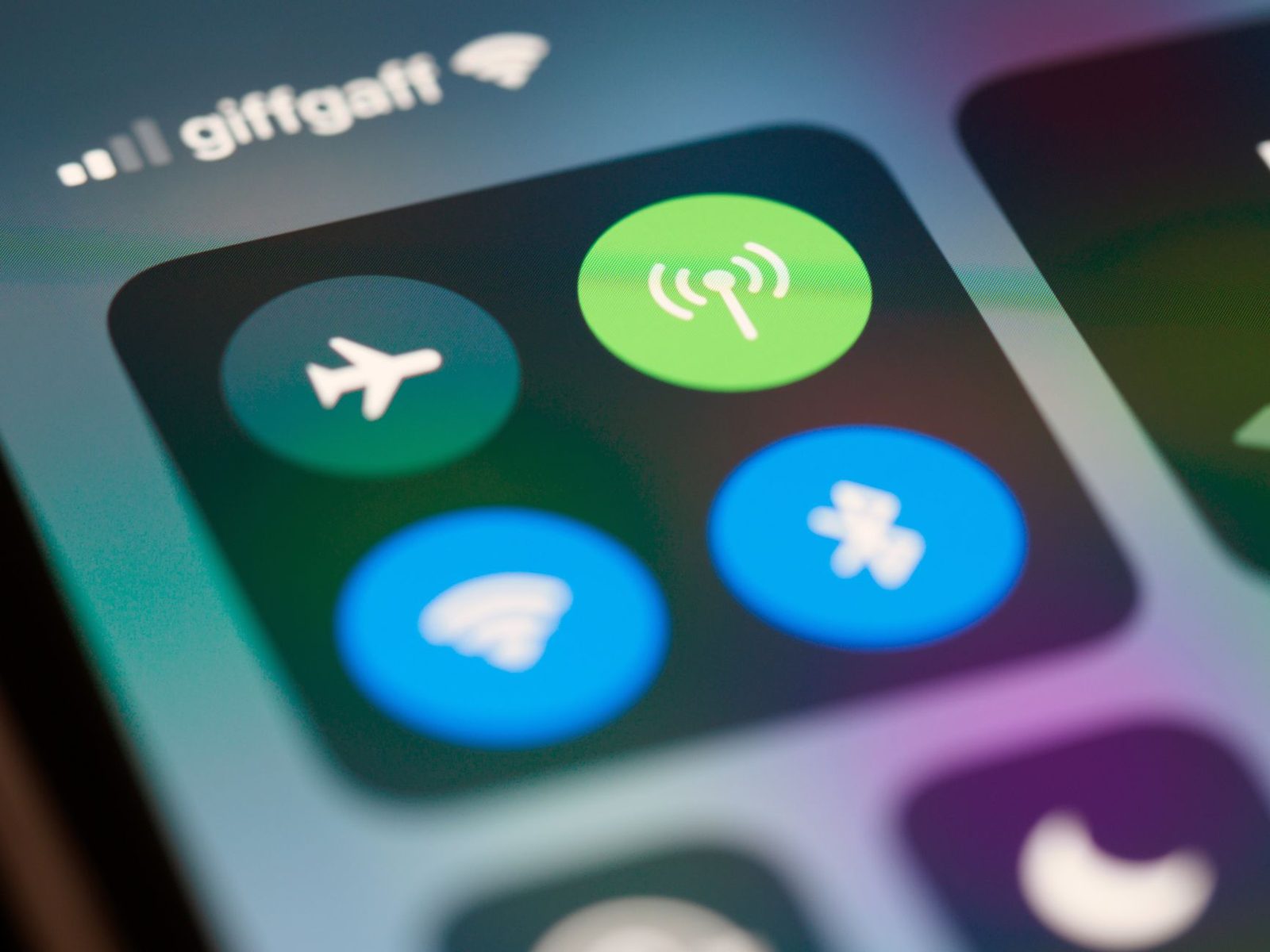
3. Turn off data roaming. On Android as on iOS, the option sits in the mobile connection settings. It's the single most effective step on this list. Once it's off, the phone stays reachable for calls and texts but doesn't use a single byte without your consent.
4. Turn off automatic updates and photo syncing. Cloud backups, app updates and photo library syncing are the three main silent consumers.
5. Disable forwarding to voicemail, or at the very least warn family and friends that you won't be listening to voice messages.
6. Download whatever needs downloading before you leave: offline maps, playlists, travel documents, flight tickets, guides.
7. Plan a local connectivity solution. That's the subject of the next section.
One practical point comes up constantly on the ground: battery life. A phone permanently hunting for a foreign network drains far faster than it does at home. A 20,000 mAh USB-C power bank is probably the most cost-effective travel accessory there is, especially during long layovers or full days away from your accommodation.
Local eSIM, prepaid card, operator add-on: which to choose?
Three strategies coexist, and the right choice depends mostly on duration and destination.
Your operator's "international pass"
The four French operators offer temporary bundles, often priced between €10 and €40 for a few days or a few gigabytes outside Europe. It's the simplest option: nothing to install, your French number retained, calls included in some cases.
- Advantage: zero technical fiddling, clear billing.
- Drawback: the per-gigabyte price remains high compared with local offers.
The travel eSIM
This has been the quiet revolution of the past five years. A data eSIM bought online activates in a few minutes, even before departure, and provides a local bundle at a price often ten times lower than the operator add-on. Recent smartphones handle dual profiles: the French line stays active to receive texts and calls, while the eSIM handles data.
One caveat, though: most travel eSIMs are data only. They don't provide a local number and can't send standard texts. To send a text message to a French number from the other side of the world without extra charges, you then have to go through an internet messaging app — or an online SMS-sending service over a Wi-Fi connection, which remains the cheapest option when you just need to let someone know you've arrived.
Do make absolutely sure your device is eSIM-compatible and unlocked. On older models, or when travelling as a group, a portable 4G Wi-Fi router takes a local SIM card and shares the connection across several devices — often cheaper than one plan per person.
The local prepaid SIM
Bought at the airport or in a shop on arrival, it generally offers the best price-to-volume ratio, along with a local number that's handy for booking a taxi or accommodation. The trade-off: sometimes lengthy ID formalities, the language barrier, and the temporary loss of your French number if you only have one SIM slot. A small SIM card organiser with an ejector tool saves you from the classic mishap of a tiny SIM tray lost in a hotel room.
Security: texts remain a critical link abroad
Cutting off all connectivity has a downside that's rarely discussed: most French banking services still send their verification codes by text. And while receiving a text is free in the vast majority of cases, the phone still needs to be attached to a network.
Three concrete recommendations:
- Keep the French line active even with data switched off. The bank's confirmation text will get through.
- Move your sensitive accounts to an authentication app or to your bank's in-app validation before you leave: these methods work over Wi-Fi.
- Be wary of public airport and hotel Wi-Fi. They're a favourite playground for interception. For sensitive activity, prefer tethering from your own eSIM.
Smishing follows travellers, too. Every summer, reports to the 33700 platform — the official service for reporting spam texts and calls — rise, with messages claiming a "parcel held at customs", an "international plan reactivation" or a "tourist tax refund". The rule never changes: no operator and no public authority ever asks for bank details by text. If in doubt, forward the message to 33700 and delete it.
For long stays, a universal travel adapter with USB ports avoids another very real pitfall: a phone with a flat battery for want of a compatible socket is neither reachable nor usable as a payment method or an e-ticket.
Back home: reading your bill and disputing it if necessary
Roaming usage isn't always billed in the month of the trip. Foreign operators sometimes send their records several weeks late, which explains nasty surprises on the following bill.
If the amount looks abnormal:
- Ask your operator for an itemised breakdown: date, time, network used, volume. Any maritime networks will show up there.
- Check that the pricing information was compliant: your operator must have informed you of the applicable rates when you entered the country.
- Contact customer services, then the second-level customer service team by registered letter.
- Refer the matter to the electronic communications ombudsman, which can be done free of charge online after two months without a satisfactory reply.
- Report it to the DGCCRF via the SignalConso platform if you believe you were poorly informed.
In practice, operators regularly grant goodwill gestures on roaming bills that are clearly accidental, particularly where a maritime network is involved. But you do have to ask — calmly, and in writing.
What's changing by 2027
Two developments are worth watching. First, the spread of eSIMs and multiple profiles: it is gradually eroding the economics of non-EU roaming by giving travellers the power to choose their network in three taps. Second, direct satellite connectivity to smartphones — direct-to-device — on which Arcep is working in France as part of its spectrum consultations. In time, sending a text from a coverage blackspot in the desert or far out at sea could become entirely ordinary — with a pricing model that has yet to be written.
In the meantime, the best protection comes down to three actions: turn off data roaming, check the safety cap, and set up an eSIM before you leave. Ten minutes of settings beats a €300 bill.