

L'équipe Texto SMS Gratuit
25 August 2026 · 13 min read
Introduction: France's mobile mast paradox
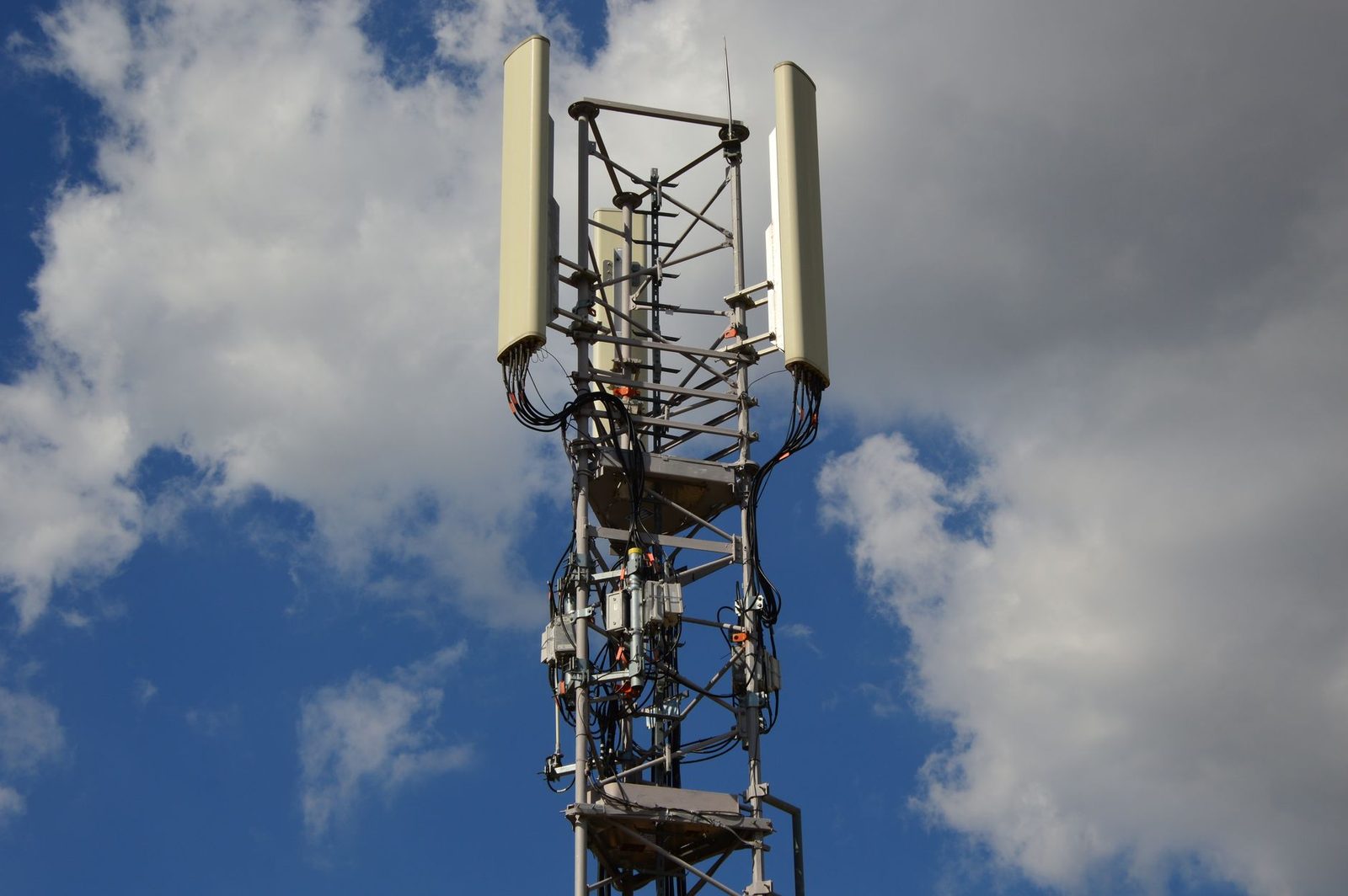
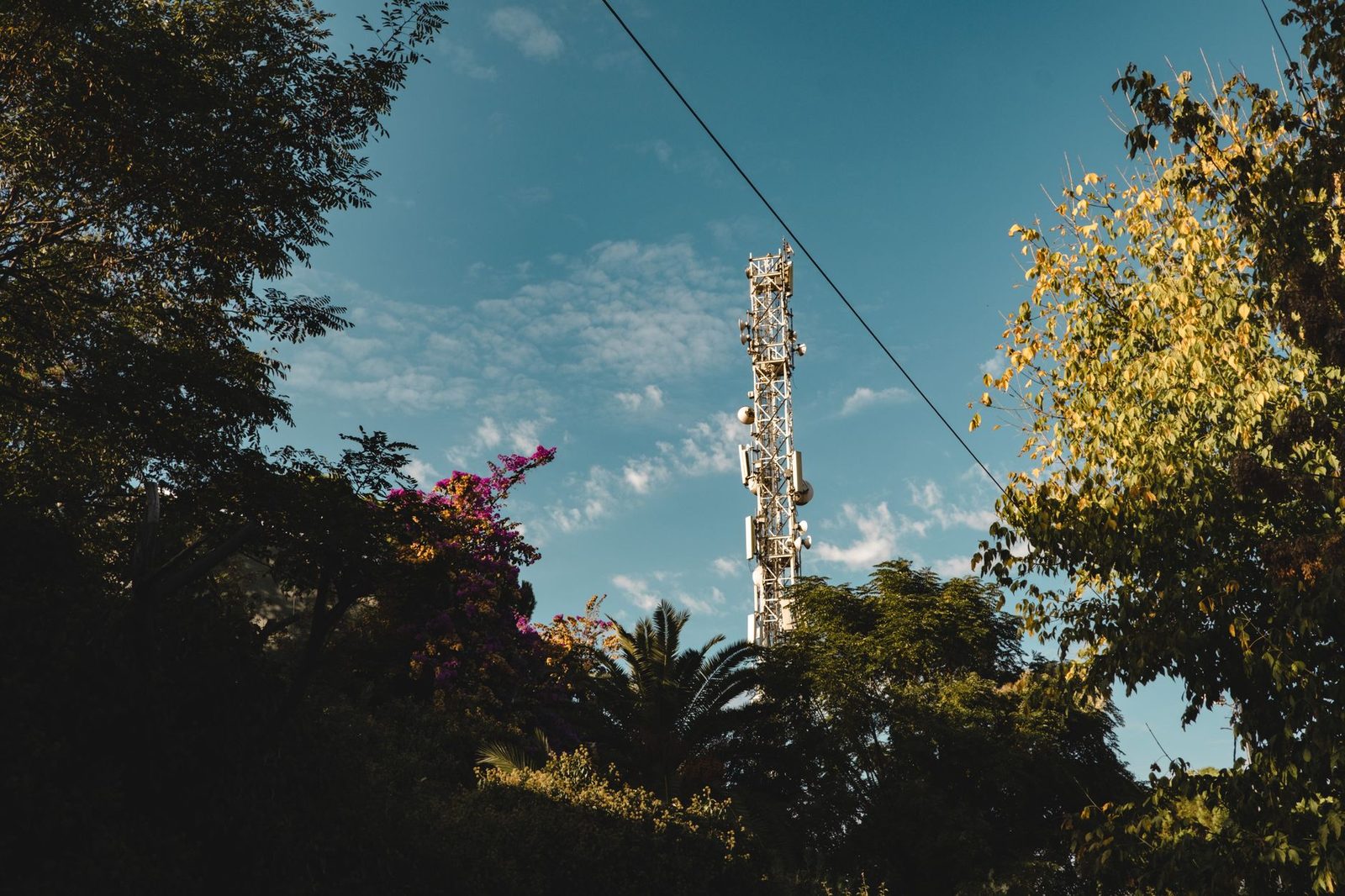
There is a contradiction that every local elected official knows by heart. In the same town, in the same week, the mayor receives two letters: one complains about not getting 4G at the far end of the village, the other firmly opposes the very mast intended to fix that coverage gap.
This paradox is not irrational at all. It reflects an information gap. Most local residents discover a mast project when the crane turns up, even though French law has provided for more than ten years a mechanism for advance notification — little known, under-used, but very real and enforceable.
In 2026, with the continued densification of 5G, the shutdown of 2G and 3G freeing up frequencies and forcing site reconfigurations, and the New Deal Mobile programme still producing masts in rural areas, the subject is back on the agenda in every inter-municipal authority. This report explains, point by point, what the regulations give you as rights, what they do not give you, and how to obtain real figures rather than impressions.
Who decides where a mast goes?
First essential clarification: it is not Arcep that puts up the masts, and nor is it the mayor who orders them.
The decision chain works like this:
- The operator (Orange, SFR, Bouygues Telecom, Free Mobile) identifies a coverage or capacity need, looks for a high point, and negotiates a lease with a private owner, a homeowners' association or a local authority.
- The ANFR (the national frequency agency) issues the installation approval on grounds of site protection and electromagnetic compatibility, and monitors compliance with exposure limit values.
- Arcep allocates the frequencies and sets coverage and quality-of-service obligations in the licences, but plays no part in the choice of a specific mast.
- The municipality processes the planning permission (usually a prior declaration, or a building permit above 12 metres in height) and receives the information file.
In other words: a mayor can refuse a mast on planning grounds (landscape integration, local planning rules, the perimeter of a historic monument), but not on health grounds. The Conseil d'État made this clear long ago: special policing powers over electronic communications belong to the State, not to the mayor. Municipal by-laws banning masts on the basis of the precautionary principle are systematically overturned.
This is a frequent disappointment for residents' action groups. It is worth knowing before launching a petition that will have no legal effect whatsoever.
The information file at the town hall: your real lever
The most useful mechanism is set out in the French Postal and Electronic Communications Code, introduced by the 2015 "Abeille" Act on limiting exposure to electromagnetic waves.
What the operator must provide
Before any new installation or substantial modification of a mast, the operator must send the mayor (or the head of the inter-municipal authority) an information file. This file includes in particular:
- a description of the project and its precise location;
- technical characteristics: frequencies used, power, azimuths, height;
- a simulation of exposure to electromagnetic fields generated by the installation;
- the identity of the operator and the contact details of the designated liaison person.
The mayor then has the option of making this file available to the public and gathering residents' comments. In practice, everything depends on the municipality's willingness: some publish everything on their website, others file the document away and take it no further.
How to access it in practice
Three ways in, to be used in this order:
- Ask the town hall for the information file relating to the site in question, specifying the address. A written request (email with acknowledgement of receipt) leaves a useful paper trail.
- Consult Cartoradio, the ANFR public service listing authorised radio sites and publishing the results of measurements already carried out. Each site has a record showing its operators and technologies.
- Check Arcep's deployment observatory, which publishes monthly the 4G and 5G sites commercially open by operator — useful for finding out whether the mast will carry one antenna or four.
One point often overlooked: site sharing. A single mast frequently hosts several operators. Challenging "the Orange antenna" makes little sense if the structure also carries SFR and Bouygues with separate files.
Exposure limit values: what are we talking about?
This is the heart of the debate, and it is where figures circulate most poorly.
The regulatory framework
The decree of 3 May 2002 transposes into French law the 1999 European recommendation, itself based on the guidelines of ICNIRP (the International Commission on Non-Ionizing Radiation Protection). The limit values depend on the frequency:
| Frequency band | Typical use | Limit value (V/m) |
|---|---|---|
| 900 MHz | Legacy GSM, 4G band 8 | 41 |
| 1,800 MHz | 4G band 3 | 58 |
| 2,100 MHz | 4G/5G band 1 | 61 |
| 2,600 MHz | 4G band 7 | 61 |
| 3.5 GHz | 5G band n78 | 61 |
These thresholds are designed to protect against the only established health effect of radiofrequencies: tissue heating. They incorporate a substantial safety factor relative to the level at which this effect appears.
What the ANFR measures in the field
Each year the ANFR publishes a summary of measurements carried out under the national monitoring scheme. The orders of magnitude observed bear no comparison with the limits:
- The vast majority of measurement points are below 1 V/m.
- Around 1% of points exceed 6 V/m, the so-called "atypical point" threshold that triggers a procedure to reduce exposure.
- The arrival of 5G in the 3.5 GHz band produced a measurable but modest rise in average exposure, a very long way from alarmist projections.
If you want hard facts about your own situation rather than a collection of screenshots from forums, an ordinary consumer electromagnetic field tester gives an order of magnitude — with one important caveat: these devices are rarely calibrated and their bandwidth does not always cover 3.5 GHz. They are useful for comparing one room with another, not for challenging a regulatory value.
Requesting an official, free measurement
This is the most concrete right, and the most under-used part of the French system.
The principle
Since 2014, anyone can request a measurement of wave exposure in a place open to the public or in a dwelling. The measurement is carried out by a COFRAC-accredited laboratory, independent of the operators, and funded by a public fund financed through a levy on operators. It costs the applicant nothing.
The procedure, step by step
- Download the Cerfa form no. 15003 requesting a measurement from the ANFR website.
- Have it signed by an authorised body: the municipality, an approved environmental protection association, a regional health agency, a federation of family associations, a social landlord, and so on. A private individual cannot trigger the measurement alone — they must go through one of these intermediaries, the town hall being the simplest.
- Send the form to the ANFR, which appoints a laboratory.
- The laboratory arranges an appointment, carries out the measurement according to the standardised protocol, and delivers the report.
- The report is published on Cartoradio, so it is enforceable and available for anyone to consult.
The observed lead time ranges from a few weeks to a few months depending on workload. The report breaks exposure down by frequency band and by technology, which makes it possible to distinguish what comes from the outdoor mast from what comes from your own Wi-Fi router.
What health research says in 2026
The subject deserves to be handled without either complacency or doom-mongering.
Institutional positions
- ANSES (the French agency for food, environmental and occupational health safety) has published several assessments of 5G and radiofrequencies. Its consistent conclusion: to date, no proven health effect has been demonstrated at the exposure levels found in France, while stressing the need for further research, particularly on the 26 GHz band, which is still barely deployed.
- The IARC (International Agency for Research on Cancer, WHO) classifies radiofrequency fields in category 2B — "possibly carcinogenic to humans". This classification reflects limited evidence, based on studies of intensive phone use held against the ear, not on environmental exposure to masts.
- The WHO published a systematic review in 2024 finding no established association between exposure to transmitters and cancers.
The counter-intuitive point: a distant mast means more exposure
Here is the reasoning that most opponents overlook, and yet it is central:
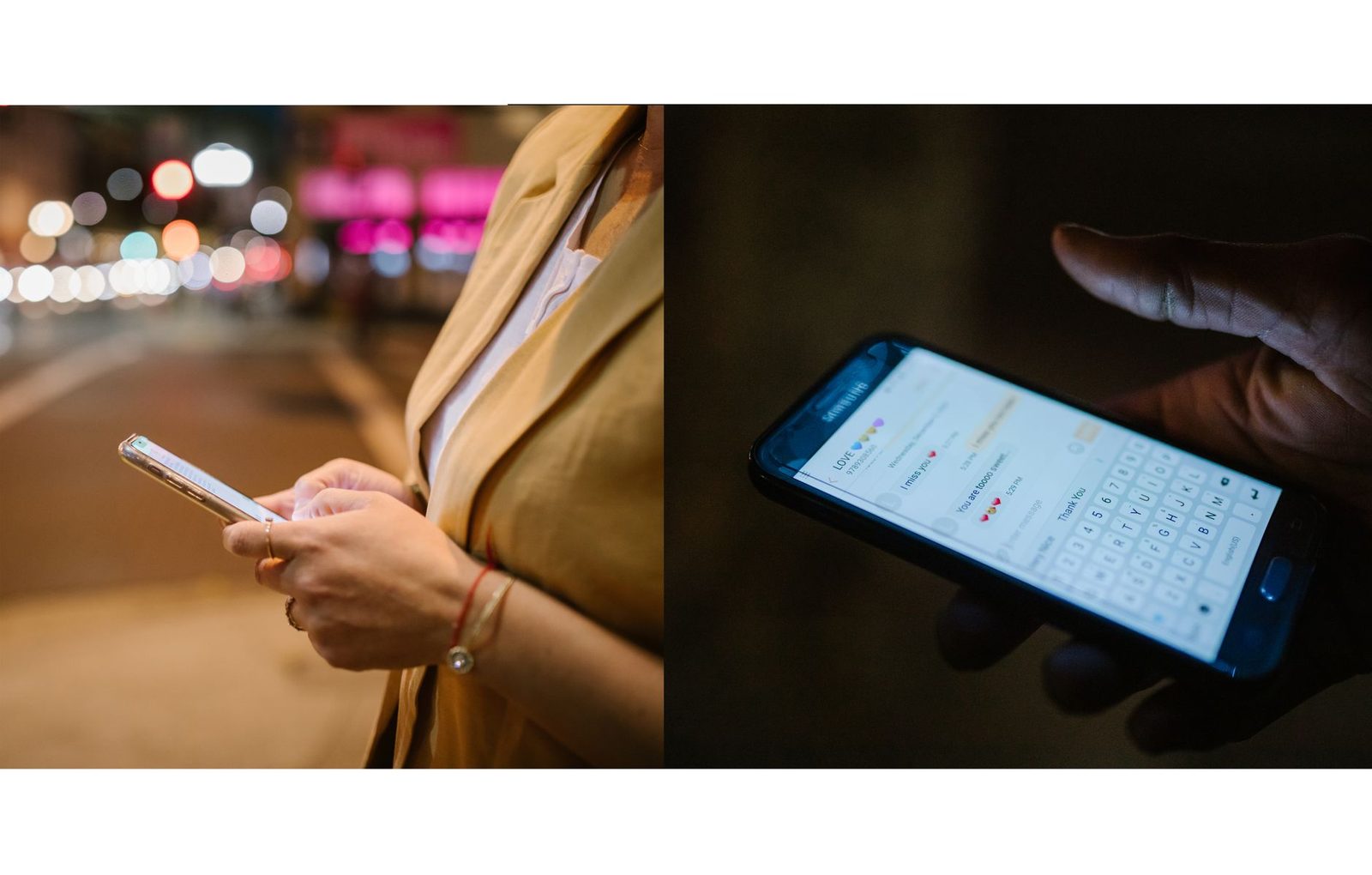
Your personal exposure comes 90% from your own phone, not from the masts in the neighbourhood. And your phone transmits all the more strongly the further it is from a mast.
Closed-loop power control means that a mobile in the middle of a city, close to a radio site, transmits a few milliwatts. The same mobile in a poorly covered area ramps up to its maximum regulatory power, two to three orders of magnitude higher. Moving masts away from a neighbourhood therefore mechanically increases residents' actual exposure — as well as draining their batteries.
That is why health authorities recommend, as a priority, moderate usage habits rather than a hunt for masts:
- prefer texts and messaging apps to long calls;
- use a wired hands-free kit to keep the device away from your head;
- avoid making calls in areas with poor reception (lifts, underground car parks, moving trains);
- don't sleep with your phone under your pillow.
For those who want to reduce night-time exposure in a bedroom, a mechanical timer for your internet router switching off Wi-Fi at night is a simple solution, with no effect on mobile coverage but which addresses a common concern.
SAR, the indicator you can actually choose
Since most exposure comes from the handset, you may as well look at the right figure: the SAR (specific absorption rate), expressed in W/kg.
France requires three values to be displayed:
| Type of SAR | Measurement condition | Regulatory limit |
|---|---|---|
| Head SAR | Phone held to the ear | 2 W/kg |
| Trunk SAR | In a pocket, against the body | 2 W/kg |
| Limb SAR | Held in the hand, against a leg | 4 W/kg |
Each year the ANFR checks several dozen models sold in France and has those that exceed the limits withdrawn or updated. The results are public. When choosing a device, comparing the stated SAR values is a free and concrete step: between two equivalent models, the gap can be threefold.
It is also worth noting that a low-SAR smartphone does not mean a low-end smartphone: several recent models post very low values thanks to better antenna design. Conversely, beware of accessories sold as "anti-wave" products (patches, stones, shielded cases): the ANFR has shown on several occasions that a blocking case can increase the phone's emissions, as it compensates by ramping up its power.
The special case of apartment buildings
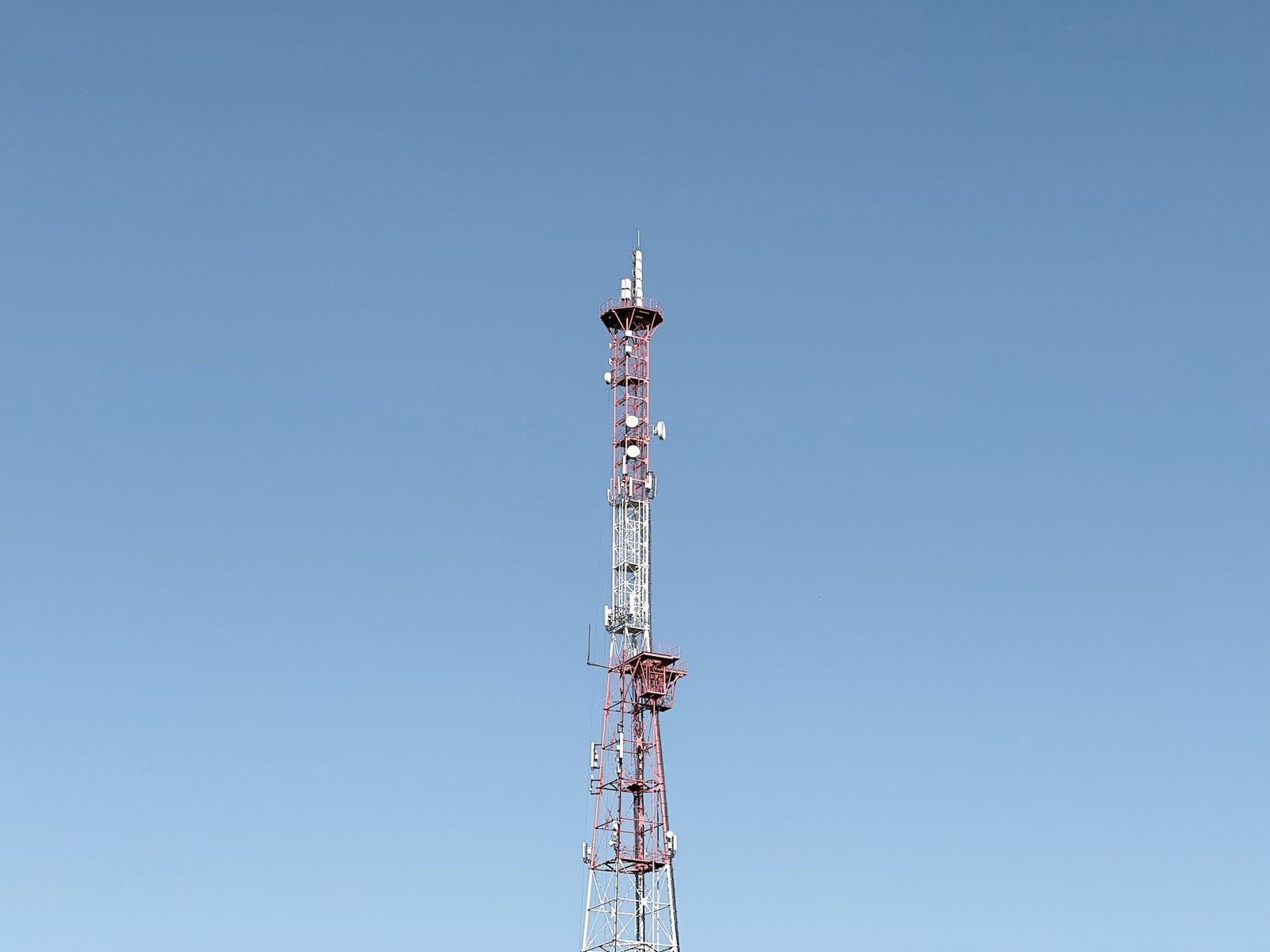
Many urban masts are installed on rooftops, in return for rent paid to the homeowners' association. A few useful rules:
- The decision to host a mast rests with the general meeting, by the majority required under the Act of 10 July 1965 for acts of disposal over common areas.
- The lease is generally concluded for twelve years with tacit renewal, and includes tightly framed termination clauses: you cannot make a mast disappear overnight.
- Opposing co-owners must challenge the resolution within two months of being notified of the minutes. After that deadline, the decision becomes final.
- A top-floor co-owner can request an ANFR measurement, like any occupant.
If you live under a roof fitted with antennas, the geometry works in your favour: antennas radiate horizontally, with strong attenuation in the downward vertical axis. Measurements regularly show lower levels in the flat directly beneath the antennas than in the building across the street.
What to do, in practice, depending on your situation
You have just found out about a mast project
- Ask the town hall for the information file, in writing.
- Check on Cartoradio whether the site already exists and whether it has been measured.
- Look at the posted planning permission: the deadline for a legal challenge is two months from the date it is displayed on site.
- If you object, base your case on planning grounds (height, integration, visibility alongside a monument), which are the only effective ones.
The mast is already in service
- Have a free ANFR measurement carried out via the town hall.
- Compare the result with the limit values in the table above and with the 6 V/m atypical-point threshold.
- If the threshold is exceeded, the ANFR refers the matter to the operator, which must bring exposure back below the limit within six months.
What you really want is better reception
That is often the real need behind the complaint. Three effective options:
- turn on Wi-Fi calling (VoWiFi), available with all French operators, which solves most indoor problems;
- check the actual coverage at your address on monreseaumobile.arcep.fr before switching operator;
- in large houses or basements, a mesh Wi-Fi extender improves VoWiFi far more reliably than a mobile signal booster — remember that non-approved GSM repeaters are banned in France for private individuals, on pain of a fine, because they interfere with the network.
Conclusion: information beats confrontation
French regulation of mobile phone masts is among the most comprehensive in Europe: mandatory advance notification, limit values transposed from ICNIRP, a free measurement scheme funded by operators but entrusted to accredited laboratories, an atypical-point threshold triggering an obligation to reduce exposure, and open publication of results on Cartoradio.
It does not give local residents a health-based right of veto, and it is only honest to say so upfront. What it does give is a right to hard, free and independent evidence. In almost every case, that measurement puts an end to the conflict: the recorded levels are so far below the thresholds that the discussion shifts to the real question — landscape integration and dialogue with the operator.
And for those genuinely wishing to reduce their exposure to radiofrequencies, the agencies' conclusion has been consistent for twenty years: the lever is in your pocket, not on the roof across the street.
Sources and useful resources
- ANFR — Cartoradio, Cerfa form 15003, annual measurement reports and SAR checks.
- ANSES — assessments of exposure to radiofrequencies and 5G.
- Arcep — mobile deployment observatory, monreseaumobile.arcep.fr platform.
- WHO / IARC — 2B classification of radiofrequency fields and systematic reviews.
- French Postal and Electronic Communications Code — provisions arising from Act no. 2015-136 of 9 February 2015.