



The Texto SMS Gratuit team
26 July 2026 · 7 min read
On 20 July 2026, Arcep published a public consultation on the future of frequency authorisations in the L-band (1518-1559 MHz, 1610-1660.5 MHz, 1670-1675 MHz, 2483.5-2500 MHz) for the Mobile Satellite Service (MSS). The stakes, low-key but strategic, are about preparing the arrival in France of Direct-to-Device (D2D): the ability, for an ordinary smartphone, to exchange SMS and data directly with a satellite, with no dedicated antenna or hardware. For a service like Texto SMS Gratuit, which relies on the reliability of short message delivery, this consultation is drawing the regulatory outlines of the next decade.
Why the L-band is back on the table
The L-band is historically assigned to mobile satellite operators such as Inmarsat, Thuraya, Iridium Italia and Globalstar: networks used for maritime transport, aeronautics, humanitarian missions, or terrestrial white zones. The current authorisations expire on a scattered schedule — by 2027 for some, up to 2030 for others — and Arcep proposes to realign all deadlines on 22 November 2030 to prepare a global reassignment.
Why now? Because the L-band is now identified, in the international work of the ITU, as a reference band for Direct-to-Device and for IoT via satellite, through the 3GPP NTN standards (Non-Terrestrial Networks, broken down into NTN-NR for 5G and NTN-IoT for low-throughput objects). In other words: what was a niche market — a few thousand satellite terminals — could become a mass market, provided regulation keeps up.
| Frequency band | Current use | Current expiry | Target expiry |
|---|---|---|---|
| 1518-1559 MHz | MSS uplink (Earth → space) | 2027-2029 | 22 November 2030 |
| 1610-1660.5 MHz | MSS downlink (space → Earth) | 2027-2029 | 22 November 2030 |
| 1670-1675 MHz | MSS / meteorological satellite | 2028 | 22 November 2030 |
| 2483.5-2500 MHz | MSS / IMT (mobile) | 2029 | 22 November 2030 |
What is Direct-to-Device (D2D)?
D2D is the promise of letting a standard smartphone — with no hardware modification — communicate directly with a satellite. For a user, this means that an SMS sent from a terrestrial white zone (a mountain hamlet, a Cévennes canyon, a stretch of railway with no coverage) could still go through, provided a satellite is visible above the horizon. The service is not a replacement for 4G or 5G for data-intensive use, but it opens a safety net for lightweight uses: SMS, instant messaging in degraded mode, safety alerts.
The pioneering offer in France is Orange Message Satellite, launched on 11 December 2025 in partnership with Skylo, on compatible smartphones (iPhone 14 and newer, Pixel 9 and newer, some Samsung Galaxy S24/S25). Other European operators are testing equivalent solutions, relying either on geostationary satellites (like Skylo) or on low-Earth orbit constellations (like Starlink Direct-to-Cell, currently being rolled out in the United States via T-Mobile).

Photo: Unsplash — when the smartphone talks directly to a satellite, mobile coverage leaves the SIM card behind.
What the Arcep consultation actually says
The document published on 20 July puts four structuring questions to stakeholders, with contributions open until 30 September 2026 at 6:00 p.m.:
- Should the number of authorisations in the L-band be limited to ensure a rational use of frequencies, in a context where the number of satellites in low orbit is exploding?
- What duration for the new authorisations? Arcep is considering 5 to 10 years, with a controlled extension mechanism for current holders who need to amortise their already-deployed constellations.
- What conditions of use for the new D2D services? Spectrum sharing with existing services, coexistence with terrestrial mobile operators, coverage obligations (white zones, emergency services, civil security).
- What role for non-holder players (Starlink, Amazon's Project Kuiper, European constellation operators like Eutelsat-OneWeb) that do not yet hold an MSS authorisation in France but are pushing to obtain one?
In its consultation, Arcep also reminds stakeholders that the L-band is adjacent to frequencies used by meteorological radars (1670-1675 MHz) and by the aeronautical mobile service (R): it is therefore necessary to ensure that future MSS authorisations do not create harmful interference.
The players involved
Four historical holders currently share the L-band in France. Inmarsat (now part of Viasat) operates geostationary satellites for maritime, aeronautical and government services. Thuraya, an Emirati brand, targets Africa, the Middle East and Asia with handheld terminals. Iridium Italia runs the Iridium constellation (66 satellites in low orbit) for global satellite telephony, including pagers and global IoT. Globalstar, finally, provides the SPOT service for location tracking and SOS in isolated areas.
Alongside these historical players are eagerly awaited new entrants: Starlink (SpaceX), whose constellation already counts more than 7,000 satellites in low orbit and is pushing for a Direct-to-Cell service in Europe; Amazon Kuiper, which is starting to deploy its first satellites in 2026; and Eutelsat-OneWeb, which operates a constellation of 650 satellites in low orbit and has filed a dossier with Arcep to obtain a D2D framework.
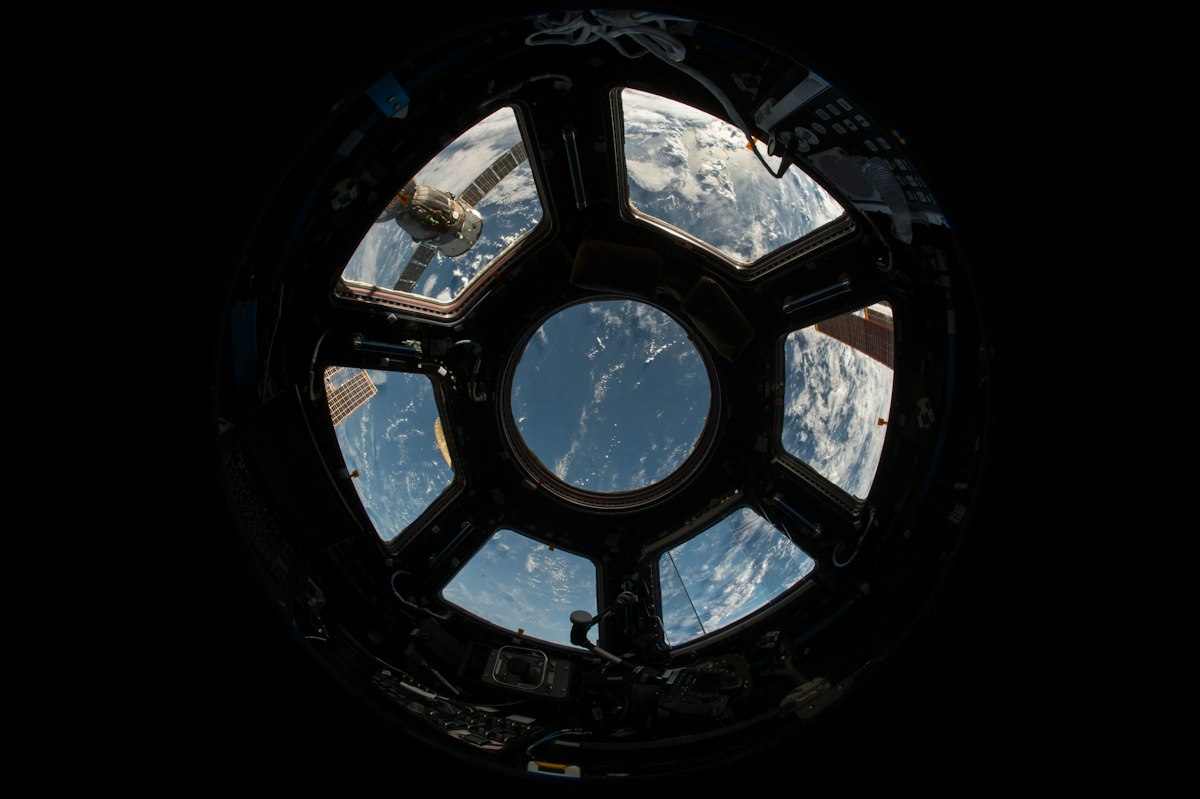
Photo: Unsplash — low-orbit constellations are changing the game for mobile coverage in white zones.
What it changes for users
In the short term, nothing changes: the current authorisations remain valid until their realignment in 2030. But three concrete developments can be anticipated.
First, D2D-compatible smartphones will become mainstream. The 3GPP Release 17 stabilised the NTN architecture in 2022, and Release 19 (published mid-2025) extended compatibility to more bands and modulations. By 2027-2028, the bulk of the high-end handset range will natively support D2D.
Second, white zones will become fallback zones, no longer just exclusion zones. A hiker lost in the Pyrenees, a sailor in the Mediterranean, a farmer in a rural area with no 4G coverage: all will, in time, be able to send an emergency SMS even without a mobile network. This is a major evolution for civil security, and Arcep has understood this well: the consultation explicitly mentions the role of D2D in sending FR-Alert messages, the SMS cell-broadcast warning system we detailed in our article on FR-Alert and cell-broadcast in France.
Third, traditional operators will have to deal with these new entrants. Orange, SFR, Bouygues Telecom and Free Mobile have built their economic model on spectrum scarcity and territorial coverage. D2D, by relying on global satellite constellations, dilutes that scarcity: a customer who no longer needs a relay antenna nearby can, in effect, bypass their historical operator for some uses. Operators will therefore seek to integrate D2D themselves into their offers (as Orange did with Skylo) or to become resellers of a third-party satellite service.
Key dates to remember
- 20 July 2026: Arcep opens the public consultation.
- 30 September 2026 (6:00 p.m.): deadline for contributions, to be sent to
frequences.satellite@arcep.fr. - End of 2026: Arcep publishes the synthesis of contributions.
- 2027-2028: reassignment decisions, possibly with new authorisations granted to players like Starlink or Kuiper.
- 22 November 2030: new common expiry date for all MSS authorisations in the L-band.
- 2028-2030: progressive switch to mass-market D2D, built on 3GPP NTN standards.
For a service like ours, focused on the simplicity of sending an SMS and the resilience of delivery, the Arcep consultation is good news: it prepares a future where an SMS can always go out, even without a relay antenna in range. In time, it is a safety net for safety communications and a natural extension of our mission.
To send a free SMS to a loved one, with no sign-up and no data shared with a third party, our sending form remains accessible everywhere, with no trace. To go further on mobile coverage in France, you can also read our FAQ, our legal notice or contact us.