



L'équipe Texto SMS Gratuit
1 October 2026 · 12 min read
Introduction: "Your plan is evolving" — translation: +€3 a month
The text message arrives on a Tuesday morning, somewhere between a banking notification and a weather alert. "Good news: your plan is evolving! As of 15 November, you get an extra 20 GB. The price of your plan rises to €22.99/month. More information in your customer account."
You skim it, you register "good news", you move on. Four months later, while going over a bank statement, you discover that your €19.99 plan now costs €22.99 — that's €36 more per year — for 20 GB you have never used. And the deadline to refuse has passed.
This scenario is anything but anecdotal in 2026. Since the French market was reshaped around the SFR takeover, the average price per gigabyte has been climbing for the first time in a decade, and carriers have gone back to a habit they had dropped during the price-war years: unilaterally changing plans that are already running. Arcep notes it in its quarterly tracking: the average mobile bill per subscriber, which had been falling mechanically since 2012, has reversed course.
The good news — the real one this time: French law protects you very well, far better than carriers' text messages would suggest. You just need to know the statute, the deadline, and exactly how to invoke it. That is what this guide is for.
The provision that changes everything: Article L.224-33
Everything rests on one article of the French Consumer Code, L.224-33, applicable to electronic communications services. Its principle is simple:
Any proposed change to the contractual terms must be communicated to the subscriber at least one month before it takes effect, together with information that, as long as they have not accepted the change, they may terminate the contract free of any charge or penalty and without any right to compensation, up to four months after the change takes effect.
Three figures to remember, and they are the only ones that matter:
| Item | Legal rule |
|---|---|
| Carrier's notice period | 1 month minimum before it applies |
| Window to cancel free of charge | 4 months after it takes effect |
| Termination fees owed | Zero, including during a commitment period |
That last point is the one advisers most often "forget" over the phone. Even if you are on a 24-month commitment with a subsidised handset, a unilateral change to the contract opens the right to leave without penalty. The legal reasoning is airtight: you signed up for a given contract, the carrier changed it, and you are not bound by a contract you never signed.
Careful: the outstanding balance on the handset is still owed
A crucial nuance. If your plan was bundled with the purchase of a smartphone paid in instalments ("phone for €1 + 24 monthly payments"), the credit tied to the handset is legally distinct from the telecom subscription. Termination fees disappear; the handset balance remains due and will be billed in one go. Check that amount in your customer account before slamming the door: leaving "free of charge" can cost €280 in one hit if you are only halfway through the phone payments.
Which changes actually trigger the right to leave
Not all changes are equal. Here is how to read them.
These do open the right to cancel free of charge:
- A price increase on the subscription, even by €1, even if "offset" by extra gigabytes.
- A reduction in service: monthly data cut back, international calling destinations withdrawn, roaming allowance trimmed, removal of an included service (cloud, music, press).
- An unfavourable change to the general terms: throttled speed cap after a certain usage, charges for previously free services, a change to the notice period.
- The introduction of new fees (paper statement, administration fee, eSIM activation fee).
These do not:
- A purely favourable change with no price consequence (data doubled at an unchanged price).
- An increase provided for in the contract from the outset under a clear, quantified indexation clause (rare in mobile, more common in fibre).
- The end of a promotional discount announced at sign-up: going from €9.99 to €19.99 "after 12 months" is not a change to the contract, it is the contract being performed. It is also misunderstanding number one.
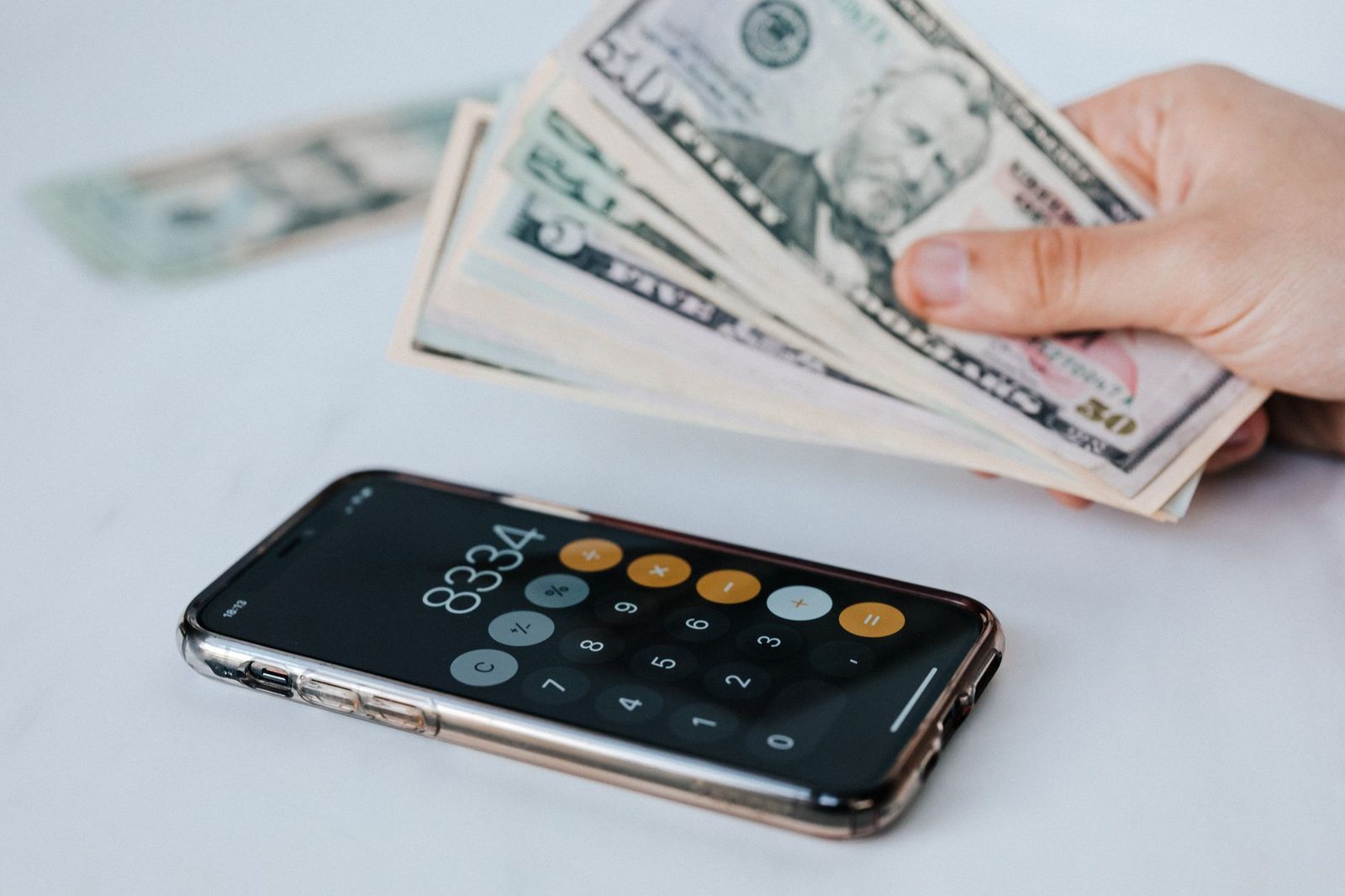
The sneaky case in 2026 is the increase dressed up as an upgrade. +€3 a month, +20 GB, +5 calling destinations. The carrier markets it as an enriched offer; legally, it is an unfavourable price change, and your right to cancel is intact. The fact that the service also improves neutralises nothing: all that counts is that you did not consent.
How to spot the announcement before it is too late
The weak point here is not the law, it is detection. Carriers do comply with the duty to inform, but they do the legal minimum: one text message, sometimes a line at the bottom of a bill, sometimes an email with a bland subject line ("Your plan gets a makeover").
A few habits that cost five minutes a quarter:
- Read the amount, not the wording. Open every monthly bill and compare the total with the previous month. A €2 gap deserves thirty seconds of attention.
- Set up a bank alert on your carrier's direct debits. Most banking apps can notify you as soon as a recurring debit changes amount.
- Never delete your carrier's text messages before opening them. They are the proof of the notification date — and therefore the starting point of your four months.
- Take a screenshot of the text message or archive the email. In a dispute, that is the piece of evidence that tips the file.
- Note the effective date in your calendar with a reminder at day 90. That leaves you a month's leeway to act.
For those managing several lines (family, an elderly parent, self-employed activity), a filing binder for administrative documents with a "telecom" divider per line saves you hunting for the original contract on the day you need to prove what was signed up for. Paper filing may look old-fashioned; in a consumer dispute, it remains formidably effective.
The procedure, step by step
Step 1: check what you are really paying
Before cancelling, get the numbers out. In your customer account, note down:
- the price before and after the change;
- the announced effective date;
- your commitment end date, if you have one;
- any outstanding handset balance being financed;
- your actual usage over the last three months (data, out-of-plan calls).
That last point is the deciding factor: if you use 4 GB a month, the enriched €22.99 offer is a bad deal and leaving is the obvious move. If you are on 60 GB and hitting the limit every month, the increase may still be competitive.
Step 2: get your RIO
Before doing anything else, dial 3179 from the line concerned (free, automated service available 24/7). You will receive your twelve-character RIO identifier by text. It is essential if you want to keep your number.
Never cancel directly with your current carrier if you want to keep your number. It is the new carrier that must trigger the number port; the old contract is then cancelled automatically. Cancelling yourself first means losing the number for good.
Step 3: sign up elsewhere, citing the grounds
When signing up with the new carrier, give them your RIO. Porting takes three working days and your old contract ends automatically at switchover.
One thing then remains to be done: notify your former carrier in writing that the termination is made under Article L.224-33, so that they do not bill you termination fees or an early-exit balance. Send a registered letter with acknowledgement of receipt, or failing that a message from your customer account (keeping a time-stamped screenshot).
Template letter
Subject: Termination free of charge due to unilateral change of contractual terms — line 06 XX XX XX XX
Dear Sir or Madam,
By message dated [date], you informed me of a change to my contract taking effect on [date], consisting of [an increase in the monthly price from €X to €Y / a reduction of the data allowance from X to Y GB].
I do not accept this change. In accordance with Article L.224-33 of the French Consumer Code, I hereby inform you of my decision to terminate my contract free of any charge or penalty and without any right to compensation, within the four-month period following the date it took effect.
My number is currently being ported to another carrier (RIO: [your RIO]). I request that you charge me no termination fees or early-exit balance, and that you confirm in writing the closure of the account as well as the refund of any overpayment and of the security deposit.
Yours faithfully,
A decent pad of writing paper and some pre-stamped envelopes are enough; what matters is the registered post, which dates the request beyond dispute. Keep the acknowledgement of receipt for at least a year.
And if the carrier bills you anyway?
It happens, usually through billing automation rather than bad faith. The escalation path is clearly marked.
Level 1 — Customer service. A call, then written confirmation. Ask for a case number. Cite the law: L.224-33, change dated [date], four-month period.
Level 2 — Consumer relations department. Every carrier has an internal appeals tier, to be contacted in writing. Usual response time: one month.
Level 3 — Médiateur des communications électroniques. Referral is free, online, and possible two months after a written complaint has gone without a satisfactory reply. The mediation body publishes an annual activity report: billing and termination disputes are, year after year, the leading category of referrals, and a large majority of the opinions issued find at least partly in the consumer's favour.
Level 4 — Reporting and the courts. Report it on the DGCCRF's SignalConso platform and, as a last resort, bring the matter before the local protection litigation judge for small amounts. An association such as UFC-Que Choisir or CLCV can support you for a modest membership fee; their local offices handle this kind of case as a matter of routine.

In the meantime, do not stop your direct debits and do not withhold payment: non-payment puts you in the wrong and can trigger debt collection, or even being flagged on a credit register. Pay, dispute, obtain a refund. It takes longer, and it is far safer.
Leaving, yes — but for where in 2026?
The "I'm out of here" reflex only makes sense if the rival offer holds up over time. Three things to watch in today's market:
- The post-promo price. The gap between the introductory rate and the standard rate is often €10 to €14 a month. Always compare over 24 months, not on the headline price in big letters.
- The disguised commitment. No-commitment offers remain the rule at low-cost brands; still, check the activation fees and the cost of the SIM or eSIM.
- Real-world coverage, not the marketing map. Check monreseaumobile.arcep.fr, Arcep's official service, entering your home address and your workplace. The gaps between carriers remain significant indoors and in rural areas.
If reception is poor at home, bear in mind that switching carriers does not solve everything: a phone with good radio sensitivity and, where relevant, a Wi-Fi router that supports Wi-Fi calling will often do more for your day-to-day comfort than a three-euro difference in price. Wi-Fi calling (VoWiFi) is now free and can be enabled on all four French networks.
Finally, for heavy data users on the move, a 10,000 mAh power bank remains the accessory that improves daily life far more reliably than a 300 GB plan of which you will use 40.
The timeline to remember
| Moment | What you do |
|---|---|
| D-30 (notification) | Archive the text/email, note the effective date |
| Between D-30 and D-day | Compare offers, check the handset balance |
| D-day (change takes effect) | The new price applies: the 4-month clock starts |
| D-day to D+120 | Window to cancel free of charge: 3179, sign up elsewhere, registered letter |
| After D+120 | You are deemed to have accepted: back to ordinary rules (notice period + possible fees) |
Three misconceptions to drop
"I'm on a commitment, there's nothing I can do." False. A commitment protects the carrier against you leaving on a whim, not against the consequences of its own change to the contract.
"I let two months go by, it's hopeless." False. The period is four months after the change takes effect, not after the notification. In practice you therefore have five months from the text message.
"They gave me more data, it's an improvement." Legally irrelevant as soon as the price goes up. An unrequested benefit does not amount to consent.
In summary
A plan price increase is not a done deal, it is a window. The carrier must warn you a month in advance, and you then have four full months to leave free of charge, commitment or no commitment. The only things that cost you this right are silence and forgetfulness.
Three moves, in order: archive the announcement message, dial 3179 to get your RIO, sign up elsewhere and then send registered notice citing L.224-33. The whole thing takes half an hour and is often worth €40 to €150 over two years.
And if you stay — because the enriched offer genuinely suits you — do so knowingly, after seeing what the competition has to offer. That is the whole difference between putting up with an increase and accepting it.
Useful sources: French Consumer Code, Article L.224-33 (Légifrance); Arcep, electronic communications market observatory and the monreseaumobile.arcep.fr service; Médiateur des communications électroniques, annual report; DGCCRF / SignalConso; UFC-Que Choisir.