

L'équipe Texto SMS Gratuit
5 September 2026 · 12 min read
Introduction: when the mobile plan lands next to the checkout
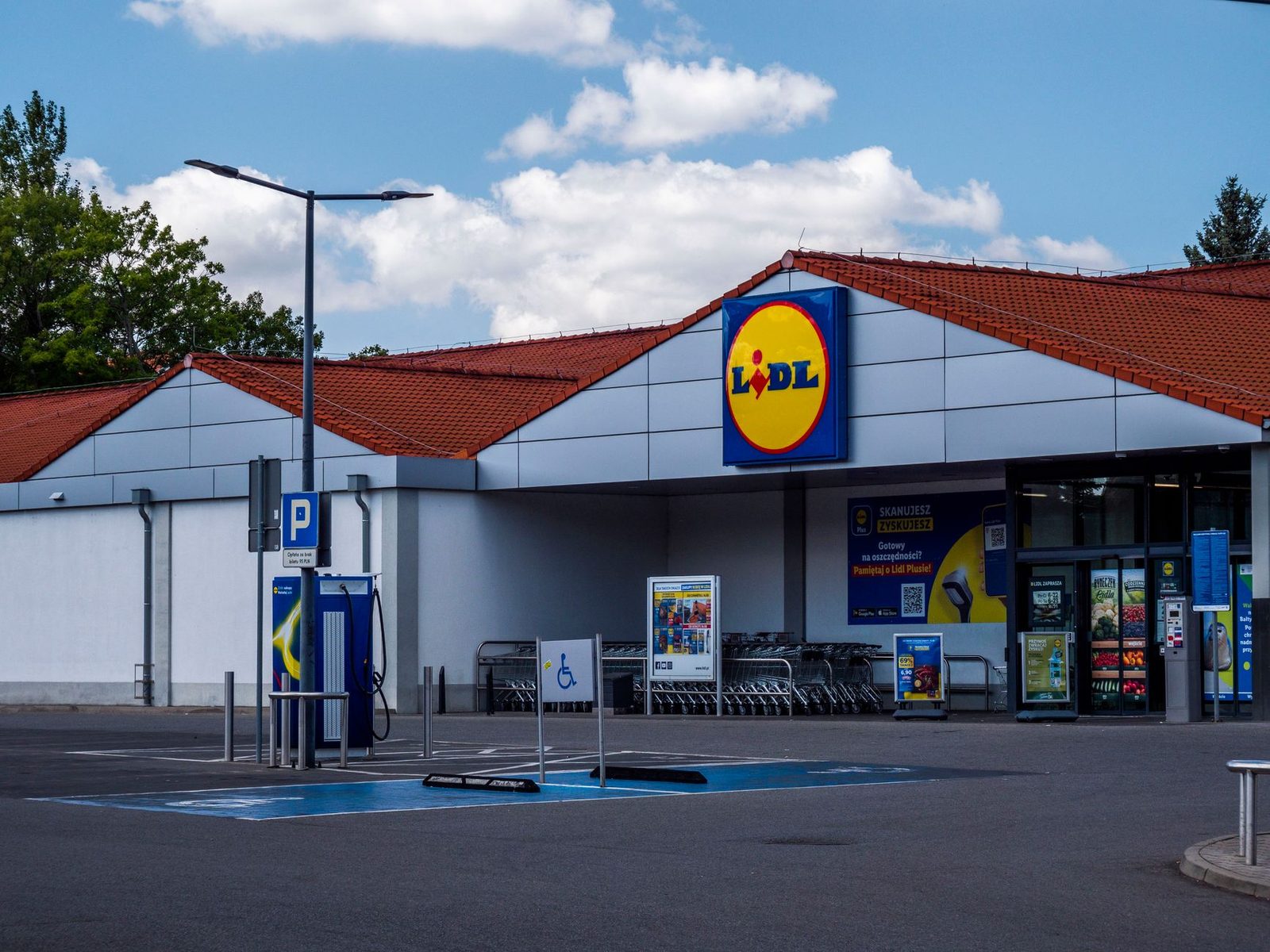
It was only a matter of time. Having already sold fuel, insurance, holidays and consumer credit, France's big retail chains are now going after the last remaining everyday subscription: the mobile plan. Leclerc and Auchan led the way more than fifteen years ago with their respective brands. In 2026, Lidl is taking the plunge and becoming a virtual operator in turn, with SIM cards and eSIMs available directly in store.
The announcement made plenty of noise, and shoppers' reasoning is logical enough: if the chain slashes prices on pasta and nappies, it should slash prices on gigabytes too. That is partly true. But a mobile plan is not a consumer good like any other: it rests on infrastructure owned by someone else, it commits you to a contractual relationship lasting several months, and its real value hinges on criteria that are invisible on the shelf — the quality of the rented network, after-sales support, number portability policy and out-of-bundle billing.
This article breaks down what a supermarket mobile plan is really worth in 2026, what big retail does (or does not) change in the French market, and the five checks to make before dropping a SIM card into your trolley.
How a supermarket becomes a mobile operator
Nobody builds masts just to sell plans
That is the starting point to grasp: no retail chain owns spectrum licences, cell towers or a core network. In France, only four players hold the frequencies allocated by Arcep: Orange, SFR, Bouygues Telecom and Free Mobile.
A chain entering the market therefore becomes an MVNO (Mobile Virtual Network Operator), in other words a reseller that rents network capacity from a host operator and adds its own brand, billing and customer service. Depending on the degree of integration, there are several tiers:
- the "light" MVNO, or simple reseller, which controls little beyond marketing and the customer relationship;
- the extended MVNO, which manages its own SIM cards, its own IT systems and sometimes its own HLR (the subscriber register);
- the full MVNO, which owns its core network and rents only radio access.
The difference is not cosmetic. A full MVNO can offer advanced services (reliable VoLTE, instant eSIM, negotiated roaming), whereas a simple reseller depends entirely on its host's technical choices and lags behind on every new feature.
The business model: thin margins, footfall in store
For a grocery chain, the mobile plan is not primarily a profit centre. It is a loss leader and a loyalty tool. The margin on an €8 plan is slim once the wholesale network cost is paid; the real interest lies elsewhere:
- bringing customers back into the store every month;
- linking the plan to the loyalty card and enriching customer knowledge;
- occupying mental space where the chain had no presence;
- shifting high-margin accessories on the shelf as well — cases, cables, fast USB-C chargers — whose margin rate far exceeds that of the subscription itself.
This logic explains the structure of the offers: few products, simple pricing grids, very few options, and distribution that relies on self-service rather than advice.
What big retail actually changes in the market
Real price pressure, but a trend already well under way
The shock effect needs putting in perspective. The French market is already one of the cheapest in Europe: Arcep has documented a steady decline in average revenue per mobile subscriber for years, and offers under €10 for several dozen gigabytes have been commonplace since Free arrived in 2012, followed by the rise of low-cost brands (Sosh, Red by SFR, B&You, Prixtel, YouPrice, Auchan Telecom, and so on).
The arrival of a chain like Lidl therefore does not blow up a cartel: it accelerates an existing trend and piles pressure on an already saturated segment, the 100–150 GB plans around €8–12.
Big retail's real contribution is not price: it is physical accessibility. A plan you can sign up for in three minutes at a local store speaks to an audience that does not subscribe online.
A distribution channel for the digitally excluded
This is where the shift is most interesting. Part of the French population remains distant from online subscription: older people, those affected by digital illiteracy, households without a bank card suited to direct debits, seasonal workers. The supermarket is one of the few places they all visit.
A prepaid SIM card or a no-commitment plan available in 1,500 points of sale meets a need that purely online offers never reach. On this terrain, big retail competes less with Free than with tobacconists and neighbourhood phone shops.
Simplicity comes at a price
In return, the range is deliberately thin. Where an incumbent operator offers a dozen plans, international options, security services, multi-SIM and broadband + mobile bundles, a grocery chain will offer two or three products. If your usage falls outside that frame — unlimited data, international calls, a secondary line for a connected device, a cellular smartwatch — you will hit a wall quickly.
Five checks before buying a plan off the shelf
1. Identify the host network, not the brand
This is question number one, and it is almost never highlighted on the packaging. Ask, or look it up explicitly: which network does this offer run on?
- A plan backed by the Orange network benefits from the best overall coverage as measured by Arcep's annual survey.
- A plan on Bouygues Telecom or SFR delivers excellent results in urban areas, with wider gaps in rural zones.
- A plan on Free Mobile relies on its own network topped up by residual national roaming.
The right reflex: check the monreseaumobile.arcep.fr map, enter your home address and your workplace, and compare the four networks before choosing. A €2 monthly saving never makes up for having no signal in your living room.
2. Check the actual speed allocated, not just the data volume
A classic trap with budget MVNOs: speed throttling. Some offers restrict 5G, cap 4G at a few Mbit/s, or heavily degrade service when a cell is congested — because the wholesale contract does not guarantee the same priority as a direct subscriber.
Wording to look for in the terms and conditions:
| Wording | What it means |
|---|---|
| "Reduced speed beyond X GB" | You keep the connection but at 128 kbit/s, unusable in practice |
| "4G access, 5G not included" | Your 5G phone will fall back to 4G, with an impact on latency |
| "Standard traffic priority" | At peak times, you come after the host's direct subscribers |
| "Fair use" | A vague clause allowing discretionary restrictions |
3. Read the out-of-bundle and capping policy
This is the line item that turns an €8 plan into a €60 bill. Three things to check:
- is the plan capped (usage cut off) or uncapped (overages billed)?
- what is the price per MB out of bundle and for calls to premium-rate numbers?
- is there an SMS overage alert and a configurable ceiling?
For a line intended for a teenager or a vulnerable relative, insist on a capped plan. It is the only genuinely effective protection, far more so than after-the-fact monitoring in an app.
4. Anticipate after-sales support
A supermarket cashier is not a telecoms technician. When something goes wrong — a stalled port-in, a faulty SIM, a billing dispute — the store will redirect you to an outsourced customer service, often reachable only via a web form or a phone line with limited opening hours.
Before signing up, check:
- whether there is a customer service number that is free from your own line;
- the actual opening hours;
- whether there is a web account area allowing you to manage options, RIO code and cancellation without going through an adviser;
- the stated lead time for sending a replacement SIM.
If the deadlock persists, the remedy is the same as with any operator: a written complaint, then referral to the Médiateur des communications électroniques, which is free, after two months without a satisfactory reply.
5. Check your phone's compatibility
With the gradual switch-off of 2G and 3G networks in France, voice over 4G (VoLTE) has become essential. Yet MVNOs are often behind on certifying handset models. An imported device or a refurbished smartphone bought outside official channels may well show four bars of signal and still be unable to make a call.
Make sure your model appears on the list of VoLTE-compatible handsets published by the host operator, and plan a fallback. In poorly covered areas, a 4G router with an external antenna is often more effective than switching operator.
Supermarket, independent MVNO or incumbent operator: which is right for whom?
| Profile | Sensible choice | Why |
|---|---|---|
| Light user (< 20 GB), sedentary urban usage | Supermarket plan | Rock-bottom price, instant sign-up, no commitment |
| Heavy data user, remote work, frequent travel | Low-cost brand of an incumbent operator | Guaranteed speeds, 5G included, network priority |
| Frequent traveller outside the EU | Incumbent operator or specialist eSIM | Negotiated roaming options, international assistance |
| Multi-line family + broadband | Converged operator | Multi-line discounts, single bill |
| Older person or digitally excluded user | Plan bought at a local store | In-person sign-up, simple payment, capped plan |
| Secondary line, connected device, teenager | Prepaid or small capped plan | Controlled cost, no surprises |
The blind spot: personal data
One point deserves to be stated plainly. When a grocery chain becomes an operator, it potentially bridges two worlds of data: your purchases (via the loyalty card) and your communications data (itemised billing, connection data, approximate location from the cell used).
The GDPR and the French Postal and Electronic Communications Code strictly govern the latter category: traffic data cannot be freely reused for commercial purposes without a legal basis and separate consent. The CNIL has repeatedly stressed that consent must be specific and granular: accepting a loyalty card does not amount to accepting a cross-referencing with telecoms data.
The practical reflex at sign-up:
- systematically untick the boxes for marketing and sharing with "partners";
- refuse the loyalty/telephony cross-referencing if it is offered separately;
- exercise your right of access once a year to see what is actually being retained.
The most common mistakes
Switching operator without keeping your number. Portability is a right: request your RIO code by calling 3179 from the line to be transferred, and give it to your new operator. It is the new operator that cancels the old contract. Taking out a new number and cancelling yourself is the surest way to pay for two plans for a month.
Confusing the introductory price with the standard price. Many offers advertise a promotional rate valid for 6 or 12 months, after which it doubles. Over 24 months, an offer at €9.99 rising to €19.99 costs more than a stable €12.99 offer. Note the switchover date in your diary as soon as you sign up.
Neglecting the ecosystem. A very cheap plan paired with a phone that lasts six hours is no help. A compact power bank in your bag, or a simple car phone mount, will improve daily life more than an extra gigabyte.
Forgetting prepaid. For a back-up line, a prepaid SIM card remains unbeatable: no direct debit, no contract, top up whenever you like. It is also the simplest solution for a foreign visitor passing through.
Key takeaways
Big retail's entry into mobile telephony is good news for accessibility, neutral news for prices (the market was already fiercely competitive) and a point of vigilance for quality of service. A plan bought off the shelf is worth exactly what the network it rents and the customer service that comes with it are worth.
Three questions are enough to decide, before you even look at the price:
- Which network does this offer run on, and what does the Arcep map say for my address?
- Is the plan capped, and is 5G genuinely included without throttling?
- How do I cancel or port my number out if it does not suit me?
If all three answers work for you, the supermarket is a point of sale like any other. Otherwise, saving a few euros a month will cost you in wasted time — and time spent on the phone with customer service is rarely included in the plan.
Sources and useful resources: Arcep (market observatory, annual survey on mobile service quality, monreseaumobile.arcep.fr), CNIL (recommendations on loyalty data and consent), Médiateur des communications électroniques, French Postal and Electronic Communications Code (articles L.44 et seq. on number portability).