

L'équipe Texto SMS Gratuit
23 August 2026 · 11 min read
Introduction: the great deal that gets terrible reception
The refurbished market now accounts for a significant share of smartphone sales in France, and that's excellent news — for your wallet as much as for the planet's material footprint. But a refurbished phone is not a neutral object: it is a device built for a given market, certified for a given set of frequencies, and sometimes locked to a foreign carrier.
And 2026 is precisely the year when these details stop being theoretical. The gradual shutdown of 2G and 3G by French operators removes the safety net that had been masking incompatibilities until now. A phone that used to "fall back to 3G" when VoLTE didn't work no longer has that escape route: it simply stops making calls.
The result: buyers who discover, three weeks after delivery, that their "5G-compatible" device can't pick up their operator's 5G, that their calls drop indoors, or that their text messages arrive ten minutes late. This guide details the four checkpoints that genuinely matter, and how to verify them before you pay.
1. Frequency bands: the number-one criterion, never highlighted
A smartphone doesn't pick up "4G" or "5G" in the abstract. It picks up specific frequency bands, listed in its technical specifications as numbers (B3, B7, B20, n78, and so on). If the band your operator uses in your town isn't supported by the device, the signal simply doesn't exist as far as it's concerned — even fifty metres from the mast.
The bands actually used in France
The frequencies allocated by Arcep to mobile operators in mainland France break down roughly as follows:
| Band | Frequency | Main use in France |
|---|---|---|
| B20 | 800 MHz | Long-range 4G, rural coverage and in-building penetration |
| B28 | 700 MHz | 4G/5G, wide coverage, repurposed for 5G |
| B8 | 900 MHz | Historically GSM, now 4G |
| B3 | 1800 MHz | 4G, capacity in urban areas |
| B1 | 2100 MHz | 4G/5G, capacity |
| B7 | 2600 MHz | High-capacity 4G, dense areas |
| n78 | 3.5 GHz | The core of French 5G, high throughput |
Two practical takeaways. First, B20 (800 MHz) is the coverage band. It's the one that goes through walls and travels far. Phones imported from Asia or North America frequently omit it: in the city the device will compensate on the higher bands, but in a village in Corrèze or the basement of a Paris apartment block, it will show "no service" where your neighbour's phone shows three bars.
Second, French 5G relies heavily on n78 (3.5 GHz). A device sold as 5G but supporting only North American millimetre-wave bands or Asian bands will never latch onto 5G from Orange, SFR, Bouygues or Free in mainland France.
How to check before you buy
- Look for the device's exact commercial reference, not just its marketing name. The same model often exists in distinct regional versions (suffixes such as
/A,/DS, or the manufacturer's internal codes). - Compare the list of bands against independent technical databases (GSMArena, or the manufacturer's official spec sheet for the European market).
- Insist that the seller states "European version" or "model sold in France". A reputable refurbisher will provide this without hesitation.
- If in doubt once the device is in your hands, a network diagnostics app lets you see in real time which bands are connected and the signal strength in dBm; it's far more reliable than counting bars.
A simple rule: if the spec sheet mentions neither B20 nor B28, the device is poorly equipped for rural and suburban France, whatever its price.
2. VoLTE: the breaking point of 2026
VoLTE (Voice over LTE) lets you make calls over the 4G network. As long as 2G and 3G existed, a phone without working VoLTE would quietly switch to those older networks to place a call. That safety net is disappearing.
French operators have begun shutting down their 2G and 3G networks on a staggered timetable, with 3G going first at several of them. Ultimately, voice will travel exclusively over 4G and 5G. Without functioning VoLTE, a smartphone keeps its data connection but loses telephony — and, in certain configurations, reliable SMS reception.
Why VoLTE doesn't always switch on
The trap is that VoLTE isn't purely a hardware feature: it is certified per operator/model pairing. Each operator maintains a list of approved handsets, and the phone must carry the right software profile (the well-known carrier bundle) to enable the option.
Very concrete consequences:
- A model bought in China, Korea or the United States may have all the necessary hardware yet never activate VoLTE on a French network, for lack of a matching profile.
- A European version stuck on old firmware may likewise refuse to enable the option until it is updated.
- Some virtual operators (MVNOs) take longer than their host networks to get models certified.
The three-minute test
- Insert the SIM card, restart, then open Settings → Mobile network → Wi-Fi Calling / VoLTE (the wording varies: "4G Calling", "VoLTE", "HD Voice").
- If the toggle is missing, that's a bad sign: the operator profile isn't being recognised.
- Make a real call and watch the network icon: it should stay on 4G/5G throughout the conversation. If it switches to H+ or G, the device is still using an older network — and that crutch is temporary.
Also check VoWiFi (Wi-Fi calling), which is especially valuable in poorly covered homes. For genuinely difficult areas, a mesh Wi-Fi extender is often more effective and perfectly legal, whereas the mobile signal boosters sold online are banned in France unless supplied by your operator.
3. The IMEI: blocking, theft and type approval
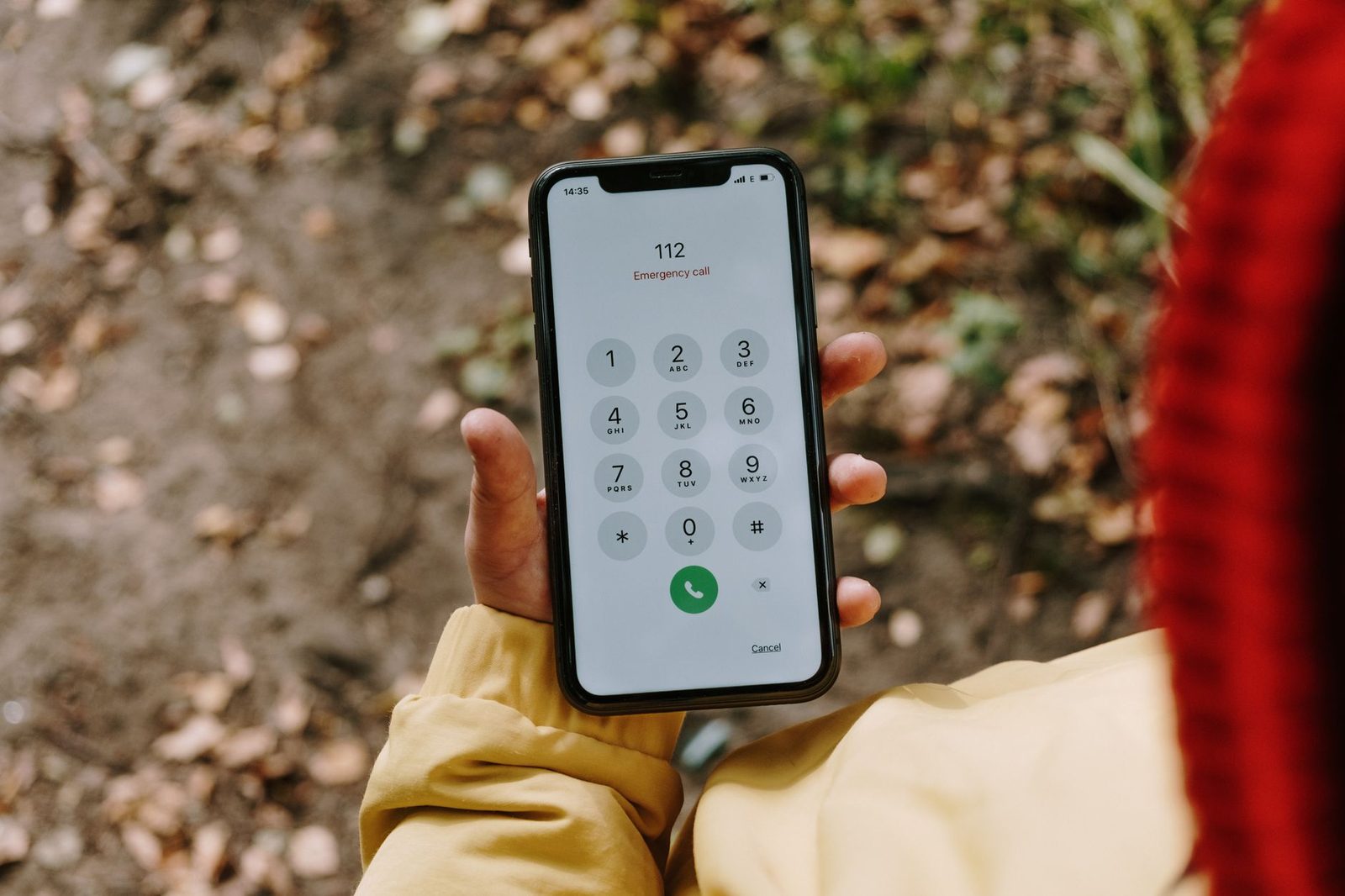
Every handset carries a unique 15-digit identifier, the IMEI, which you obtain by dialling *#06#. It's what determines whether the device is allowed to connect to networks.
Three distinct risks
Theft. A phone reported stolen in France is added to a national blacklist maintained by the operators: it is then rejected by every French network, whatever SIM is inserted. A device stolen abroad, on the other hand, may work perfectly well in France until the lists are cross-referenced. Buying from a private seller without an invoice means taking that risk.
Carrier locking (SIM lock). In France, locking has largely fallen out of practice, but imported handsets can still be locked to a foreign operator. They then display an error message at startup with a French SIM.
Financial blocking. A phone bought on credit abroad and left unpaid can be blocked remotely by the retailer, sometimes several months after resale.
The checks to carry out
- Ask for the IMEI before buying and check it against a reputable verification service, such as public IMEI databases or the manufacturer's own checking tool (Apple and Samsung offer warranty verification pages that cross-check the serial number).
- Confirm that the IMEI shown by
*#06#matches the one on the box, the invoice and the label under the SIM tray. - Insist on an invoice in your name. It's the only document that will let you invoke the legal guarantee of conformity, which also applies to refurbished goods and runs for a minimum of 12 months from a professional seller, often 24.
- Be wary of listings advertising "unlocked, all networks" with no proof of purchase: the phrase says nothing about where the device came from.
4. SIM, eSIM and hardware subtleties
One last layer of compatibility, and one that is often overlooked.
eSIM or no eSIM
Not every model includes an eSIM, and above all, the regional version changes everything: some models sold in certain countries ship without an active eSIM, or even with two physical slots instead. If you're counting on switching networks in a matter of minutes or picking up a local data plan while travelling, check this point explicitly on the product page.
Card format and dual SIM
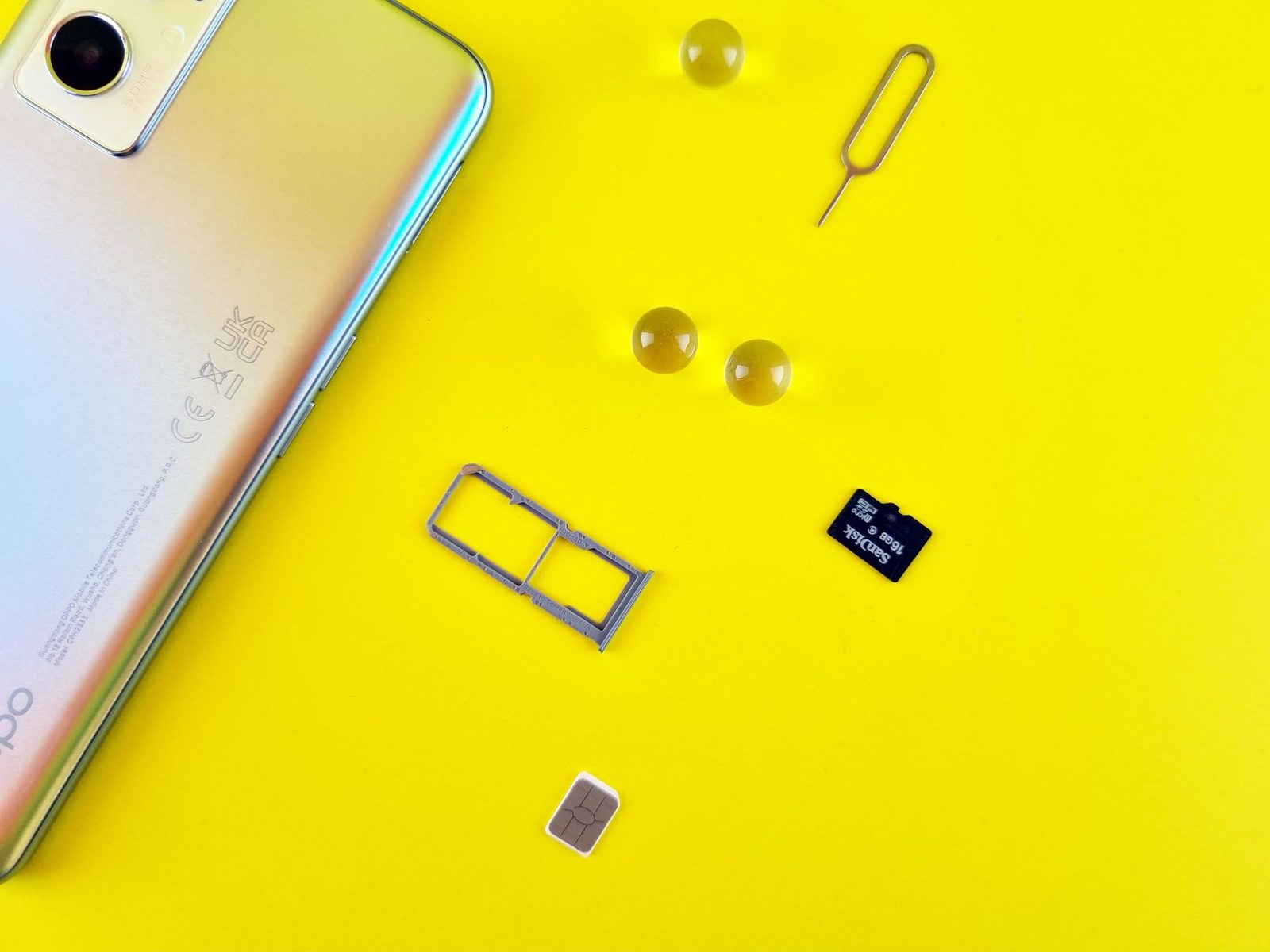
Hybrid trays — where the second SIM slot is shared with the memory card — force you to choose between two lines and expanded storage. If you end up with a device whose tray is missing or bent, a SIM card adapter and a compatible replacement tray are easy to find, but make sure you have the exact model reference.
The battery, coverage's hidden variable
A rarely explained point: a tired battery degrades reception. When the voltage drops, the modem reduces its transmission power and the phone loses the signal sooner at the edge of a cell. Reputable refurbishing platforms state a minimum battery health level (often 80 or 85%). Ask for that figure in writing. Going forward, a compact backup power bank will stop you hitting 5% at precisely the moment you need to send an important message.
Finally, don't underestimate physical protection: refurbished phones often ship without accessories, and a shockproof protective case plus a tempered glass screen protector cost a fraction of the price of a broken display.
Security: software updates, the refurbished blind spot
A device with great reception that no longer receives security patches poses another, more insidious problem. Smishing campaigns and tech-support fraud often exploit flaws that were fixed long ago in recent versions of the operating system.
So before you buy, check:
- The end-of-software-support date announced by the manufacturer for that model. European manufacturers now publish explicit support durations, driven by EU requirements on update availability and repairability.
- The presence of the latest security patches in the settings (Android shows the security patch date; iOS shows the system version).
- The device's ability to receive recent anti-scam features: call filtering, reporting suspicious texts to 33700, and verified-sender display in RCS. These protections depend on up-to-date apps.
A useful reminder: 33700 remains the national reporting service for fraudulent texts and calls, and the Cybermalveillance.gouv.fr platform offers step-by-step guidance if you've been compromised. These tools are no substitute for an up-to-date system.
The checklist before you confirm your basket
Let's recap what to verify, in order:
- European regional version confirmed in writing, with the exact model reference.
- Frequency bands: B20 and B28 present for coverage, n78 if you want genuine 5G.
- VoLTE and VoWiFi advertised as compatible with your operator — and tested in the first few days.
- IMEI provided before purchase, verified, and matching the invoice.
- Battery health stated as a figure, ideally ≥ 85%.
- End of software support still at least two years away.
- Cosmetic grade and returns policy: the 14-day right of withdrawal applies to any distance sale from a professional seller.
- Warranty: 12 months minimum, with the legal guarantee of conformity also covering refurbished goods sold by a professional.
What if you've already bought the device?
All is not lost if you discover the problem after the fact.
- Update the system: switching to official European firmware sometimes resolves missing VoLTE, where the manufacturer allows it.
- Contact your operator's support team, giving the exact model: some can push a network profile remotely, or confirm that the handset isn't on their compatibility list.
- Turn on Wi-Fi calling if the option exists: it compensates for poor indoor coverage.
- Invoke the warranty or your right of withdrawal if a professional seller advertised compatibility that doesn't exist. A product page stating "compatible with 5G in France" when n78 is absent constitutes a lack of conformity.
- If a dispute with an operator over service quality persists, the J'alerte l'Arcep platform lets you report the problem; it doesn't handle individual disputes the way an ombudsman would, but it feeds into the regulator's monitoring.
Conclusion: refurbished is still a good choice — an informed one
Nothing above argues against buying a refurbished smartphone. Chosen well, it delivers essentially the performance of a new device for a fraction of the price and with a far smaller environmental footprint. The problem isn't refurbished phones: it's grey imports, devices designed for other markets and resold in France without any mention of what they can't do.
In 2026, with old networks being switched off and voice over 4G becoming the norm, the margin for error is shrinking. Three minutes spent checking a list of frequency bands and an IMEI are worth more than three months of dropped calls. And once the device passes muster, all that's left is to enjoy a network that, on this point at least, largely delivers on its promises.