


L'équipe Texto SMS Gratuit
27 September 2026 · 12 min read
Introduction: €9.99 + €2 = cheaper than €19.99
The maths fits on a single line of your bill. On one side, an "all-inclusive" plan at €19.99 a month from a legacy carrier, with 100 GB and unlimited calls. On the other, two subscriptions: a generous data plan at €9.99 from an MVNO, plus a small voice line at €2 — sometimes less — from another provider. Total: €11.99. Same usage, €8 saved every month, close to €100 over the year.
There is nothing underhand about this setup. It relies on a feature present in virtually every smartphone sold in France since 2019: dual SIM. Two lines, two carriers, two networks, a single device in your pocket.
Except that dual SIM is not a straightforward doubling. In the vast majority of cases the phone contains only one radio modem, and that physical constraint produces a series of behaviours nobody explains to you in the shop: silently missed calls, 5G available on only one line, a battery that drains faster, voicemail landing on the wrong card. This guide describes how it actually works, which setups are worth it, and which ones will cost you more in hassle than they save in euros.
What "dual SIM" means technically
There are three families of devices, and marketing vocabulary happily blurs the lines between them.
| Acronym | Full name | What it actually does |
|---|---|---|
| DSSS | Dual SIM Single Standby | Only one line active at a time; you have to switch manually. All but extinct. |
| DSDS | Dual SIM Dual Standby | Both lines are reachable, but only one can be in a call. This is 95% of the market. |
| DSFA / DSFS | Dual SIM Full Active | Two modems, two simultaneous calls. Extremely rare, mostly on professional hardware. |
Remember DSDS, because it is almost certainly what you are holding. The principle: a single modem splits its time between two lines. It "listens" to both networks alternately, a few milliseconds each, switching constantly. So both numbers ring normally — as long as you do nothing.
The moment line A enters a call, the modem devotes itself to it. Line B becomes, for the duration, unreachable. Depending on your carrier's settings, the caller will hear either a busy tone, an "unavailable" announcement, or be diverted to voicemail. You will see nothing: no notification, no missed call in the log. This is dual SIM's first blind spot, and it is a deal-breaker for anyone using their second line for work.
Since 2023–2024, some manufacturers have introduced variants that soften the problem (dynamic data switching, incoming-call notification on the second line via the network). These are partial software patches, not the removal of the constraint.
Physical card or eSIM: the real split in 2026
The second source of confusion is the nature of the slots. A "dual SIM" phone in 2026 can mean three very different things:
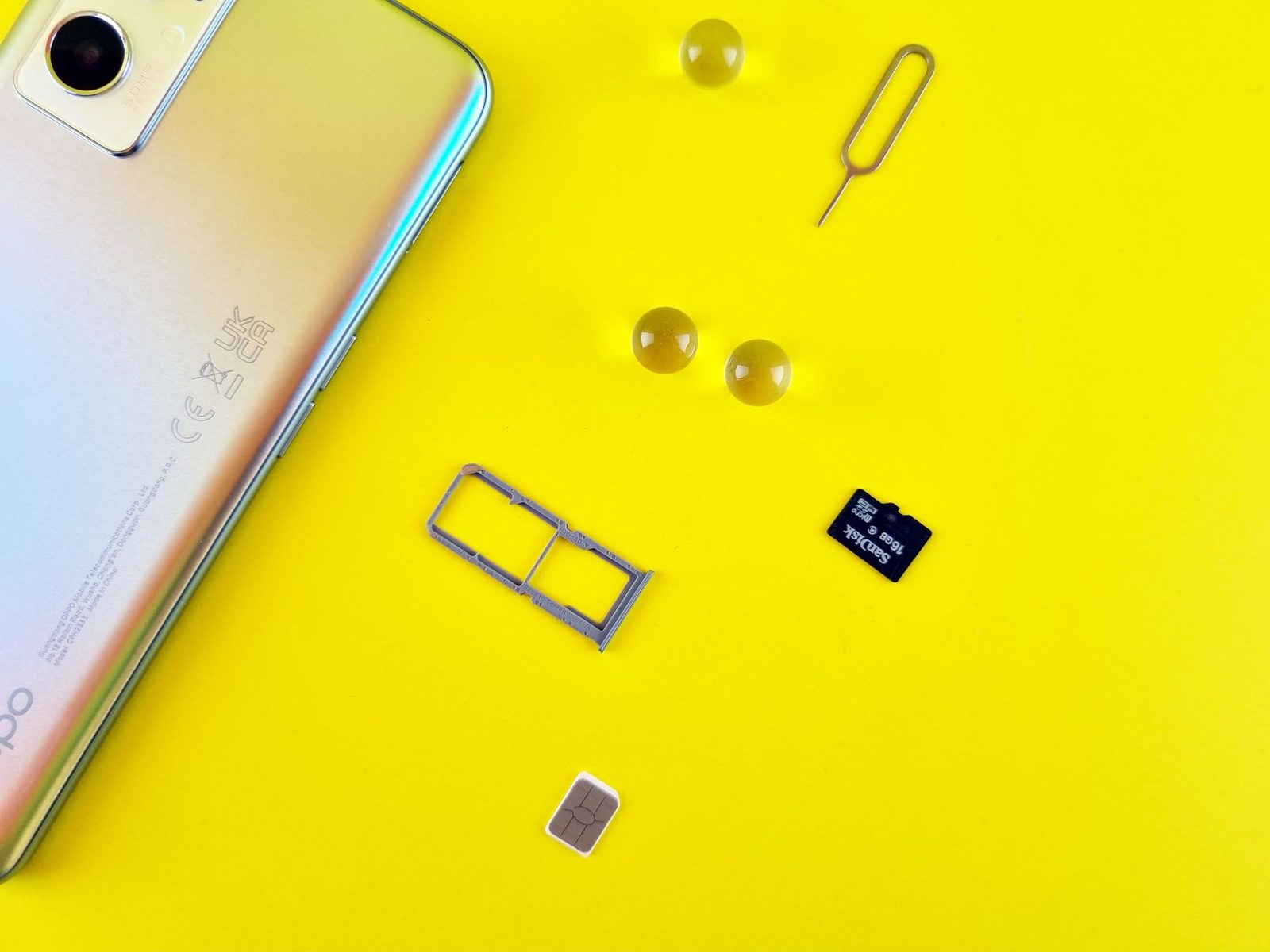
- Two physical nano-SIM slots. Common on mid-range Android and imported models. The consequence: on many devices the SIM tray no longer includes a microSD slot — you choose between a second line and expandable storage.
- One nano-SIM + one eSIM. The most widespread configuration at the high end. You keep your existing card and add the second line via QR code in a matter of minutes.
- Two eSIMs (or more stored in memory). iPhones sold in the United States since the 14 series have no tray at all; European models keep the physical reader but manage several registered eSIM profiles, two of which can be active at once.
An essential check before building your combination: dial *#06# on the phone keypad. The screen displays the device's identifiers. Two IMEI numbers = two SIM slots supported. A single IMEI = your phone is single-line, and the setup is impossible. An "EID" line additionally indicates eSIM compatibility.
If your device still has two physical trays, the small accessory that will save the day remains mundane: a spare SIM ejection pin costs a few euros and spares you the bent paperclip that scratches the chassis. And for cards you store between trips, a SIM card holder fits in a wallet and saves you the classic "I put it somewhere in the kitchen drawer".
The four setups that make sense
Not all combinations are equal. Here are the ones that genuinely hold up in daily use.
1. The money-saving setup: data on one side, voice on the other
This is the textbook case described in the introduction. On the main line you put a data-rich plan — offers with 100 or 200 GB have dropped below €10 at several virtual operators — and on the second you keep a minimal voice line at around €2, often the one you've had for ten years and whose number everyone you know already has.
Secondary benefit: you never port your long-standing number, so no RIO code, no portability, no risk of a service cut. You only change the data line, the one nobody has the number for, and you can switch it every six months without telling a soul.
2. The coverage setup: two different networks
If you live or work in an area where one carrier struggles, dual SIM becomes a coverage tool. The principle is simple: pick two plans riding on two distinct physical networks. MVNOs don't build masts, they rent those of Orange, SFR or Bouygues Telecom — so you need to check which host network sits behind the offer before subscribing, or you'll end up with two lines on the same infrastructure and no benefit at all.
The coverage maps published by Arcep at monreseaumobile.arcep.fr let you compare all four networks address by address. It is the reference source, updated from measurements and carrier declarations. Check it for your home, your workplace and your daily commute before deciding.
If one carrier suffers an outage — recent years have supplied several examples — you switch manually to the second line in three taps. It is the only genuinely effective redundancy available to consumers.
3. The work/life boundary setup
One number for your employer, one for your family, a single device to carry. Recent operating systems let you assign a distinct ringtone, a label colour and, above all, time windows to each line: the work line can be switched off automatically after 7 pm.
One caveat, though: because of DSDS you will miss work calls during a personal conversation, and vice versa. For any activity where every incoming call counts, this setup isn't reliable.
4. The travel setup
Abroad outside the EU zone, the second line hosts a local or regional eSIM bought online, while the French line stays active to receive bank authentication SMS — those always arrive on the number registered with the bank. You turn off mobile data on the French line, enable it on the local eSIM, and your roaming bill stays at zero.
The six settings to configure on activation day
A badly configured dual SIM produces surprise bills. Take ten minutes, once, in your phone's "SIM" or "SIM cards and mobile networks" settings.
- Name the lines. "Personal", "Data", "Work" — never "SIM 1" and "SIM 2", or you'll mix them up. Assign a distinct colour if the system offers it.
- Designate the mobile data line. Only one line consumes data at any given moment. If you leave the €2 voice line in charge of data, you'll pay out-of-plan charges per megabyte, at rates that climb very fast.
- Turn off "automatic data switching". This option, enabled by default on some manufacturers' phones, moves data to the other line when the first is in a call. Handy in theory, expensive if the backup line has no data allowance.
- Choose the default calling line — and prefer, if the option exists, the "always ask" mode. A call placed from the wrong line can fall outside your plan.
- Check SMS. The sending number must match the one your contacts know, otherwise your messages will arrive from an unknown number.
- Check VoLTE and VoWiFi on both lines. Without VoLTE (voice over 4G), the line falls back to 2G/3G to place calls. Yet the shutdown of 2G and 3G networks has been under way in France since 2025–2026, on timetables specific to each carrier: a secondary line without VoLTE enabled risks eventually being unable to make calls at all.
A simple rule to remember: the line carrying the data must be the one whose plan contains the gigabytes. Everything else follows from that.
The limitations you have to accept
5G, often on one line only
On most devices, 5G is available only on the line designated as primary; the second falls back to 4G. This isn't a defect, it's a limitation of the shared modem. In practice it only matters if you were planning to alternate between two 5G plans — a rare case, since the whole point of the setup is precisely to concentrate data on a single line.
Battery life
A modem scanning two networks alternately draws more power than a single-line modem. The order of magnitude, according to independent tests, is around 5 to 10% less battery life in everyday use — more if one of the two lines has poor reception, since the handset then increases its transmit power. If you're already cutting it fine by the end of the day, a compact USB-C power bank more than offsets the setup's extra energy cost.
Tracking your spending
Two lines means two customer accounts, two bills, two debit dates and two risks of a promotion ending at different times. Write both renewal dates down somewhere. A subscription tracking notebook or a simple calendar reminder at eleven months avoids the nasty surprise of a price doubling after the first year.
Emergency calls
A reassuring point: emergency numbers (112, 15, 17, 18, 114 by SMS) work from any active line, and even without a valid plan, as soon as the phone picks up any network at all. Dual SIM therefore mechanically improves your chances of reaching the emergency services in poorly covered areas.

The case of locked phones and bundled offers
Two legal checks before you dive in.
First, carrier unlocking. A handset bought subsidised with a plan may be locked to the selling carrier's network. In France, regulations require free unlocking on simple request, and carriers can no longer charge for this operation under normal conditions. A locked phone will flatly refuse the second SIM.
Second, bundled offers. If your main plan benefits from a discount tied to a fixed internet subscription ("broadband + mobile" reductions range from €5 to €10 a month), do the maths again before cancelling: the apparent saving from the dual SIM setup can be wiped out by losing the bundle discount. Add it up over twelve months, not one.
Finally, remember that the second line is a subscription like any other: it falls under the same cancellation rules, and French Chatel legislation governs disclosure of contract commitment periods. For this secondary line, favour a no-contract offer — the whole point of the setup is precisely being able to switch quickly.
Do you need a new phone for this?
No, in most cases. *#06# will answer that for you. If your device shows a single IMEI and no EID, two solutions exist short of buying new: keep two phones (the least elegant option but the most reliable, since it removes the DSDS constraint), or use your next upgrade to check for the "Dual SIM" mention in the spec sheet.
If you do upgrade, one thing to watch: on many models, the physical dual SIM and the memory card share the same tray. Those who store photos and videos locally will have to choose, or move to a high-capacity microSD card on the rare devices that keep all three slots. And for anyone still torn between several models, an up-to-date smartphone buying guide remains more useful than in-store comparison tools, which sort by margin rather than relevance.
In summary
- Dual SIM isn't a gimmick: it's the most effective tool for lowering a mobile bill without cutting back on usage.
- DSDS imposes one absolute rule: only one call at a time; the second line becomes unreachable during a call, with no notification.
- Check compatibility with
*#06#(two IMEIs) and carrier unlocking before anything else. - Choose two plans on two different host networks if coverage is the goal; check on monreseaumobile.arcep.fr.
- Set the data line, disable automatic switching, enable VoLTE on both sides.
- Expect 5 to 10% less battery life, and two promotion end dates to keep an eye on.
The setup takes half an hour to put in place and pays for itself from the first month. The one thing it will never do is let you answer two calls at once.