


L'équipe Texto SMS Gratuit
16 September 2026 · 10 min read
Introduction: €214, and nobody understands why
The bill arrives on the 8th of the month, three weeks after you get home. Two innocuous lines: "Out-of-plan usage — zone 2 data: €187.40" and "Out-of-plan usage — voice: €26.80". The trip lasted six days. The phone stayed in a pocket most of the time.
This scenario is anything but exceptional. Every year, consumer associations and the French electronic communications ombudsman handle hundreds of disputes linked to roaming — that moment when your phone connects to a foreign operator's network. And in almost every case, the subscriber did nothing illegal or absurd: they simply believed that "roaming included" meant "included everywhere, all the time, without limits".
In 2026, European roaming is governed by the "Roam Like At Home" regulation, extended to 2032 by the European Union. It is real, it is protective, and it stops at very precise borders. This guide explains where those borders lie, how your operator measures your usage, and which settings to change before you board.
What "roaming included" really means in 2026
The Europe zone: wider than the European Union, but not infinite
The basic principle is simple: within the European Economic Area, your French plan applies at domestic rates. Your calls, texts and data used from Spain or Poland are deducted from your French allowance, with no extra charge.
The zone concerned covers:
- the 27 Member States of the European Union;
- Iceland, Norway and Liechtenstein (European Economic Area);
- depending on the operator, optional commercial extensions to Switzerland, the United Kingdom, Andorra, or the French overseas departments (Guadeloupe, Martinique, French Guiana, Réunion, Mayotte).
These extensions are not guaranteed by European regulation. Switzerland and the United Kingdom belong to neither the EU nor the EEA: their inclusion depends solely on your operator's goodwill, and can disappear when a product range is updated. Check the current price list, not an advertising pitch from three years ago.
Classic trap: Turkey, Morocco, Tunisia, Egypt, Serbia and Albania are very popular European or Mediterranean destinations, and none of them is in the regulated roaming zone.
The fair use rule: the clause nobody reads
The regulation allows operators to apply a fair use policy. Its purpose is to prevent a consumer from taking out a French subscription in order to live abroad all year round. In practice, it takes two forms.
A data cap. On plans with large allowances (100, 200, 300 GB), the share usable while roaming in Europe is limited — often 20, 25 or 30 GB per month. Beyond that, each extra gigabyte is billed at a wholesale rate capped by the European Commission, a few euros per GB. It isn't ruinous, but it comes as a surprise.
A presence check. If, over a rolling four-month window, your line is mostly used abroad, the operator can send you a warning and then apply charges. It must give you fourteen days to react. This rule affects cross-border commuters, students and retirees who spend winter in the sun far more than it affects holidaymakers.
| Situation | Applicable rule | Risk of extra charges |
|---|---|---|
| 2 weeks in Italy, 50 GB plan | Domestic rates | None, unless the fair use cap is exceeded |
| 3 months in Portugal, 200 GB plan | Roaming data cap + presence check | Moderate, warning possible |
| 1 week in Morocco | Outside the zone, international rates | High without an add-on |
| Mediterranean cruise | Onboard satellite network | Very high |
Outside Europe: where bills explode
Pricing zones, an in-house geography
Every operator carves the world into numbered zones that match no standard whatsoever. One carrier's zone 2 is not another's zone 2. Out-of-plan data rates can reach several euros per megabyte in certain destinations — which turns an app update into a gourmet dinner.
Three protections exist, and you need to know about them:
- The data safety cap. Under European directives transposed into French law, your operator must cut off data while roaming outside the EU once a monthly cap (usually €50 excluding tax) is reached, unless you have explicitly waived it. Check that you never disabled this safeguard in your online account.
- Alert texts. On landing, the operator sends a message setting out the rates. Read it: it's the only contractual information that reaches you at the time.
- Travel add-ons. A pass costing a few euros a day, or about ten euros for a week, is still ten to fifty times cheaper than raw out-of-plan billing.
The non-geographical traps
Some overcharges have nothing to do with the country.
- Maritime and airborne networks. A ferry, a cruise ship or an equipped aircraft can broadcast a mobile network relayed by satellite. Your phone latches onto it automatically, and the billing is covered by no roaming regulation at all. It's the leading cause of three-figure bills in the Mediterranean and the English Channel.
- Porous borders. In Menton, in Strasbourg, in the Pyrenees, your phone can pick up a mast in the neighbouring country without you having moved. Within the European zone that's harmless; on the Swiss border before the extensions existed, it cost a great many people dearly.
- Incoming calls. Outside Europe, receiving a call is charged. Many people don't realise this and let their voicemail ring for ten days.
Preparation: thirty minutes before you leave
Reviewing your online account
Log in to your subscriber account and check, in order:
- the exact pricing zone of your destination;
- the non-Europe data cap (enabled or disabled);
- whether there is a travel add-on suited to the length of your stay;
- the volume of European roaming data included if you're away for more than two weeks.
Take a screenshot of the rates displayed. If a dispute with customer service arises later, that's your only proof of what was advertised at the time of departure.
The phone settings that prevent 90% of accidents
On Android as on iOS, four actions are enough:
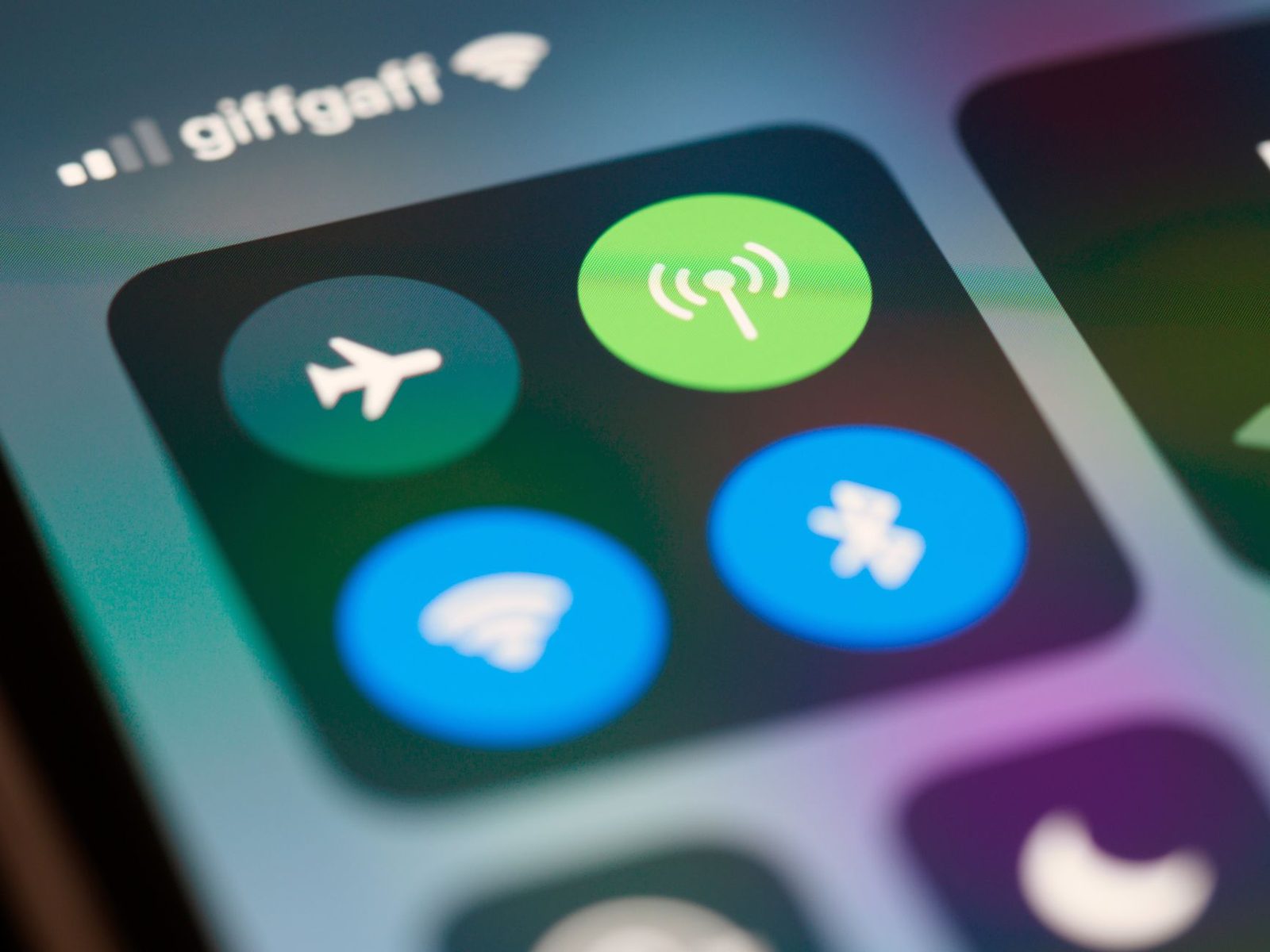
- Turn off data roaming by default. You'll switch it back on manually when you need it.
- Disable automatic network selection when you're at sea or near a sensitive border, and choose the local operator manually.
- Restrict automatic app updates and photo backups to Wi-Fi only. A cloud backup triggered over 5G abroad eats several gigabytes without a sound.
- Enable Wi-Fi calling (VoWiFi). From a connected hotel, a call to France then goes over the internet and is billed as a domestic call by most operators. It's the most cost-effective and least known feature there is.
Plan the hardware logistics too. A universal travel plug adapter saves you from buying one in a rush at the airport at four times the price, and a high-capacity power bank makes bearable those days spent hunting for a signal: constantly searching for a network is one of a smartphone's biggest energy drains.
The local eSIM: the real revolution for travellers
How it actually works
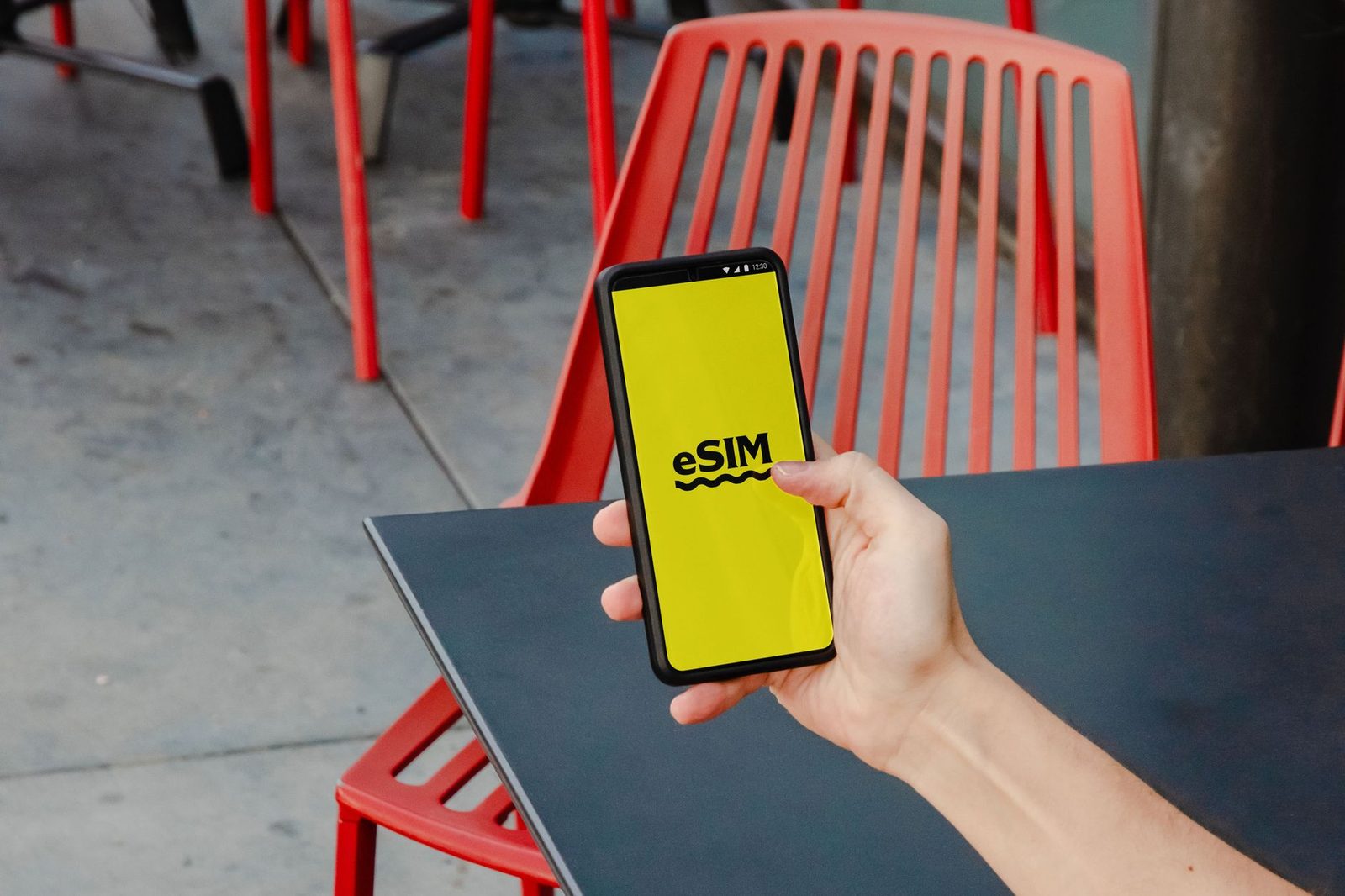
An eSIM is a software SIM card, embedded in the phone. You buy a data plan from a local or international provider, you scan a QR code, and your device has a second network profile — without removing your French SIM.
The result: you keep your French number active to receive banking texts and important calls, while using your data on a local offer costing a few euros for 10 or 20 GB. For a two-week stay in the United States, Japan or Thailand, the gap with a French operator's travel pass is routinely a factor of five to ten.
The essential checks
- Hardware compatibility. Not all phones support eSIM. Most mid-range and high-end models launched since 2020 do, but some devices sold in mainland China or at the entry level do not.
- Carrier unlocking. A subsidised, locked handset will refuse a third-party profile. Unlocking is free and must be granted on request after a contractual period — Arcep regularly reminds consumers of this right.
- Data only. Most tourist eSIMs don't provide a local number usable for standard calls. That's not a problem if you use instant messaging, but it becomes one if a hotel or a rental company needs to reach you.
- Activate before departure. Install the profile from home, over Wi-Fi. Scanning a QR code in an airport with no connection is a frustrating experience.
Frequent travellers often add a portable 4G Wi-Fi router to their kit: a single eSIM or local SIM goes in, and the whole family shares the connection without multiplying subscriptions. For destinations where the mobile network is patchy, a printed travel guide remains, paradoxically, the best backup plan: it needs neither battery nor coverage.
Coming home: disputing a roaming bill
The three questions to ask
If the bill looks absurd, don't pay in silence and don't cancel your contract straight away: ask in writing, first through customer service then through the consumer department:
- A time-stamped breakdown of the disputed usage (date, time, volume, visited network). The operator must be able to produce it.
- Proof of prior information: the alert text sent on arrival, the cap notification.
- The status of the safety cap over the period, and any record of you having disabled it.
A safety cap that failed to work when you had never lifted it is a solid argument.
Escalating
If you're refused, the procedure is clearly mapped out:
- a written complaint to customer service, sent by recorded delivery;
- referral to the operator's consumer department;
- after two months without a satisfactory reply, a free referral to the Médiateur des communications électroniques, which publishes an annual report detailing roaming disputes;
- in parallel, a report on the DGCCRF's SignalConso platform.
Keep everything: screenshots of the rates, alert texts received, invoices. A documented case secures a goodwill gesture far more often than an angry phone call.
The checklist to reread the night before
| Step | Action | When |
|---|---|---|
| 1 | Check the destination's pricing zone | D-7 |
| 2 | Confirm the non-EU data cap is active | D-7 |
| 3 | Buy a travel add-on or install an eSIM | D-3 |
| 4 | Switch backups and updates to Wi-Fi only | D-1 |
| 5 | Enable Wi-Fi calling | D-1 |
| 6 | Turn off data roaming at boarding | Departure day |
| 7 | At sea or in the air: select the network manually | Departure day |
Conclusion: roaming isn't a trap, it's a contract
European roaming works well. In a decade, it has eliminated one of the sector's most spectacular abuses. But it remains a regulatory framework, with a scope written down in black and white, with caps, and with a clear border beyond which unregulated pricing takes over again.
Surprise bills almost never come from operator fraud. They come from a gap between what the traveller thinks they bought and what they actually bought: a cruise off the coast of Sardinia, a weekend in Istanbul, a photo backup triggered at 3 a.m. in a Marrakech hotel.
Thirty minutes of preparation before departure is enough to remove most of the risk. And if you travel outside Europe several times a year, the local eSIM is no longer a geek's trick: it's simply the cheapest way to stay reachable.