


L'équipe Texto SMS Gratuit
19 August 2026 · 16 min read
Introduction: the gray SMS puts on a new suit
For years, commercial messaging had the same silhouette: a short SMS, often impersonal, signed with a more or less readable sender name and ending with a shortened link. You opened it to retrieve a delivery code, confirm a medical appointment, track an order, or read a bank alert. It was raw, efficient, universal. And precisely for that reason, fraudsters rushed in.
In 2026, another form of messaging is gradually taking hold on French phones: RCS Business Messages. Behind this somewhat technical name lies a simple idea: replacing commercial SMS with a rich, verified conversation that can display a brand logo, buttons, carousels, and sometimes even a payment or donation journey without leaving the messaging app.
The shift is discreet, but it affects a massive use case. Transactional messages — banking, transport, healthcare, e-commerce, insurance, energy — are still one of SMS’s last strongholds. According to Arcep, the volume of SMS messages exchanged on French mobile networks has been declining for several years, while IP messaging use continues to grow. RCS is therefore arriving at a paradoxical moment: personal SMS is declining, but useful messages, the ones people read because they concern an immediate action, remain strategic.
The question is no longer simply whether RCS will “replace SMS.” It is to understand what changes when a brand message looks less like a text alert and more like a mini-app inside your conversation thread.
What RCS Business Messages really is
RCS, for Rich Communication Services, is a standard backed by the GSMA, the international association of mobile operators. In its consumer version, it adds read receipts, modernized group chats, higher-quality photo sharing, and an experience closer to WhatsApp or iMessage to classic messaging, while remaining integrated into the phone’s SMS app.
RCS Business Messages, often shortened to RBM, is its version for businesses. A brand can send a rich message to a user, with a verified visual identity and interactive actions. Instead of an SMS such as:
Your parcel will be delivered tomorrow. Tracking: bit.ly/xxxxx
users may receive a conversation with:
- the company’s full name;
- its logo;
- a badge or verification indication;
- a “track my parcel” button;
- a “change the time slot” button;
- a card or carousel of information;
- a reply thread with an adviser or bot.
This difference may seem cosmetic. In reality, it is decisive. Traditional SMS carries almost no context: a sender name, 160 characters per segment, a link, sometimes a STOP instruction. RCS adds a layer of identity and interface. For users, this can reduce confusion. For brands, it greatly increases conversion opportunities.
In a household where several people manage orders, appointments, and bank accounts, a stable phone stand becomes almost a comfort accessory: it lets you calmly check a message, compare a notification with the official app, and avoid rushed confirmations.
Why brands want to move beyond classic SMS
Commercial SMS still works because it is immediate. It requires no app, no additional account, and no connection to a social platform. A mobile number is enough. But it suffers from three weaknesses that have become difficult to ignore.
SMS is too limited for modern uses
A carrier wants to offer a new time slot. A bank wants to explain a suspicious transaction without encouraging a dangerous click. A charity wants to enable a donation. An energy supplier wants to present a consumption estimate. All of this fits poorly into a bare-bones SMS.
RCS makes it possible to integrate structured actions. Users do not type an ambiguous reply: they choose a button. They do not copy a code: they confirm an option. This usability brings messaging closer to a mobile app, but without requiring the installation of an additional application.
SMS links have become toxic
The wave of smishing has profoundly changed users’ relationship with messages. Campaigns involving fake parcels, fake tax refunds, fake fines, or fake bank advisers have normalized one rule of caution: do not click too quickly. CNIL, Cybermalveillance.gouv.fr, and operators regularly remind people of best practices: check the sender, never share your credentials, and report suspicious SMS messages to 33700.
This distrust also penalizes legitimate messages. When every short link seems suspicious, brands look for another way to reassure users. RCS promises precisely that: displaying a clearer identity and limiting bare URLs.
Conversations become measurable
For businesses, RCS also opens up a less visible benefit: measurement. An SMS rarely shows whether the user understood, interacted, hesitated, or abandoned the process. A rich message makes it possible to track which buttons were used, which journeys were started, and which replies were sent. This is useful for customer service, but it also raises privacy questions.
This is where users need to keep a critical eye. A prettier message is not automatically more virtuous. It may be more convenient, but also more trackable.
France, fertile ground for transactional RCS
France has a distinctive combination: high smartphone penetration, generous mobile plans, operators accustomed to pricing innovation, and heavy use of transactional messages. Even though personal exchanges are moving to WhatsApp, Signal, Messenger, or iMessage, the mobile number remains the default contact identifier.
Banks, delivery platforms, public services, mutual insurers, retailers, and carriers continue to use SMS because it reaches almost everyone. RCS aims to preserve that universality while improving the experience.
The recent spotlight on donations via RCS messages in France illustrates this logic well: it is not only about sending a text, but about creating a reliable, fast, and understandable journey. In the charity sector, a few seconds of hesitation can lose a donation. In banking, a few seconds of confusion can instead be very costly.

A reliable USB-C charging cable is nothing spectacular, but it helps avoid a very common scenario: receiving an important validation message with 2% battery, rushing, and then confirming without checking. Mobile security sometimes starts with very ordinary details.
What users will actually see
The transition will not necessarily be announced by a major message. It will appear inside the messaging app, especially on Android through Google Messages, when the operator, phone, app, and brand are compatible.
Here are the most visible differences:
| Element | Classic SMS | RCS Business Messages |
|---|---|---|
| Sender identity | Short name or number | Rich brand profile, often verified |
| Content | Text and link | Text, images, buttons, carousels, actions |
| Interaction | Text reply, STOP, link | Buttons, quick choices, guided conversation |
| Trust | Depends mainly on vigilance | Clearer identity, but vigilance still required |
| Connection | Mobile SMS network | Mobile data or Wi-Fi, with possible fallback to SMS |
This last point is important: RCS runs over the Internet. If mobile data is turned off or the service is unavailable, a message may sometimes fall back to SMS depending on the configuration. Users should therefore not imagine a clean break. For several years, the two worlds will coexist.
The psychological trap: when the message looks too official
RCS’s main benefit — a verified appearance — can become its main risk. A poorly written SMS with a strange link more easily triggers suspicion. A rich message with a logo, neat buttons, and a smooth conversation can lower your guard.
Fraudsters always follow interfaces that inspire trust. Yesterday, they imitated payment pages. Today, they reproduce bank notifications. Tomorrow, they will try to bypass or imitate the visual codes of RCS.
It is therefore important to distinguish three levels of trust:
- The channel: a message arrives in the usual SMS/RCS app.
- The displayed identity: the name and logo seem to match a brand.
- The request being made: the message asks for an action, a payment, a credential, or a confirmation.
Even if the first two levels seem reassuring, the third remains decisive. A legitimate bank does not ask for a full password by message. A carrier should not demand unexpected fees through a dubious link. A government agency does not threaten immediate sanctions in an approximate conversation thread.
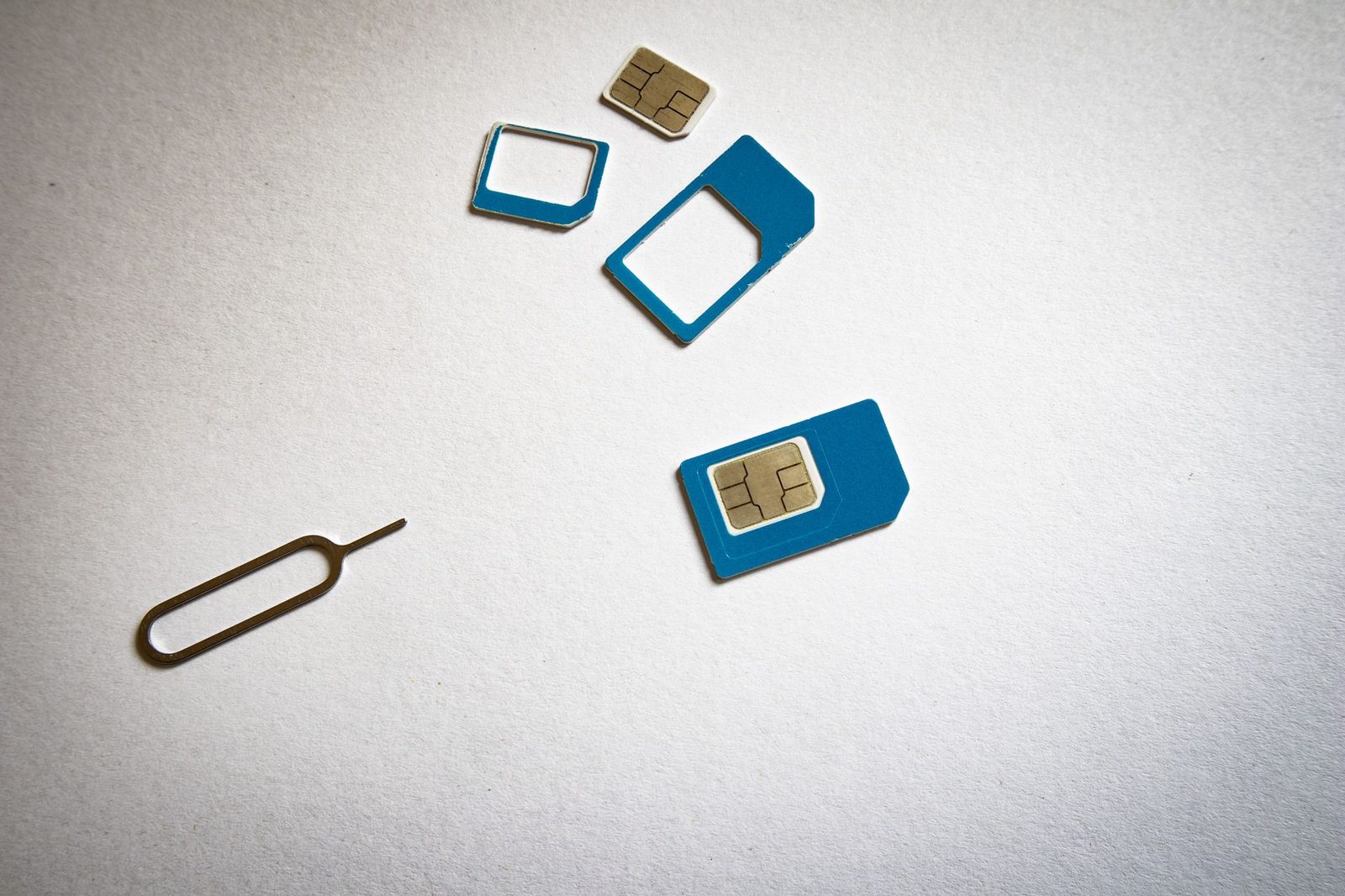
For people who manage multiple SIM cards or professional numbers, a SIM card storage pouch remains useful: it prevents lines from being mixed up, especially when some critical services are tied to a specific number.
Good habits before pressing a button
Moving from a blue link to a colored button should not change basic caution. Before confirming an action in a commercial RCS message, a few simple checks are often enough.
Check the context
Do you really have an order in progress? A scheduled appointment? An open case? If a message arrives without context, it is better not to interact directly. Open the company’s official app or type the known address into the browser.
Observe the conversation identity
A brand profile should be consistent: name, logo, wording, thread history. A sudden change in tone, an obvious mistake, or an unusual request should raise a red flag. RCS can improve readability, but it does not replace judgment.
Avoid urgent confirmations
Scams rely on stress: “final reminder,” “account suspended,” “parcel blocked,” “urgent transaction.” The RCS channel does not change that mechanism. If the message pushes you to act within a few minutes, take a step back.
Use reporting channels
In France, unwanted or fraudulent SMS messages can be reported to 33700. Cybermalveillance.gouv.fr also provides practical advice in cases of phishing, impersonation, or suspicious payment. For commercial calls and messages, Bloctel and the rules set by public authorities remain useful reference points, even if RCS introduces new formats.
A paper password notebook may seem old-fashioned, but for some users it is still preferable to reusing credentials everywhere. The key is to keep it out of sight and separate from the phone, and never photograph it in the gallery.
RCS, Apple, and Android: interoperability remains the real challenge
RCS was long mostly an Android topic. Google pushed it strongly in Google Messages, while Apple kept iMessage as the main rich experience on iPhone. Apple’s gradual opening to RCS changes the situation, but it does not mean that all business features will be available everywhere at the same time.
For French users, this can create a somewhat confusing situation:
- the same brand message may appear as RCS on an Android phone;
- arrive as a classic SMS on an iPhone or an incompatible model;
- switch differently depending on the operator, system version, and app used;
- lose some rich features while roaming or in the event of a poor data connection.
This is nothing new in telecoms: standards take time to become invisible. 4G, VoLTE, 5G, and eSIM all went through phases where compatibility depended on a combination of settings. Commercial RCS will follow the same path.
What operators gain from it
French operators have seen part of the value of messaging slip away to major Internet platforms. SMS is still billed in some business markets, but its prestige and mainstream use are declining. RCS offers an attempt to regain control: modernized operator messaging, monetizable with businesses, integrated with the mobile number.
This movement also interests message aggregators, the intermediaries that route business SMS messages. Their work is changing: it is no longer just about delivering text, but about designing conversational scenarios, authenticating brands, managing replies, and measuring engagement.
For users, the challenge is not to become simply a better-segmented target. Authorities such as CNIL regularly remind organizations that electronic marketing requires a framework: consent, information, the ability to object, and proportionate retention periods. The RCS format does not exempt companies from these obligations.
Privacy: does the rich message know too much?
A traditional SMS is limited, but that poverty has an advantage: it collects few visible interactions on the user side. With RCS, companies can potentially know that a message was received, opened, that a button was pressed, or that a journey was interrupted.
Everything then depends on settings, providers, and the contractual framework. But users should remember one simple rule: the more a message looks like an interface, the more usage data it can generate.
The points to watch are:
- the purpose of the message: useful information or marketing;
- the presence of a simple unsubscribe option;
- consistency with the consent previously given;
- the company’s privacy policy;
- the messaging app settings.
A USB NFC security key can strengthen the most sensitive accounts, especially email and compatible banking services. It does not directly protect against every fake message, but it reduces the impact of a stolen password.
Free SMS and RCS: two uses that will coexist
For readers used to free SMS services, RCS may seem distant. Yet the two topics meet around the same question: how to send a message without depending on a traditional SMS plan?
Free SMS over the Internet meets an accessibility need: sending a one-off message, sometimes without credit, sometimes from a computer, sometimes to someone who does not use the same app. RCS, for its part, aims to modernize native mobile messaging. In both cases, the phone number remains central.
But there is an important difference:
- free SMS is often a backup tool, useful for sending a short text;
- RCS is a structural evolution of mobile messaging, supported by operators, manufacturers, and platforms.
So RCS should not be expected to replace all free SMS uses. It depends on device compatibility, data connection, the app, and agreements between players. On the other hand, it can change how users perceive received messages: less as simple texts, more as service interactions.
The sectors that will switch first
Not all commercial messages will become RCS overnight. The first sectors affected will be those where interaction delivers immediate value.
Delivery and e-commerce
Parcel tracking is one of the most obvious cases. Choosing a time slot, confirming an address, reporting an absence, or contacting a courier fits quick buttons well. It is also one of the sectors most copied by fraudsters, which makes identity verification crucial.
Banking and insurance
Banks want to reduce incoming calls and secure alerts. An RCS thread could explain a transaction, offer to contact the official service, or redirect to the banking app. But institutions will need to be very careful: any interactive banking message can train customers to respond in a channel that fraudsters will try to imitate.
Healthcare and appointments
Appointment reminders, exam preparation, attendance confirmation: there are many uses. Healthcare providers will, however, have to comply with strict requirements, particularly around personal data and medical confidentiality. CNIL and the Agence du Numérique en Santé are important references on these topics.
Charities and donations
Donations via rich messages can make it easier to act, especially during high-profile events. The clarity of the sender and the amount then becomes essential. A donation journey must be readable, reversible, and understandable to avoid any confusion.
What brands will need to avoid
RCS can improve the experience, but it can also become unbearable if it reproduces the worst habits of mobile marketing. A messaging thread is not a promotional inbox. It is more intimate, more immediate, more intrusive.
The companies that succeed will probably be those that follow a few principles:
- send less, but better;
- reserve RCS for genuinely useful messages;
- avoid aggressive follow-ups;
- offer clear unsubscribe options;
- do not mix critical information and promotion;
- maintain an SMS or email alternative when RCS fails.
Conversely, if users associate RCS with animated and repetitive promotions, they will quickly learn to block conversations. Trust in a channel is earned slowly and lost in a few poorly designed campaigns.

How to prepare your phone
There is no magic setting, but a few adjustments can prevent unpleasant surprises.
On Android, check that the messaging app you use supports RCS chats and that chat features are enabled. On iPhone, keep an eye on system updates and the messaging options available through your operator. In all cases, keep the official app from your bank, operator, and essential services up to date.
A compact power bank is especially useful when traveling, not to “consume more,” but to avoid managing sensitive confirmations in the urgency of a nearly dead phone.
It is also recommended to:
- update the phone’s system;
- lock the screen with a strong passcode or biometrics;
- enable strong authentication on important accounts;
- check messaging app permissions;
- delete old unnecessary conversations containing codes or sensitive information;
- back up important data before changing phones.
RCS will not kill SMS; it will specialize it
SMS will not disappear overnight. It remains a universal safety net, used for basic phones, areas with unstable data connections, some alert systems, and many professional uses. But it will gradually lose its role as a rich channel — a role it never really had anyway.
The most likely scenario is specialization:
| Use | Likely channel |
|---|---|
| Minimal universal alert | SMS |
| Rich personal conversation | RCS, iMessage, IP messaging apps |
| Transactional customer service | RCS Business Messages |
| Sensitive authentication | Dedicated app, push notification, security key |
| Broad emergency communication | SMS cell broadcast, dedicated alert systems |
This specialization can be positive if it makes each channel clearer. It becomes problematic if users can no longer distinguish information, advertising, authentication, and conversation.
Conclusion: useful progress, provided we do not confuse convenience with trust
RCS Business Messages marks an important stage in the evolution of mobile messaging in France. It addresses a real problem: classic commercial SMS is poor, easy to imitate, and less and less suited to modern uses. By adding verified profiles, buttons, and guided journeys, RCS can make useful messages easier to read.
But the interface must not lull users into complacency. A logo, a button, and a smooth conversation are never enough to prove that a request is legitimate. The same rules still apply: check the context, avoid urgency, use the official app when in doubt, report suspicious messages, and limit the data you share.
The real revolution will therefore not be only technical. It will be cultural. After twenty years of learning to distrust SMS links, users will now have to learn to distrust conversations that look too perfect.