



The Texto SMS Gratuit team
25 June 2026 · 5 min read
You buy a new phone and there's no longer a tray for the little plastic card? That's normal: in 2026, the eSIM has become the default activation method at most French operators. No card to punch out, none to insert — your line is activated by scanning a QR code.
Here's a clear guide to understand what an eSIM is, how to get one with the four major networks, how much it costs, and above all what it changes (or not) for your texts and calls.
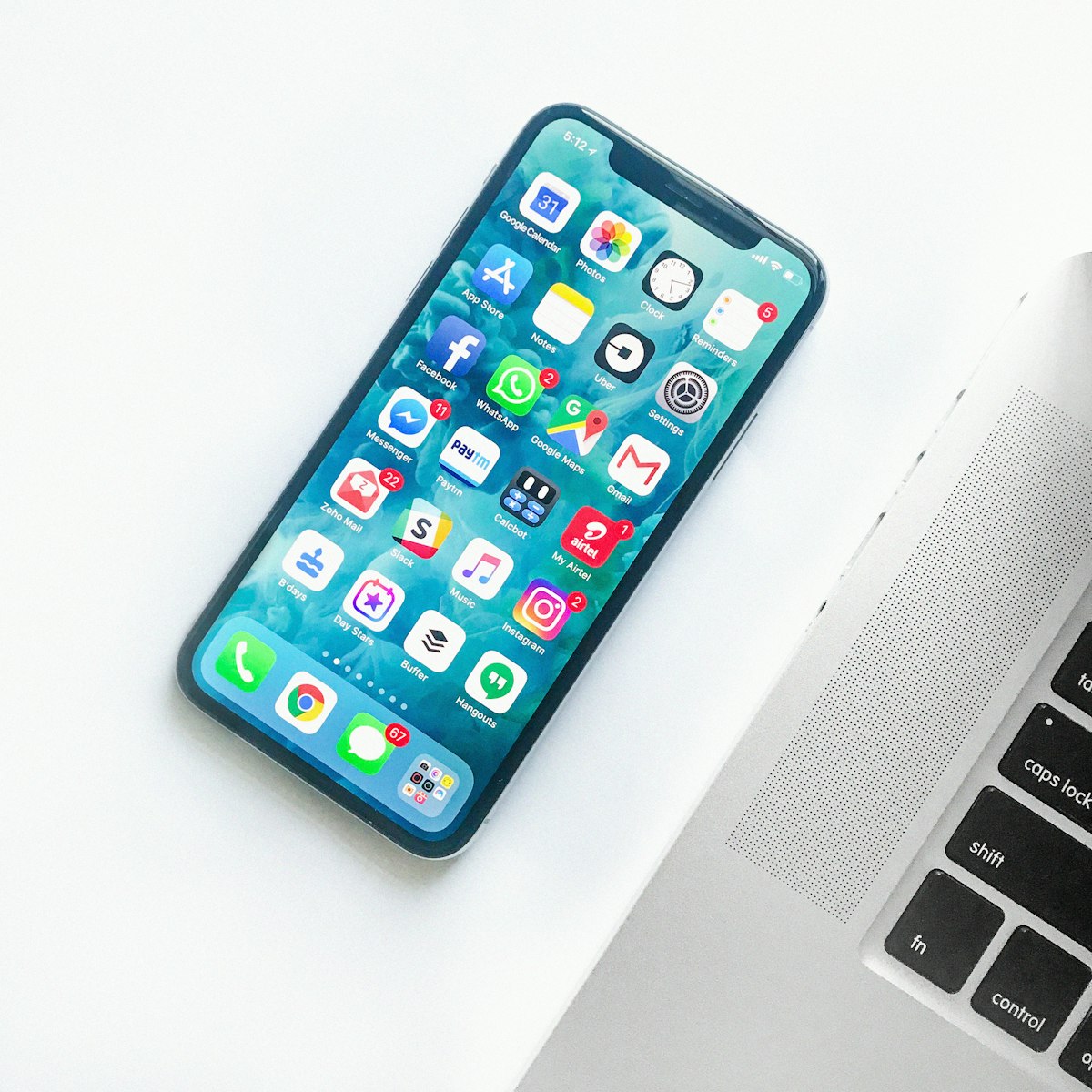
Photo: Unsplash — with an eSIM, your line is activated straight from the phone's settings.
What exactly is an eSIM?
The eSIM (for embedded SIM) is a chip soldered directly into the smartphone. It does the same job as a classic SIM card — identifying you on your operator's network — but without a physical medium. Instead of inserting a card, you download a mobile profile onto your device.
In practice, nothing changes in your daily use: you keep the same number, you make your calls and you send and receive your texts as before. Only the way the line is activated changes.
Which operators offer the eSIM in 2026?
As of June 2026, the four national operators and their low-cost brands offer the eSIM across most of their ranges:
| Operator | Brands | Availability |
|---|---|---|
| Orange | Orange, Sosh | All mobile plans |
| SFR | SFR, RED by SFR | All plans |
| Bouygues Telecom | Bouygues, B&You | Large majority of plans |
| Free | Free Mobile | Available on plans |
If you want to dig into each network's specifics, our guide on France's SMS operators breaks down their differences.
How much does it cost?
Fees depend on the operator and your situation (new line or migration from a physical SIM):
- Orange and Sosh: all plans are compatible; setting up an eSIM costs around €10, the same to migrate a classic SIM to an eSIM.
- SFR: €1 + €10 activation fee; €10 with RED for a new subscription.
- Bouygues and Free: the eSIM is offered at sign-up or from your online account, depending on the plan.
Always check the details in your account area: terms change regularly.
How to activate an eSIM, step by step
Activation relies on a QR code provided by the operator. It takes a few minutes:
- Request the eSIM at sign-up, from your online account, or in store.
- Get the QR code sent by your operator (by email or in your account).
- On iPhone: Settings > Cellular > Add Cellular Plan. On Android: Settings > Mobile network > Add mobile plan.
- Scan the QR code: activation is almost instant.

Photo: Unsplash — the eSIM is built into the phone's board, with no removable medium.
The concrete benefits of the eSIM
- Instant activation: no waiting for a card in the mail.
- Dual line: most recent smartphones handle one eSIM + one physical SIM (or two eSIMs), handy to split work and personal or for travel.
- Harder to steal: you can't pull an eSIM out of a lost phone to slip it into another device.
- Greener: no plastic, no postal shipping.
What it changes (or not) for your texts
Good news: nothing changes for your messages. A line on an eSIM receives texts, one-time codes (OTP) and calls exactly like a physical SIM. The same good habits apply against unwanted messages — we cover them in our guide on SMS scams and smishing and our tips for protecting your SMS privacy.
The eSIM is part of the same telecom modernisation as the 2G shutdown and the rise of RCS against SMS: the network evolves, but the text message stays universal — it works on every phone, whatever the type of SIM.
Frequently asked questions
Is my phone eSIM-compatible? Most recent smartphones are (iPhone since the XS, many Android models and Google Pixel). Check your device's spec sheet or look for the "Add plan" option in the settings.
Can I keep my number when switching to an eSIM? Yes. The migration keeps your number; your texts and calls carry on as normal.
Can I have two numbers on one phone? Yes, if your device supports Dual SIM (eSIM + physical SIM, or two eSIMs).
What if I don't have a plan on hand? You can always send a free SMS to a French mobile from our site, with no sign-up, no ads and no commitment.
In short
In 2026, the eSIM becomes the norm in France: QR-code activation, dual line, stronger security — and no impact on your texts, which remain the most universal way to reach someone. Got a question? Our FAQ and contact page are there, and you can send a free text in seconds, with nothing to install.