



Marc
19 June 2026 · 4 min read
The SMS, that veteran of mobile communication, is going through an unprecedented moment. In 2025, the number of texts sent in France fell by 27% in a single year according to Arcep, after yearly drops of around 10% before that. In the fourth quarter of 2025 the decline even reached 31% year on year. Behind this slide, one name keeps coming up: RCS. Let's break down this shift and what it actually means for you.
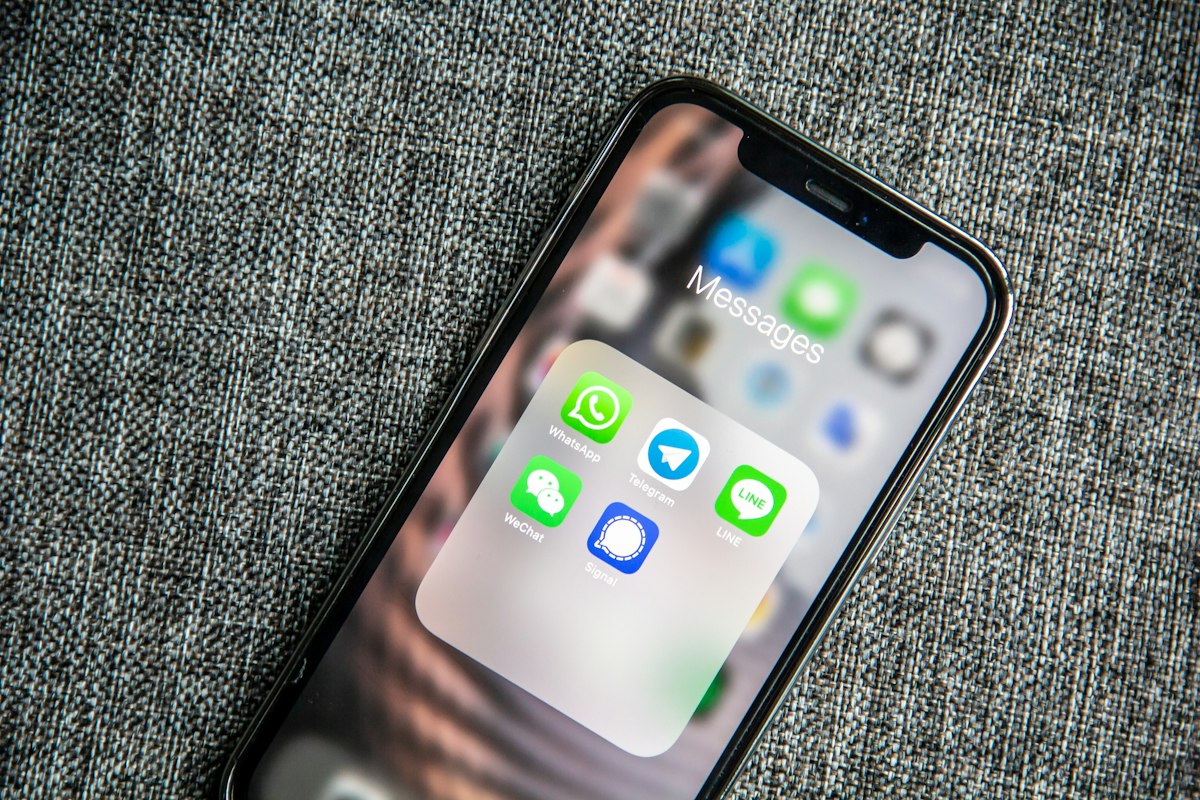
Photo: Unsplash — messaging apps on a smartphone.
SMS is declining, and the numbers show it
The erosion of the SMS isn't new, but it has clearly accelerated. A French subscriber sent on average 250 texts per month in 2016, versus about 70 a month in 2025. In the fourth quarter of 2025, the average even dropped to 59 monthly texts per SIM card — 28 fewer than a year earlier.
| Indicator | 2016 (peak) | 2025 |
|---|---|---|
| SMS sent / month / SIM | ~250 | ~70 |
| Yearly volume change | rising | −27% |
| Q4 year on year | — | −31% |
The trend is explained first by personal conversations moving to internet messengers (WhatsApp, Messenger, Signal…), and more recently by RCS being built directly into smartphones' default messaging app.
So what exactly is RCS?
RCS (Rich Communication Services) is the official successor to the SMS. It runs over the internet rather than the classic GSM network, much like an instant messenger. In practice it brings read receipts, the "typing" indicator, high-quality photo sharing, richer groups and messages with no character limit — whereas the SMS is still capped at 160 characters.
Since 2025, RCS has been available across the four French operators (Orange, SFR, Bouygues Telecom and Free), on both Android and iPhone. It's this rollout that is speeding up the decline of the traditional text.
The encryption debate in France
One point is causing controversy, though. With iOS 26.5, Apple added the option to encrypt RCS messages end to end, but French operators have not enabled it. Worse: according to an analysis of iOS 27's configuration files reported in June 2026, France is one of only three countries — alongside China and South Korea — to fully block RCS encryption at the country level. Investigations point to a political rather than a technical reason.
For users, the lesson is clear: a "modern" RCS message doesn't always mean privacy. It's a topic we take seriously, as we explain in our article on protecting your privacy.
Photo: Unsplash — everyday smartphone use.
Should we bury the SMS, then?
No, and it's worth remembering why. The SMS keeps advantages that RCS and messengers don't offer:
- Universality: it works on any phone, with no app, no account and no internet connection on the recipient's side.
- Reliability: a text gets through with a single bar of signal, whereas RCS needs an active data connection.
- Simplicity: no sign-up, no profile to create. That's exactly what our free sending form on the home page offers.
For reminders, confirmations, alerts or a quick note to a loved one, the SMS remains the safest channel to actually be read. That's why our service still relies on direct GSM lines with French operators.
Frequently asked questions
Will RCS make the SMS disappear? Not in the short term. The SMS is still the only universal channel, with no app or data connection needed. It's shifting toward more targeted uses (alerts, codes, reminders).
Is RCS free? It runs over your data plan or Wi-Fi. Sending a classic SMS, on the other hand, is still possible for free from our home page, with no sign-up.
Are my RCS messages encrypted in France? Not for now: end-to-end encryption isn't enabled there. For any question, our contact page and our FAQ are available.
In short
The SMS is declining sharply, pushed by an RCS that's now widespread across the four operators. But between data dependency, the encryption debate and the question of universality, the good old text still holds a strong place for reaching someone for sure. And to send one without installing anything, it's still free with us.