



Marc
17 July 2026 · 6 min read
Arcep, the French telecoms regulator, released on 10 July 2026 its observatory of the retail electronic communications market in France for the first quarter of 2026. The document confirms the maturity of the French mobile market: 88.1 million active SIM cards across consumer and business lines, still growing, but at a much slower pace than before the pandemic. For users — and in particular for visitors of Texto SMS Gratuit, who want to understand the ecosystem in which they send their messages — this is a reference publication. Here is what to take away from it.
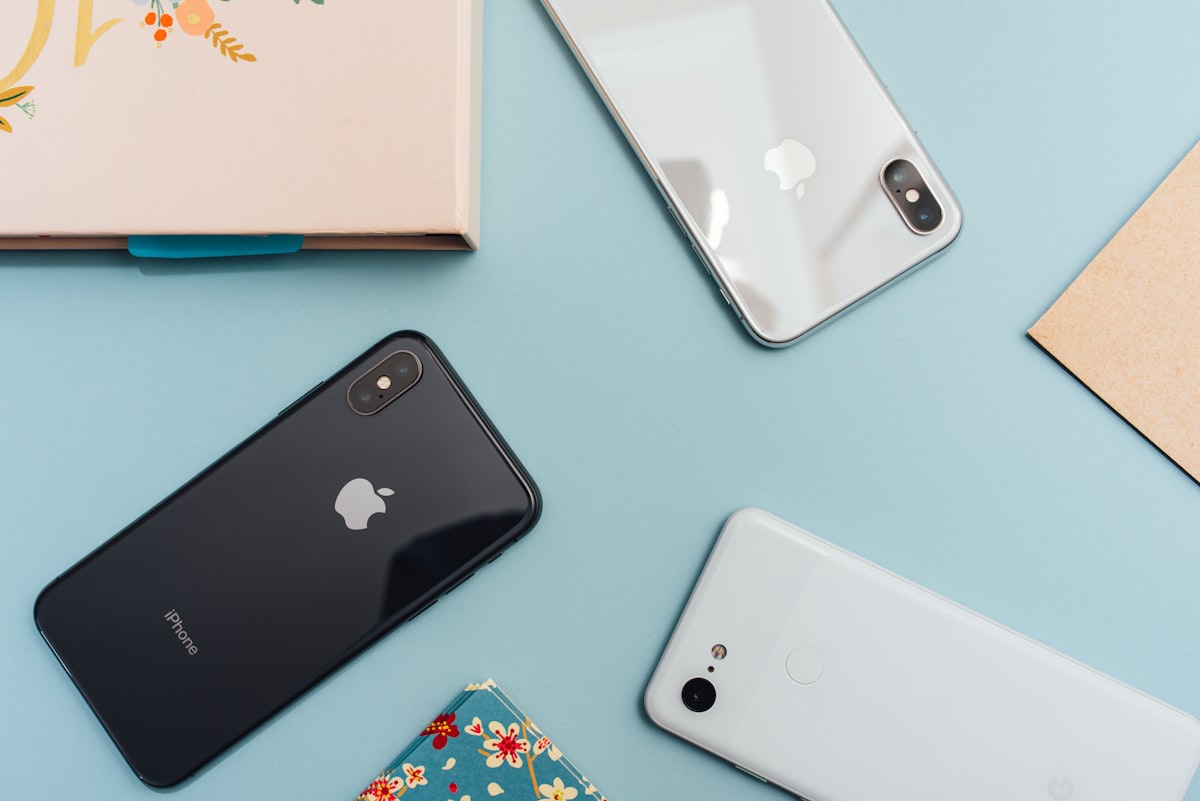
Photo: Unsplash — the French mobile market now exceeds 88 million active SIM cards.
88.1 million SIM cards: +0.6% year on year
As of 31 March 2026, France had 88.1 million SIM cards in service on metropolitan mobile networks, according to the observatory. That is +0.6% over one year, but only +0.1% over the previous quarter. The gap between annual growth and quarterly growth illustrates the slowdown: the momentum died down with the end of the price hikes first seen in 2023–2024, and the market has now entered a pure renewal phase, with no new influx of users.
For reference, the base had grown by +1.8% in 2022, +1.4% in 2023 and +1.0% in 2024, according to Arcep's earlier publications. 2025 had already plateaued; 2026 confirms the move.
No-commitment plans now represent 83% of the base
A breakdown of the base shows a stabilised market structure around three segments:
| Card type | Share of base, Q1 2026 | Change over 1 year |
|---|---|---|
| Plans (postpaid) | 83% | +0.9 pt |
| Prepaid | 13% | –0.7 pt |
| M2M (connected objects) | 4% | +0.2 pt |
Plans — including no-commitment offers such as Free Mobile 2 €, Sosh, B&You and YouPrice — therefore now make up the overwhelming majority of usage. Prepaid, long dominant for short-term uses (holidays, travel, first-time users), keeps shrinking: the convenience of €5–10 offers with no commitment makes the "rechargeable card" argument less and less relevant for the general public.
For users who need to send a one-off SMS from a secondary device, this trend explains why services like Texto SMS Gratuit remain useful: you can keep a prepaid line for roaming and still have a "pure SMS" use case via the web, without paying for a full plan.
Revenue: €3.4 billion over the quarter, slightly up
The combined revenue of the four mobile network operators (Orange, SFR, Bouygues Telecom, Free Mobile) on the consumer segment reached €3.42 billion in Q1 2026, against €3.38 billion a year earlier. The +1.2% increase is below inflation, which means in constant euros the market has slightly contracted.
This trend had already been highlighted in the previous observatory: price competition, notably on 5G segments under €10, is pulling the average revenue per user (ARPU) down. Arcep notes that the tariff increases seen in 2025 — by about €2 per plan on average — did not offset the loss in volume.
SMS volume: the structural decline continues
The number of person-to-person SMS sent by French operator customers keeps falling: –7.4% year on year in Q1 2026, to around 18.6 billion messages over the quarter. The iMessage app, OTT messengers (WhatsApp, Messenger, Telegram) and 5G use cases for enriched calls remain the main competitors.
This is a well-known pattern — we already documented it on the blog through the article on Arcep's SMS observatory — but it has a positive side-effect for one-off SMS: they keep their place for notification use cases (medical appointments, deliveries, validation codes, administrative alerts), where immediate read rates are still higher than for e-mail. That is precisely the slot Texto SMS Gratuit has occupied since 2008.
Free Mobile keeps gaining market share
The breakdown by operator shows that Free Mobile remains the leading net recruiter, with a gain of around +210,000 plans over the quarter, mainly in the entry and mid-range segments. Bouygues Telecom also grew, but more modestly, while Orange and SFR are almost flat. The gap between Xavier Niel's operator and Orange in consumer market share keeps narrowing, although Orange remains the leader in value thanks to its business base.
For the general public, this intensified competition translates into entry-level offers under €2 (Free 2 €, Prixtel, YouPrice) that make 4G/5G available to everyone. That is a positive signal for digital inclusion, but it contributes to the pressure on sector revenue mentioned above.
What this changes for Texto SMS Gratuit users
For our readers, these figures confirm a deep trend: mobile has become a commoditised service, delivered in no-commitment plans at rock-bottom prices, and SMS remains a backup channel — efficient, universal, Internet-free — for short and urgent messages. The platform we make available fits into that complementarity: a web send with no commitment, no app, no registration, for the cases where your phone is not at hand.
Two reflexes to keep in mind for July 2026:
- Review your plan: if you pay more than €12 a month for light usage, there is almost always a more suitable offer (compare via UFC-Que Choisir for instance).
- Test your network on Ma connexion internet: Arcep publishes real-world coverage by operator and technology, which helps you anticipate where 5G is available — handy for data-heavy use cases.
For any practical question, you can go through our contact page or check the site FAQ. And if you need to send a text to a contact without touching your plan, the homepage form is of course available 24/7.
The key takeaways
- The French mobile base has 88.1 million SIM cards as of 31 March 2026, up +0.6% year on year but with a marked slowdown.
- No-commitment plans now account for 83% of the base; prepaid is down to 13%.
- Mobile revenue in Q1 2026 stands at €3.42 billion for the four operators, up nominally but down in real terms against inflation.
- SMS volume keeps declining (–7.4% year on year), to 18.6 billion messages per quarter, in favour of OTT messengers.
- Free Mobile remains the leading net recruiter in the market, followed by Bouygues Telecom.
To dig further, you can read the official publication on Arcep's website, revisit our analysis on the decline of SMS in France or write to us if any point seems inaccurate or deserves further explanation.