

L'équipe Texto SMS Gratuit
15 September 2026 · 12 min read
Introduction: the empty pocket, and the countdown that starts
You pat your right pocket. Then the left. Then your bag, twice, with that absurd gesture we all repeat hoping reality will change. It's 6:40 p.m., you got off the tram four minutes ago, and your phone is gone.
What happens in the next hour has nothing to do with the device. A smartphone can be replaced. What doesn't replace well is a hijacked mobile line: your number is the master key to your bank accounts, your email, your verification codes. A rushed thief resells the hardware; an organized thief goes for the number first.
In France, the Ministry of the Interior records several hundred thousand mobile phone thefts every year, a large share of them snatch thefts in urban areas. Yet most victims make the same mistake: they start by looking for the device instead of neutralizing the line. This guide puts the steps back in the right order.
The first six hours: the order that matters
Minute 0 to 10 — locate it, but don't spend your evening on it
Before blocking anything, give yourself ten minutes, no more, to try locating the device from another one:
- Android:
google.com/android/find(Find My Device service). - iPhone:
icloud.com/findor the Find My app on a friend's device.
These services show the last known position, make the device ring and offer a Lost Mode that locks the screen with a message and a callback number. Turn it on immediately if available: it locks access without wiping data, which leaves a chance of recovery.
Never go and retrieve a located phone yourself in an unfamiliar place. Police services say it over and over: a rough location has already led victims to ring the doorbell of complete strangers with no connection to the case — or worse, to put themselves in danger.
Minute 10 to 30 — suspend the line with your carrier
This is the priority action. It doesn't depend on the police report, the insurance, or the IMEI number.
Call customer service from another phone, or use your online account area, which now offers a one-click "suspend my line" option with all the major carriers:
| Carrier | Number from another phone | From your own line |
|---|---|---|
| Orange / Sosh | 3900 | 0 800 100 740 |
| SFR / RED | 1023 | 1023 |
| Bouygues / B&You | 1064 | 614 |
| Free Mobile | 3244 | 3244 |
Suspension cuts off calls, texts and data. It does not cancel the contract and doesn't stop your subscription from being billed: it's a freeze, reversible in minutes if you find the device again.
Key point: explicitly ask for a block on the SIM card, not just a service suspension. The two concepts are distinct in some carrier systems, and only the SIM block prevents the card from being reactivated in another device.
Minute 30 to 60 — lock down sensitive accounts
While the line is dead, change the passwords of every service where your number is the recovery factor: primary email first, then banking, then social networks. If your bank uses a device-linked validation app, call the bank's fraud/stop-payment line: the device must be de-enrolled.
This is also the moment to face an uncomfortable truth: a phone number is a poor second factor. Recommendations from the ANSSI and the CNIL have converged for several years now on authentication via a dedicated app or a physical key. A FIDO2 security key, stored somewhere other than the same pocket as your phone, removes this risk entirely: even with your number, an attacker gets nowhere.
Hour 1 to 6 — police report, IMEI, insurance
Once the line is neutralized, the rest can be done without panic — but within the day.
The IMEI number: the only thing that blocks the device itself
What an IMEI actually is
The IMEI (International Mobile Equipment Identity) is a 15-digit identifier unique to each handset — a radio serial number, independent of the SIM. Every carrier maintains a database called the EIR (Equipment Identity Register) in which a device reported stolen is blacklisted. A blacklisted handset can no longer attach to the network, whatever SIM card is inserted.
In France, this blacklist is shared among the four national carriers through a pooled mechanism: blocking with Orange makes the device useless on SFR, Bouygues and Free too. On the other hand, blocking largely stops at the border: the international database run by the GSMA isn't fed the same way by every country, which explains the trafficking of stolen handsets abroad.
Where to find it when the phone is gone
Here's the paradox: you get the IMEI by dialing *#06#… on the phone you no longer have. Backup sources:
- the device's original box (barcode label);
- the retailer's purchase invoice;
- your Google account (
myaccount.google.com→ Devices) or Apple account (Settings on another device with the same Apple ID, Devices section); - your carrier's account area, which sometimes keeps a record of IMEIs seen on the line.
Take five minutes, today, to write that IMEI down somewhere else. Many people copy it into a paper password notebook kept in a drawer, along with the serial number and purchase date — it's rudimentary, and it's exactly what saves the process six months later.
How to request a block
An IMEI block is requested from your carrier, usually with the police report receipt. Some accept a simple declaration, others require the document. Expect 24 to 48 hours in general for the listing to take effect across all networks.
Watch out for a side effect that's often overlooked: a blacklisted device stays blacklisted even if you find it again. Unblocking is possible, but it requires a formal request to the same carrier, with proof of ownership. So don't request an IMEI block in the first ten minutes "just in case": it's the line suspension that's urgent, not the hardware block.
Filing a report: loss, theft, and why the distinction changes everything
Theft: a complaint at the police station or online
In case of theft, you file a complaint at any police station or gendarmerie brigade, regardless of where the incident happened. The Ministry of the Interior's Ma Sécurité service also allows a pre-complaint online for property offences with no known perpetrator, to be finalized in person afterwards. The receipt is the document that unlocks all other rights: IMEI blocking, insurance compensation, disputing a bill.
Loss: a simple declaration
If the device is merely lost — left in a taxi, dropped out of a bag — there's no offence, so no complaint. You file a declaration of loss, at a police station or sometimes directly at the town hall. Some insurers accept it, others don't: read the clause before choosing how to classify the event. And never report a theft that isn't one: a false declaration is an offence under the penal code.
Theft abroad
Outside France, file a report with the local authorities before you come home, then contact the consulate if the device contained scanned identity documents. A foreign police receipt is accepted by most French carriers and insurers, possibly with a translation.

Who pays for the fraudulent calls?
This is the least understood point, and the one that generates the most disputes.
The principle set out by law
Article L. 224-30 of the French Consumer Code and carriers' general terms converge on a logic of shared responsibility:
- Before the block: the subscriber is in principle liable for calls made, since the line was active under their responsibility.
- After the block: no further usage can be billed to you. If a bill arrives anyway, it is disputable, no discussion needed.
Many carriers apply a liability cap before the block is placed, often in the range of a few dozen euros, provided the block was requested "without delay." Hence the importance of timestamping: note the exact time of your call to customer service, or make the request in writing through your online account, which leaves a dated trace.
The dispute that works
If an abnormal bill lands anyway:
- Dispute it in writing with customer service, attaching the police report receipt and proof of the time the block was placed.
- Without a satisfactory answer within a month, escalate to the carrier's consumer relations department (second level).
- Then to the Médiateur des communications électroniques, a free online referral, competent for all member carriers.
Don't pay "to avoid being cut off" thinking you'll be reimbursed later: payment often counts as implicit acknowledgment and complicates everything afterwards.
Getting a line back in service: SIM, eSIM and double security
The physical SIM
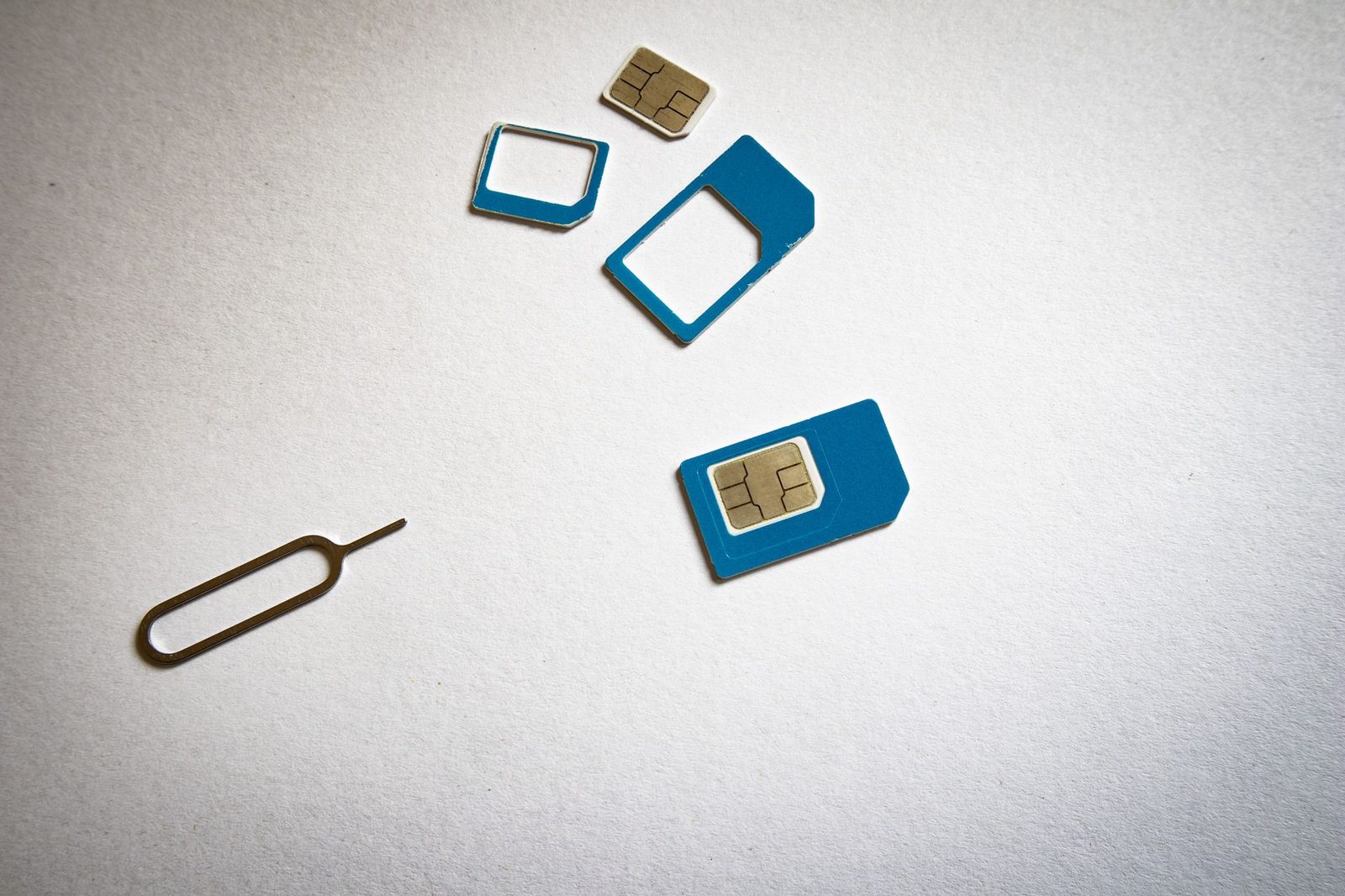
Your carrier sends a new card, usually within 48 to 72 hours, or hands it to you in store. The replacement costs between €0 and €15 with most providers, depending on the plan. Your number is kept: it's a change of medium, not a change of line.
eSIM: the decisive advantage in 2026
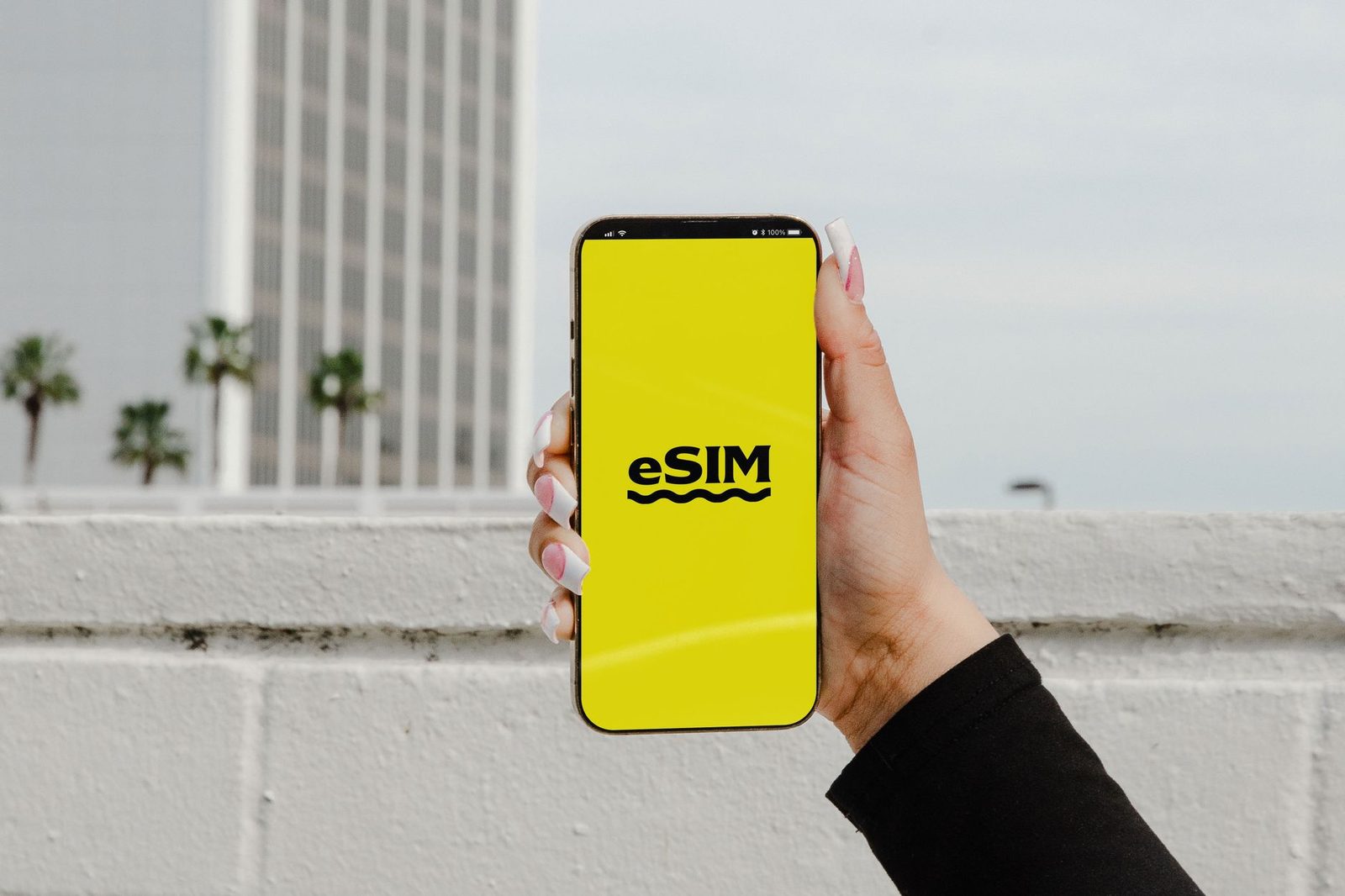
If your plan and your replacement device support eSIM, reprovisioning happens online, often in under an hour, via a QR code sent by email. That's the real selling point of eSIM in a theft scenario today: no waiting for the post, no trip to the store.
Two things to watch:
- eSIM does not protect against SIM swapping: an attacker who takes control of your online account area can request a new eSIM profile. Enable the carrier PIN/passcode and, where it exists, two-step validation for sensitive operations.
- Keep a way to log back into your account area without your number: that's exactly what the theft takes away from you.
The backup phone, the most underrated accessory
A replacement device, however modest, completely changes how you handle a theft: it lets you receive the eSIM QR code, call your carrier, access your accounts. A basic unlocked phone under €40, kept in a drawer with its charger, will be useful exactly once in its life — but on that day, it's worth a hundred times its price. Same logic for a compact power bank kept at the office: a dead backup device is no use at all.
Protecting the device before it disappears
The settings that change everything, to do tonight
- SIM card PIN enabled: this is the most neglected setting. Without it, a stolen SIM works immediately in another device. With it, it's useless.
- Screen lock with a 6-digit code minimum, not a pattern.
- Hide notification content on the lock screen: otherwise, SMS verification codes appear without any unlocking.
- Automatic backup enabled (iCloud, Google One, or a personal NAS): what really hurts in a theft is the photos.
- Location always on, including offline (Find My on iPhone works via Bluetooth even with the device powered off on recent models).
Physical prevention
Snatch thefts target phones held in the hand on the street, at transit exits. A few simple habits drastically reduce the risk: don't talk on the phone while walking along a roadway, put the device away before leaving a station. A belt bag worn at the front, or an anti-theft pouch with a zipped closure, takes the device out of sight and out of arm's reach. For higher-risk activities — cycling, worksites, the beach — a rugged shockproof case limits the other cause of total loss: breakage.
Finally, check what your existing policies actually cover: many premium bank cards and some home multi-risk insurance policies cover phone theft with assault, sometimes better than the mobile insurance sold for €8 a month in store. The comparison takes twenty minutes and often avoids paying twice for the same cover.
Summary: the 24-hour checklist
| Timing | Action | Where |
|---|---|---|
| 0–10 min | Locate + enable Lost Mode | Google / iCloud |
| 10–30 min | Suspend the line and block the SIM | Carrier customer service |
| 30–60 min | Change critical passwords | From a computer |
| 1–3 h | File a complaint (theft) or declaration (loss) | Police station / Ma Sécurité |
| 3–6 h | Request the IMEI block | Carrier, with the report receipt |
| 6–24 h | Report the claim to your insurer | Insurer or bank |
| 24–72 h | New SIM or eSIM, restore from backup | Carrier |
Conclusion: what to remember
A phone theft isn't a material event, it's an identity incident. The hierarchy of urgencies is counter-intuitive: you want to find the object, when what you must do first is cut off the line, then protect the accounts, and only then deal with the device.
The fifteen minutes you spend tonight enabling your SIM PIN, hiding notifications on the lock screen and noting your IMEI somewhere safe are worth every procedure that comes afterwards. They turn a disaster into a mere administrative annoyance.
Sources and useful resources: Service-Public.fr ("Vol ou perte de téléphone portable" factsheet), Ministry of the Interior / Ma Sécurité service, ANSSI (recommendations on multi-factor authentication), CNIL (data protection on mobile devices), Médiateur des communications électroniques, Arcep (monitoring of carrier quality of service).