


Marc
13 July 2026 · 4 min read
It is an invisible revolution: while public debate focuses on 5G and fibre, the protocol that carries every single data packet in France is quietly changing. And on that front, France moved to first place in the world for IPv6 adoption in June 2025, according to the annual barometer published by the French regulator Arcep. The third volume of its annual report, "The state of the internet in France" — the 2026 edition is due on 16 July — devotes a large section to it.
What are we actually talking about?
Every connected device needs an IP address, much like a postal address. The older format, IPv4, provides roughly 4.3 billion addresses — a number that felt limitless in 1981 and is hopelessly short today, with smartphones, routers, connected objects and servers all competing for one.
IPv6 raises that ceiling to a figure beyond intuition (2^128 addresses). No more rationing, no more workarounds where dozens of customers share a single public address.

The numbers from the Arcep barometer
| Indicator | Value |
|---|---|
| Fixed-line consumer customers with IPv6 | ~87% |
| Mobile consumer customers with IPv6 | ~70% |
| France's world ranking | 1st (since June 2025) |
| Full consumer transition expected by | 2027 |
France was eighth in 2022, second in December 2024, and took the lead six months later. The progress comes mainly from major operators enabling IPv6 by default on their routers and mobile plans.
Who is lagging behind?
The transition is not uniform. Customers still stuck on IPv4-only connections are mostly on end-of-life networks — ADSL, VDSL, cable — whose shutdown schedule we covered in our article on the end of the copper network. In other words: in many cases, moving to fibre also means moving to IPv6, without even noticing.
Gaps also remain between operators, particularly on some business offers and on FttH scopes that have not switched yet. Arcep tracks this year after year, alongside the quality of service perceived by subscribers.
What it changes (and doesn't) for you
In practice, no user ever "sees" their IP address change format. But the effects are real:
- Fewer middlemen. IPv4 address sharing (CGNAT) degrades certain uses: online gaming, video calls, self-hosting a small server. IPv6 restores a genuine end-to-end connection.
- A more legible internet for emergency services and investigations. Identifying a connection becomes far less ambiguous than when hundreds of subscribers share one IPv4 address.
- Nothing to do on your side. No setup required: your router and smartphone handle everything.
Where does SMS fit in?
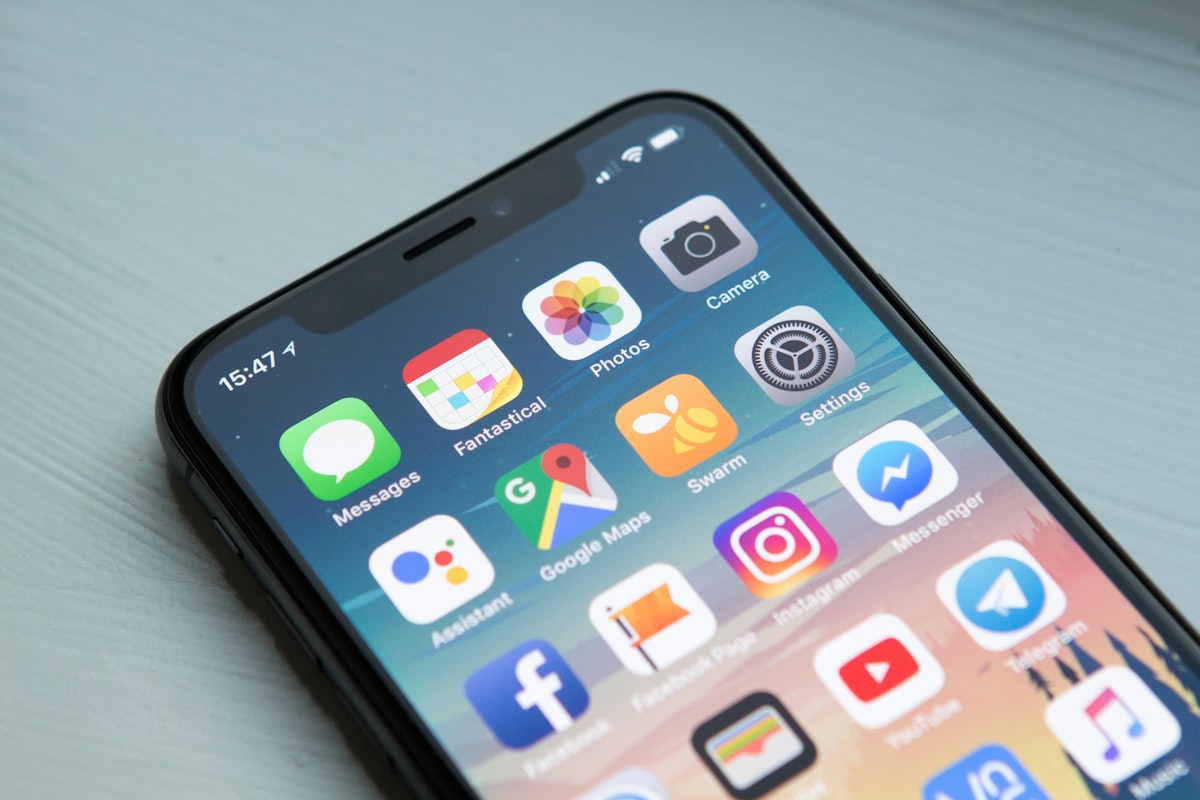
This is where the comparison gets interesting. SMS does not depend on the internet. It travels through the mobile network's signalling channels, indifferent to whether your data connection runs on IPv4, IPv6, or is down entirely. That is exactly what makes it such a robust fallback, as we explained about FR-Alert warnings and satellite SMS.
RCS, the announced successor to SMS, is the opposite: it is an IP-based service that needs a data connection to work, and therefore benefits directly from IPv6 progress. We compared both protocols in our RCS vs SMS piece, and detailed its end-to-end encryption.
In short: the more the French internet shifts to IPv6, the more reliable modern messaging becomes — and the more SMS keeps, by contrast, its role as the universal safety net.
Key takeaways
- France has ranked first worldwide for IPv6 adoption since June 2025.
- 87% of fixed-line and 70% of mobile consumer customers are already on IPv6.
- The full consumer transition is expected by 2027.
- SMS remains independent of these network layers — that is its strength.
Need to send a message right now, without relying on a data connection? Our free SMS form works from any browser, with no sign-up and no ads. For bulk sending, have a look at our SMS packs, browse the FAQ or get in touch.